Trust in Cancer Information Sources and Awareness of Human Papillomavirus as a Cause of Cervical Cancer Among - Report - MDSpire

Trust in Cancer Information Sources and Awareness of Human Papillomavirus as a Cause of Cervical Cancer Among

  • By

  • Olajumoke Ope Oladoyin

  • Paula Cuccaro

  • Lara S. Savas

  • Robert Yu

  • Joel Fokom Domgue

  • Sheryl McCurdy

  • Sanjay Shete

  • June 24, 2026

  • 0 min

Share

Perceptions of Cancer Information Sources and Knowledge of HPV

Background

Cervical cancer is primarily caused by persistent infection with high-risk HPV types, particularly 16 and 18. The HPV vaccine is a proven preventive measure, yet vaccination rates are below national targets.

Data Highlights

The study utilized data from the Health Information National Trends Survey (HINTS) conducted from March 7 to November 8, 2022, with a response rate of 28.1% among 29,600 addresses, indicating a representative sample of the US adult population.

Key Findings

  • Approximately 90% of cervical cancers are linked to HPV infection.
  • HPV vaccination completion rate in the US was 61.4% in 2023, below the Healthy People 2030 target of 80.0%.
  • Public awareness of HPV decreased from 70.1% in 2019 to 68.3% in 2022.
  • Trust in US government health agencies dropped to 16.0% in 2023, the lowest since 2011.
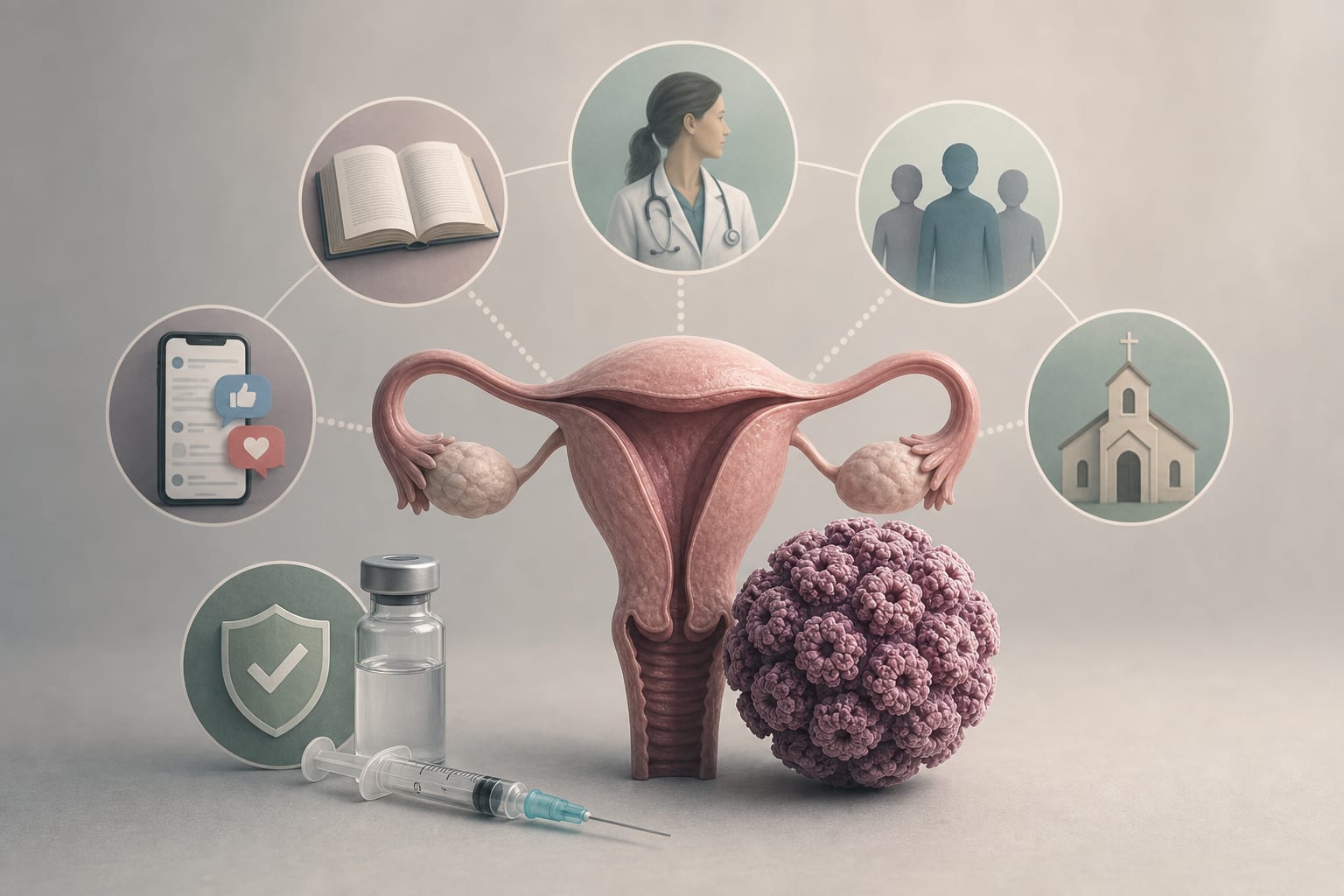
  • Individuals affiliated with faith-based organizations showed lower awareness of HPV and its vaccine.
  • Social media is a significant source of both information and misinformation regarding HPV.

Clinical Implications

Healthcare professionals should be aware of the declining trust in health information sources and the impact this may have on patient education regarding HPV and cervical cancer. Enhanced communication strategies may be necessary to address misinformation and improve vaccine uptake.

Conclusion

The findings indicate a critical need for targeted public health interventions to increase awareness of HPV and its link to cervical cancer, particularly in light of declining trust in health information sources.
Related Resources & Content

  1. Adjei Boakye et al, The ASCO Post, 2023 -- Awareness of the Link Between HPV and Cervical Cancer Has Declined Between 2014 and 2020
  2. Journal of Medical Internet Research (JMIR), 2026 -- Human Papillomavirus Vaccine Discourse and Sentiment on Reddit Before and After COVID-19
  3. The ASCO Post, 2025 -- Public Awareness of HPV, HPV Vaccine, and the Association of HPV With Cancer
  4. The ASCO Post, 2023 -- Better Awareness of HPV-Associated Cancers Is Still Needed in the United States, Study Finds
  5. Draft Recommendation: Cervical Cancer: Screening | United States Preventive Services Taskforce
  6. FDA Approves HPV Tests with Self-Collection in a Health Setting
  7. cobas HPV Test for 4800 System – P100020/S055 | FDA
  8. Press Releases
  9. https://www.hrsa.gov/about/news/press-releases/new-cervical-cancer-screening-guidelines?utm_source=openai
  10. Advisory Committee on Immunization Practices Recommended Immunization Schedule for Children and Adolescents Aged 18 Years or Younger — United States, 2025 | MMWR
  11. Cervical Cancer Causes, Risk Factors, and Prevention - NCI
  12. Trends in Cervical Precancers Identified Through Population-Based Surveillance — Human Papillomavirus Vaccine Impact Monitoring Project, Five Sites, United States, 2008–2022 | MMWR
  13. New research confirms HPV vaccination prevents cervical cancer | Cochrane
  14. Extended follow-up of invasive cervical cancer risk after quadrivalent HPV vaccination: nationwide, register based study | The BMJ
  15. Single-dose HPV Vaccine Studies

Original Source(s)

Related Content