Clinical Report: Single Burr-Hole Ventriculoscopy for Intraventricular Lesions
Overview
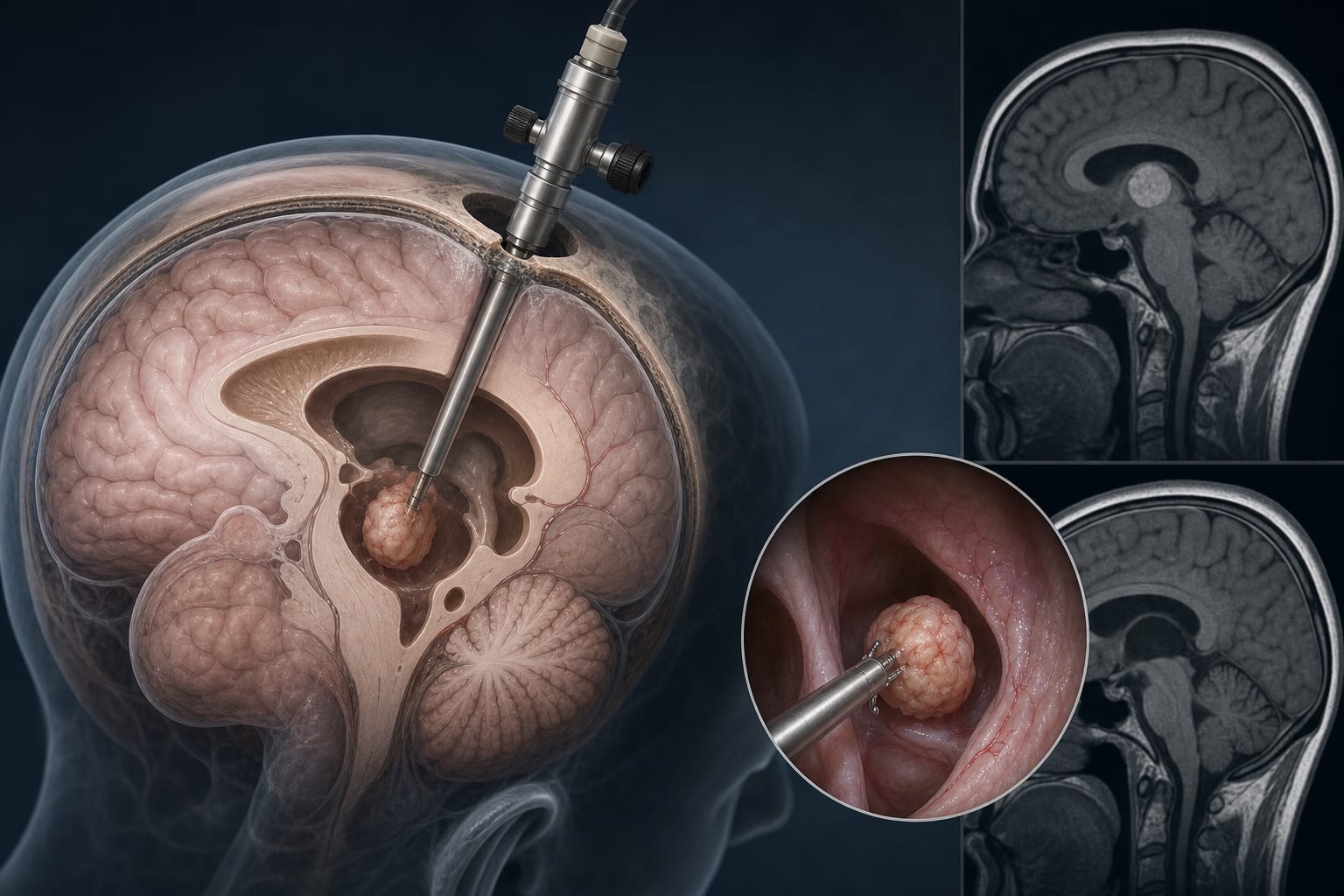
This study demonstrates that single burr-hole pure ventriculoscopic resection is a safe and effective method for the resection of small solid intraventricular lesions, achieving a gross-total resection rate of 92.1% with minimal complications. The approach allows for individualized trajectory planning and favorable long-term outcomes.
Background
Intraventricular lesions pose significant surgical challenges due to their deep location and proximity to critical brain structures, which can lead to serious neurological deficits if not managed carefully. Traditional surgical methods often involve extensive dissection and carry substantial risks. Minimally invasive techniques like ventriculoscopy offer a promising alternative, potentially reducing morbidity while achieving effective resection.
Data Highlights
Parameter
Value
Number of patients
38
Median lesion diameter
17 mm
Gross-total resection rate
92.1% (35/38)
Transient diplopia
5.3% (2 patients)
Intracranial infection
2.6% (1 patient)
Mean follow-up duration
60 months
Key Findings
92.1% gross-total resection rate achieved in the study cohort.
No permanent neurological deficits or mortality reported.
Transient diplopia occurred in 5.3% of patients.
One case of intracranial infection (2.6%) was noted.
No recurrence of lesions observed during a mean follow-up of 60 months.
Preoperative virtual planning showed good concordance with intraoperative findings.
Clinical Implications
The findings support the use of single burr-hole ventriculoscopy as a viable option for the resection of small solid intraventricular lesions, minimizing the risks associated with traditional surgical approaches. This technique may enhance surgical outcomes while preserving neurological function.
Conclusion
Single burr-hole pure ventriculoscopic resection is a promising minimally invasive technique for managing solid intraventricular lesions, offering high rates of complete resection and low morbidity.