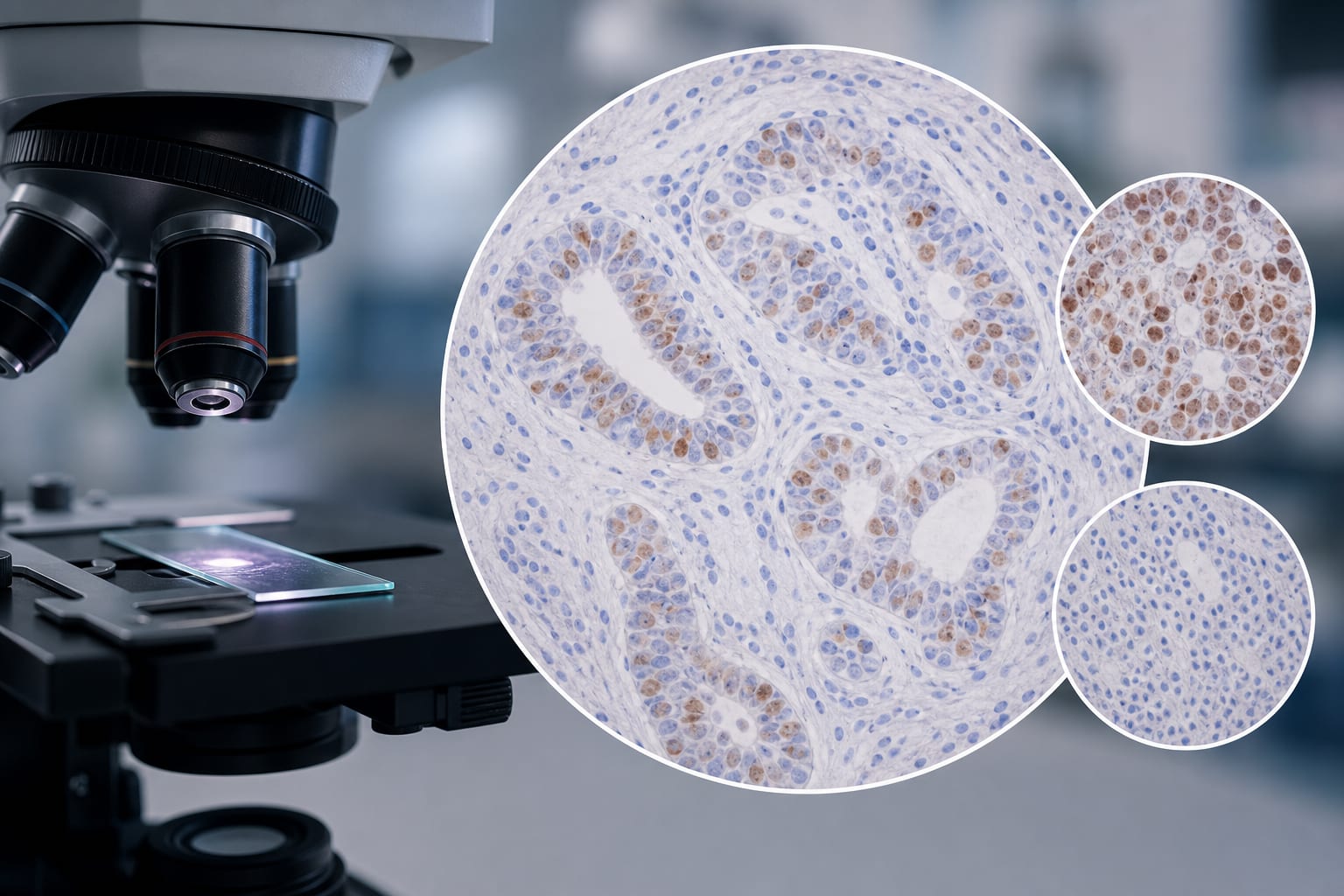
Editorial: Challenges and strategies in the management of ER/PgR Low-expression breast cancer: exploring fundamentals, clinical insights, and treatment approaches - Report - MDSpire
Advertisement
Editorial: Challenges and strategies in the management of ER/PgR Low-expression breast cancer: exploring fundamentals, clinical insights, and treatment approaches
Clinical Report: Navigating the Difficulties and Solutions in Treating Low ER/PgR Expression Breast Cancer
Overview
This editorial discusses the complexities in managing low ER/PgR expression breast cancer, highlighting the need for a nuanced understanding of treatment strategies. It emphasizes the importance of dual cutoffs for ER positivity and the potential benefits of chemotherapy and immunotherapy in this patient population.
Background
Breast cancer treatment is heavily influenced by hormone receptor status, yet low ER/PgR expression tumors present unique challenges. These tumors often fall between luminal and triple-negative classifications, complicating treatment decisions. Understanding the biological behavior and therapeutic responses of this subgroup is crucial for improving patient outcomes.
Data Highlights
No numerical data available in the source material.
Key Findings
Low ER/PgR expression tumors often resemble triple-negative breast cancer in their biological behavior.
Approximately 75–80% of ER-low tumors are non-luminal and basal-like, indicating a need for different treatment approaches.
CDK4/6 inhibitors may not provide significant benefits in ER-low tumors due to their distinct molecular characteristics.
Low PgR combined with high Ki67 is significantly associated with HER2 overexpression in pre-invasive stages.
Prospective trials are needed to evaluate the efficacy of immunotherapy in ER/PgR-low breast cancer.
Clinical Implications
Clinicians should consider the unique characteristics of ER/PgR-low tumors when developing treatment plans, including the potential for chemotherapy and immunotherapy. Standardized biomarker assessments are essential to guide therapy decisions and improve patient outcomes.
Conclusion
The management of low ER/PgR expression breast cancer requires a multidisciplinary approach and a deeper understanding of the tumor biology. Continued research and clinical trials are vital to establish effective treatment strategies for this challenging patient population.