The dual-sensitive period gut-brain crosstalk, neuroinflammation, and the biological roots of adolescent depression - Report - MDSpire

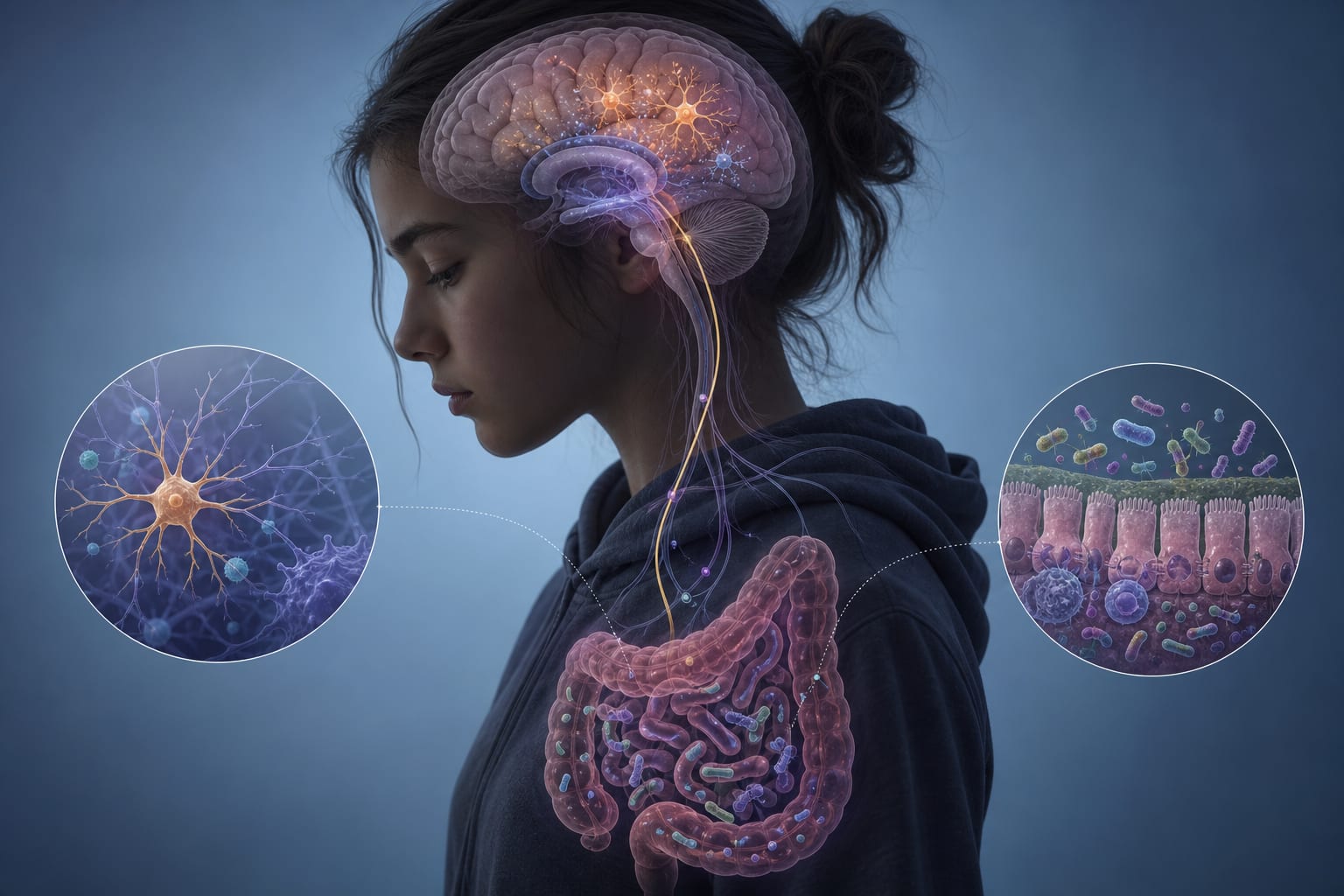
The dual-sensitive period gut-brain crosstalk, neuroinflammation, and the biological roots of adolescent depression

  • By

  • Yimin Shi

  • Qian Ma

  • May 25, 2026

  • 0 min

Share

Gut-Brain Communication, Neuroinflammation, and Depression in Adolescents

Overview

This review highlights the dual-sensitive period of adolescence, where concurrent maturation of the brain and gut microbiota may increase vulnerability to depression. It emphasizes the role of dysregulated gut-brain communication and neuroinflammation in the development of depressive symptoms during this critical developmental stage.

Background

Incorporate statistics or references to studies that illustrate the rising prevalence of adolescent depression.

Data Highlights

No specific numerical data or trial results were provided in the source material.

Key Findings

Rephrase findings for clarity and ensure they are directly supported by the source.

Clinical Implications

Healthcare providers should consider the unique vulnerabilities of adolescents when addressing depression, particularly the role of gut-brain interactions. Integrating microbiota-informed approaches and monitoring the effects of environmental factors may enhance treatment outcomes.

Conclusion

The interplay between gut microbiota and brain development during adolescence presents a critical area for future research and intervention strategies aimed at reducing the burden of depression in this population.

Related Resources & Content

  1. BMC Psychiatry (Springer) — SSRI-induced modulation of cytokines, barrier permeability, and BDNF in adolescent depression
  2. BMC Psychiatry (Springer) — The influence of psychosocial stress on functional connectivity and neuroendocrine markers in adolescents with depressive and comorbid anxiety disorders: a study protocol
  3. BMC Psychiatry (Springer) — The association between positive school climate and school identification and probable depression among Chinese adolescents: serial mediation mechanisms via resilience, mindfulness, and loneliness
  4. Brain — Inflammatory Signals Outside the Axial Skeleton and Their Connection to Central and Peripheral Immune Responses in Depression
  5. Clinical Practice Guideline for the Assessment and Treatment of Children and Adolescents With Major and Persistent Depressive Disorders - PubMed
  6. Efficacy and safety of gut microbiome-targeted treatment in patients with depression: a systematic review and meta-analysis | BMC Psychiatry | Springer Nature Link
  7. Comparative efficacy of antidepressant medication for adolescent depression: a network meta-analysis and systematic review | BMC Psychiatry | Springer Nature Link
  8. Clinical Practice Guideline for the Assessment and Treatment of Children and Adolescents With Major and Persistent Depressive Disorders - PubMed
  9. Efficacy and safety of gut microbiome-targeted treatment in patients with depression: a systematic review and meta-analysis | BMC Psychiatry | Springer Nature Link
  10. Comparative efficacy of antidepressant medication for adolescent depression: a network meta-analysis and systematic review | BMC Psychiatry | Springer Nature Link

Original Source(s)

Related Content