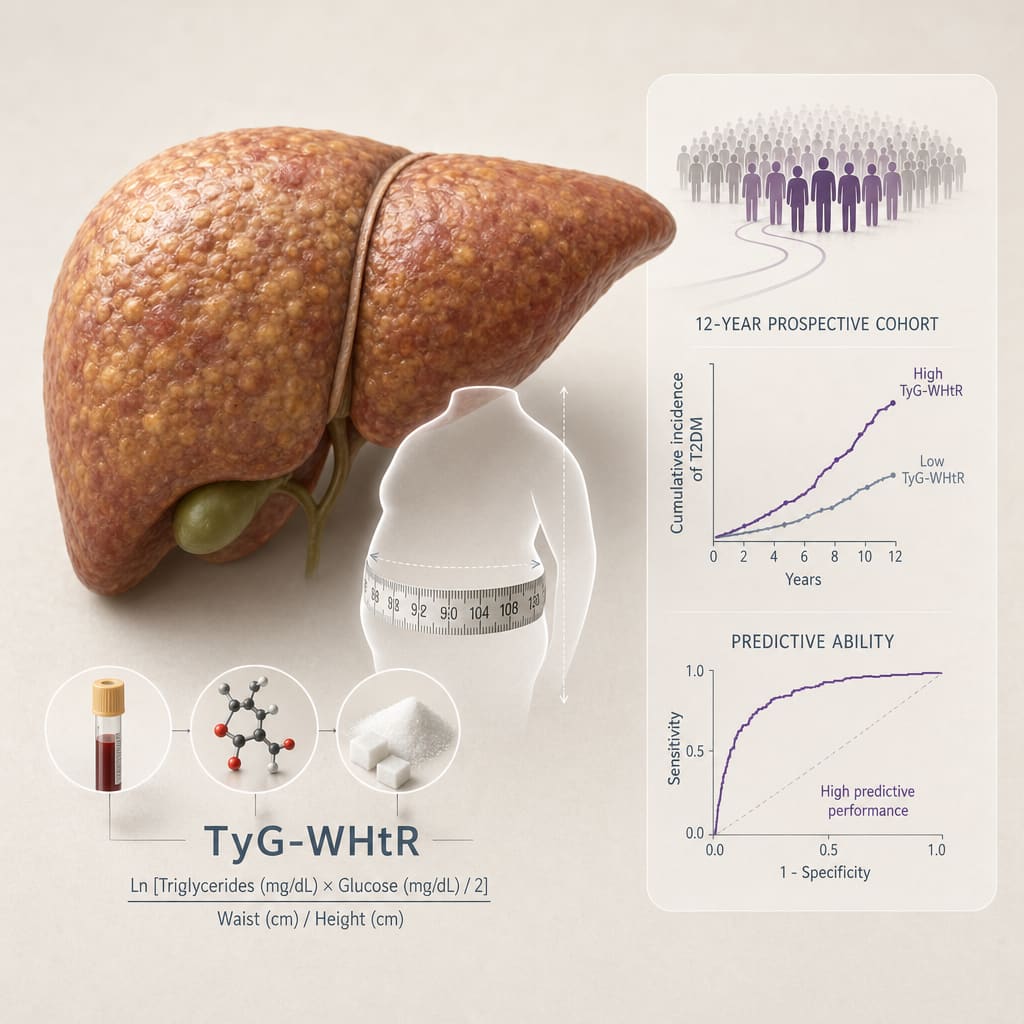
Clinical Report: The Role of TyG-WHtR in Forecasting New Cases of T2DM
Overview
This study evaluates the predictive capacity of metabolic composite indices for type 2 diabetes mellitus (T2DM) in patients with nonalcoholic fatty liver disease (NAFLD). The triglyceride–glucose–waist–height ratio (TyG-WHtR) emerged as a significant predictor, demonstrating moderate but consistent discriminatory capacity.
Background
The rising prevalence of nonalcoholic fatty liver disease (NAFLD) is a major public health concern, significantly increasing the risk of type 2 diabetes mellitus (T2DM). Understanding the predictive value of metabolic indices in this population is crucial for early intervention and management. This study focuses on the effectiveness of various metabolic indices in forecasting T2DM among NAFLD patients.
Data Highlights
Index
Hazard Ratio (HR)
95% Confidence Interval (CI)
TyG-WC
1.80
1.56–2.07
TyG-WHtR
1.77
1.54–2.04
TyG-BMI
1.70
1.47–1.96
VAI
1.29
1.15–1.42
Key Findings
All twelve metabolic indices showed a significant correlation with new-onset T2DM in NAFLD patients.
The TyG-WHtR index had the highest predictive accuracy (AUC = 0.680) among the indices evaluated.
Subgroup analyses revealed no significant interactions affecting the predictive capacity of the indices.
All associations between the indices and T2DM onset were linear, indicating consistent predictive relationships.
The TyG-WC index demonstrated a slightly higher hazard ratio compared to TyG-WHtR, but not statistically significant.
Clinical Implications
Healthcare professionals should consider the TyG-WHtR as a valuable tool for assessing T2DM risk in NAFLD patients. Regular monitoring of metabolic indices can facilitate early identification and management of patients at risk for developing T2DM.
Conclusion
The study confirms that metabolic composite indices, particularly TyG-WHtR, are effective in predicting T2DM in NAFLD patients. These findings underscore the importance of integrating metabolic assessments into routine clinical practice for this high-risk population.