Clinical Report: Predictive Framework for Early Neurological Decline in Acute Ischemic Stroke from Large Artery Atherosclerosis
Overview
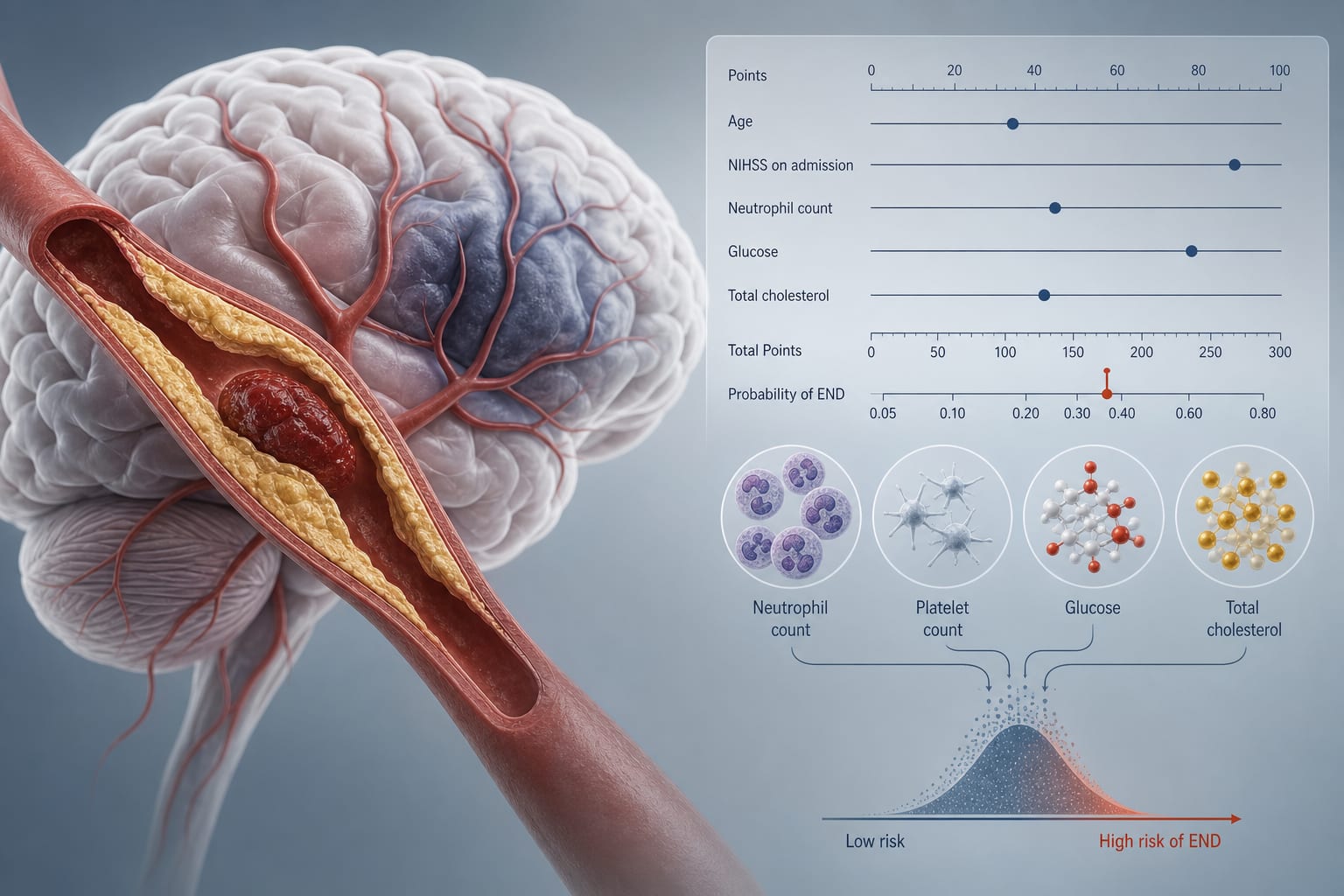
This study developed and validated a predictive model for early neurological deterioration (END) in acute ischemic stroke due to large artery atherosclerosis. The model identified six independent predictors: neutrophil count, platelet count, lymphocyte count, fasting plasma glucose, total cholesterol, and homocysteine, and demonstrated good performance in both training and validation cohorts.
Background
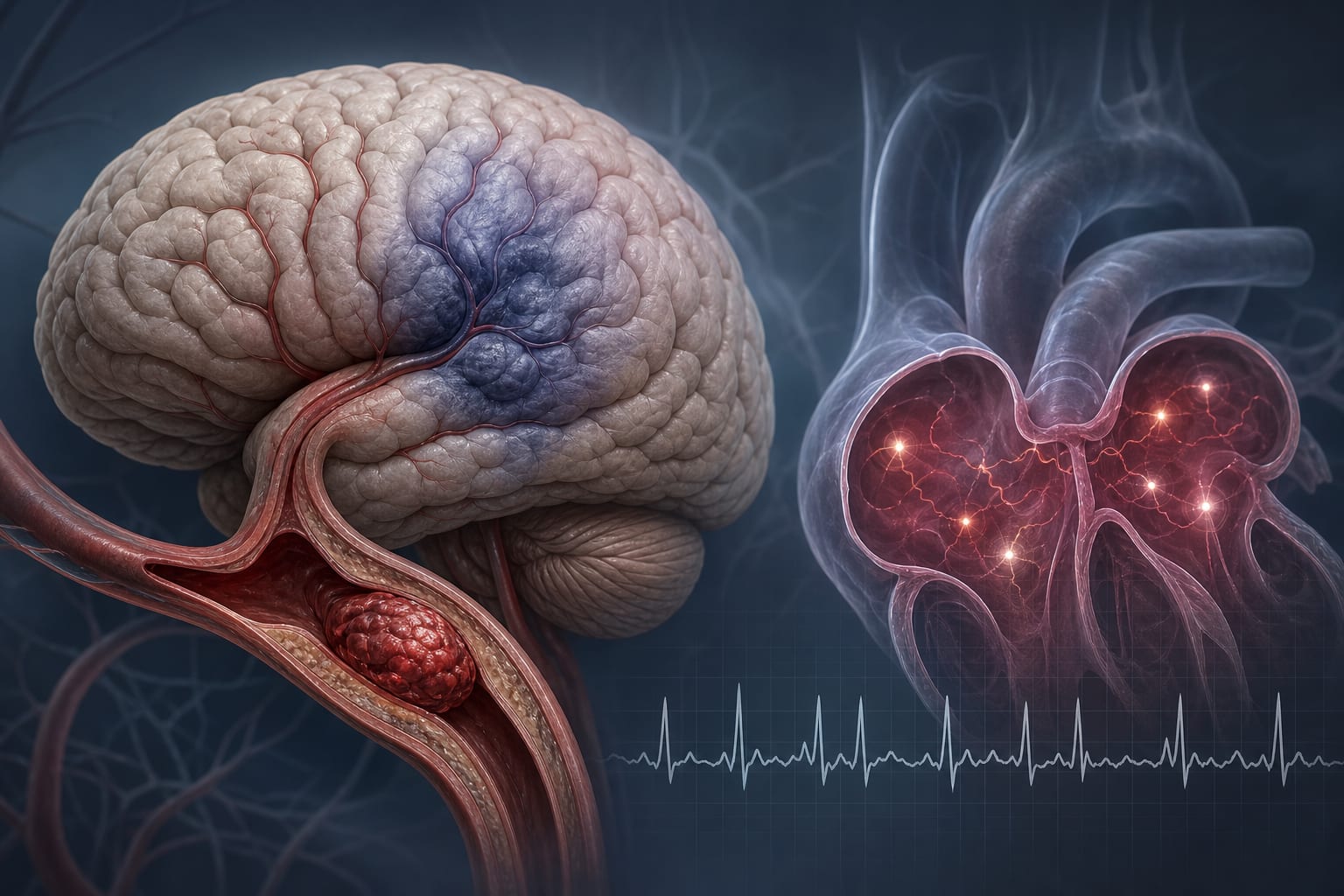
Acute ischemic stroke is a leading cause of disability and mortality, particularly in patients with large-artery atherosclerosis. Early neurological deterioration (END) is common in this population and is associated with poor outcomes.
Data Highlights
Cohort
END Rate
AUC
Sensitivity
Specificity
Accuracy
Training
27.1%
0.791
72.7%
78.5%
76.9%
Validation
26.9%
0.778
75.9%
70.9%
72.2%
Key Findings
END occurred in 27.1% of the training cohort and 26.9% of the internal validation cohort.
Seven variables were identified as potential predictors of END, with six being independent predictors (p < 0.05).
The model achieved an AUC of 0.791 in the training cohort.
Fasting plasma glucose showed a trend toward association (p = 0.084) and was retained in the model.
Calibration curves indicated acceptable fit with mean absolute errors of 0.023 and 0.048.
Clinical Implications
The predictive model can serve as an initial screening tool for identifying patients at risk of early neurological deterioration in acute ischemic stroke due to large artery atherosclerosis.
Conclusion
The developed predictive model may facilitate early identification of patients at risk for END.