Clinical Report: Assessment of Cardiovascular Risk Factors and Carotid Plaque Composition
Overview
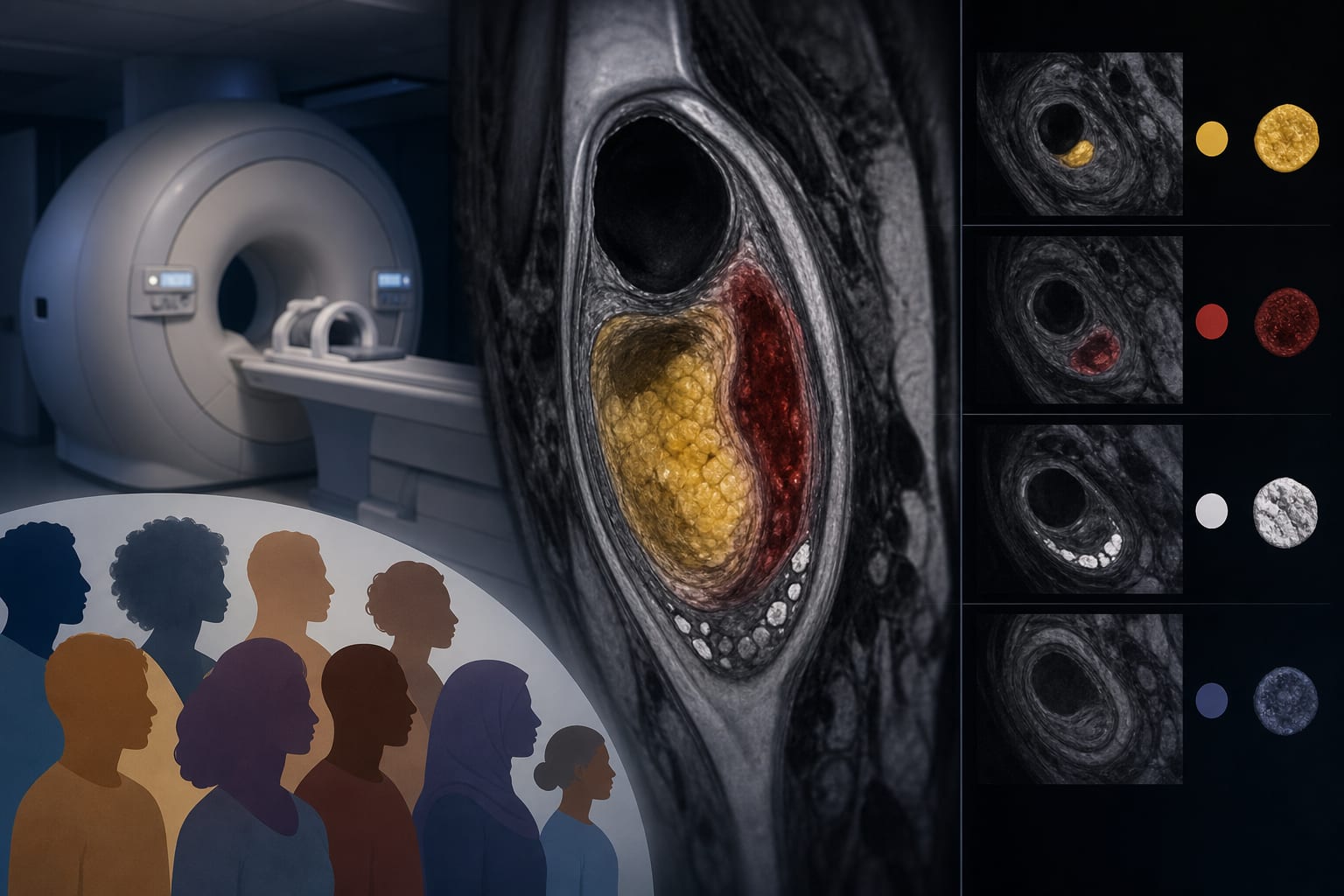
This study investigates the associations between cardiovascular risk factors and carotid plaque composition in a diverse midlife population. Utilizing 3 Tesla MRI, the research highlights the presence of lipid-rich necrotic core (LRNC) and intraplaque hemorrhage (IPH) as markers of plaque characteristics.
Background
Understanding carotid plaque composition is crucial as it may indicate plaque characteristics. Most existing studies focus on older populations or those with symptomatic carotid artery stenosis, leaving a gap in knowledge regarding midlife, multi-ethnic cohorts. This study examines the relationship between cardiovascular risk factors and plaque characteristics in a diverse population.
Data Highlights
The study included 356 participants with cardiovascular risk factors assessed between 2011 and 2015, and MRI performed between 2022 and 2023, with a median follow-up of 8.4 years.
Key Findings
The presence of LRNC and IPH were significant markers of plaque characteristics.
Calcification was associated with more stable plaques.
The study included a diverse cohort from Dutch, Moroccan, and South-Asian Surinamese backgrounds.
Participants were selected based on atherosclerosis detected via carotid ultrasonography.
The MRI protocol utilized advanced techniques for accurate plaque characterization.
Clinical Implications
The findings suggest that assessing plaque composition using advanced MRI techniques can provide valuable insights into cardiovascular risk in midlife populations. This knowledge may inform earlier preventive strategies for individuals at risk of ischemic events.
Conclusion
This study contributes to the understanding of carotid plaque composition in a diverse midlife population.
by Esther M. C. Vriend, Thomas A. Bouwmeester, Daniel Bos, Didier Collard, Eric P. Moll van Charante, Henrike Galenkamp, Renske Merton, Aart J. Nederveen, Pim van Ooij, Oscar H. Franco, Bert-Jan H. van den Born