Modeling of Phthalates and Their Metabolites Using PBK Approaches
Overview
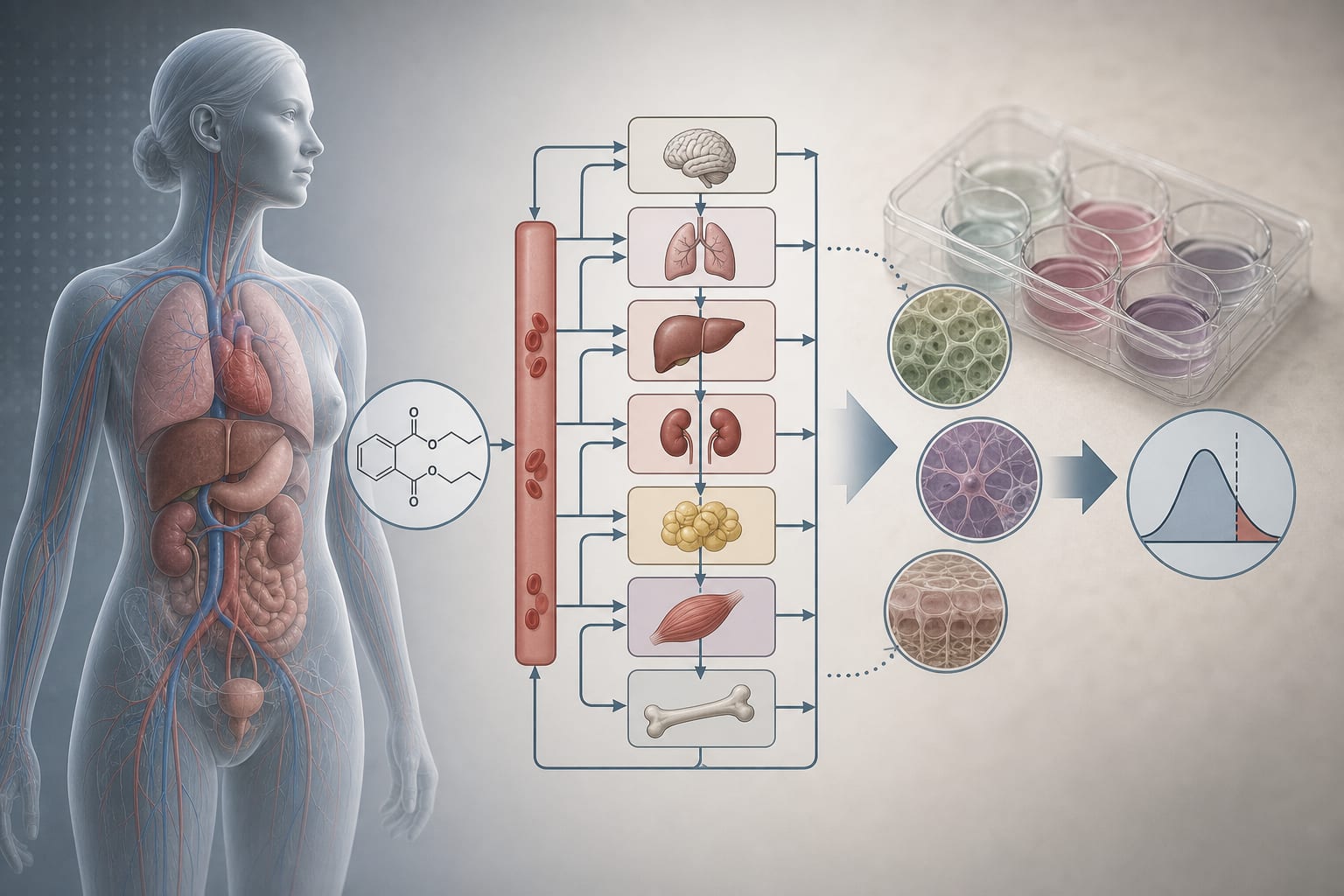
This study explores the application of physiologically based kinetic (PBK) modeling to support next generation risk assessment (NGRA) for phthalate esters, specifically dibutyl phthalate (DBP) and di(2-ethylhexyl) phthalate (DEHP), along with their metabolites.
Background
Phthalate esters are widely used plasticizers that can have significant biological effects due to their rapid metabolism into active monoester forms. Traditional risk assessments often overlook the metabolites, which can reach concentrations associated with biological effects. The integration of PBK modeling into NGRA frameworks represents a shift towards more accurate risk assessments.
Data Highlights
No numerical data or trial data provided in the source material.
Key Findings
PBK models for DBP and DEHP were developed without relying on human in vivo data.
Simulations indicated that plasma concentrations of metabolites should be compared with in vitro bioactivity data.
DBP and its metabolite MBP showed similar potencies for anti-androgenic activities.
MEHP exhibited anti-estrogenic and anti-androgenic effects with specific AC50 values.
The study provides a proof-of-principle for extending NGRA frameworks to include bioactive metabolites.
Clinical Implications
Understanding the bioactivity of metabolites can lead to more comprehensive safety evaluations of chemical exposures.
Conclusion
The application of PBK modeling in this study supports the inclusion of metabolites in risk assessment methodologies.