The trinity of T cell engagement: navigating the molecular and clinical landscape of CAR-T, TILs, and TCEs in the war against cancer - Report - MDSpire
Advertisement
The trinity of T cell engagement: navigating the molecular and clinical landscape of CAR-T, TILs, and TCEs in the war against cancer
Clinical Report: Exploring the Triad of T Cell Activation in Cancer
Overview
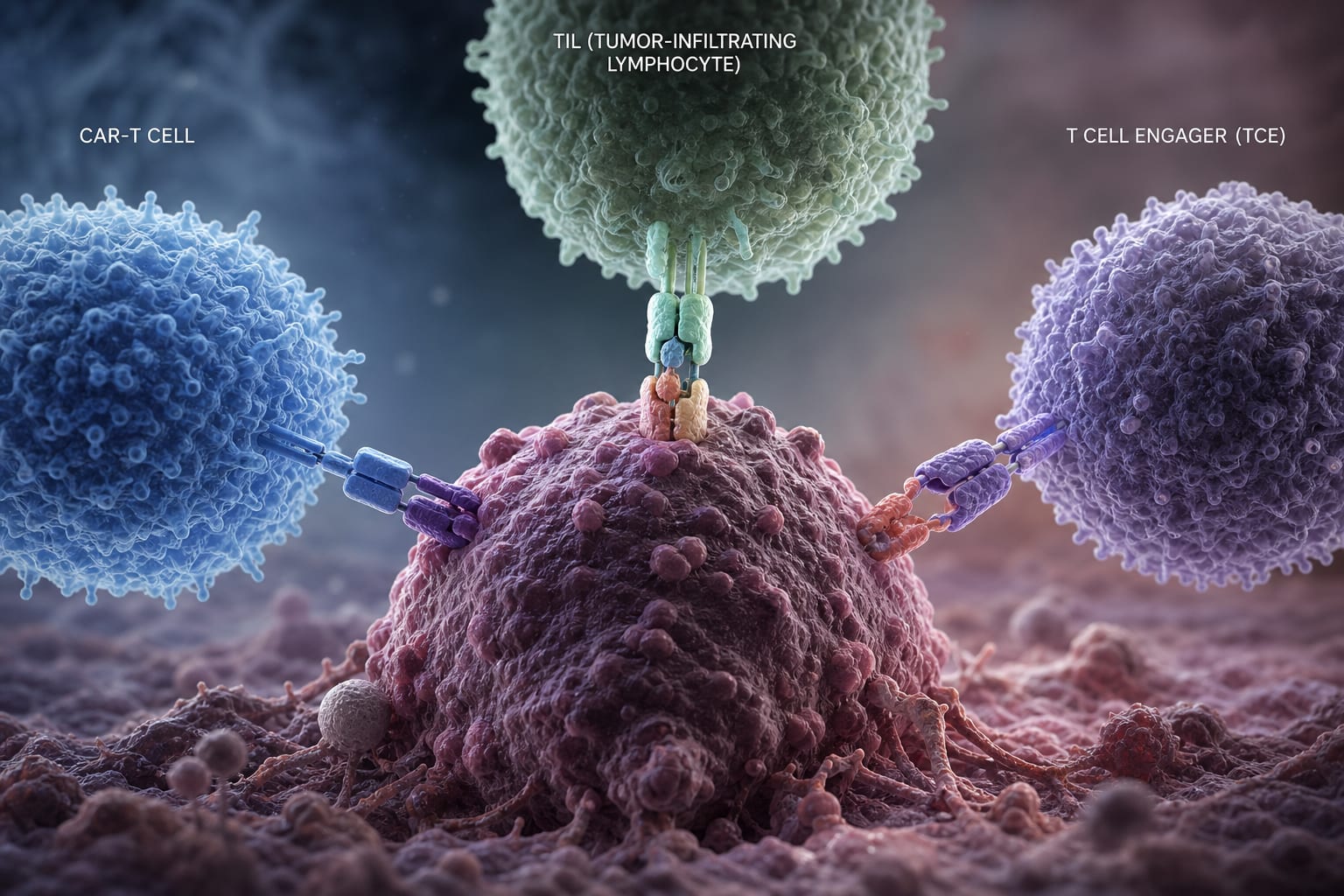
This report examines the three primary T cell-driven therapies: CAR-T, TIL, and TCEs, highlighting their mechanisms, successes, and challenges in treating various cancers. It emphasizes the need for combinatorial strategies to enhance efficacy against solid tumors.
Background
The shift from traditional cancer therapies to immunotherapy represents a significant advancement in oncology, leveraging the immune system's ability to combat malignancies. Understanding the mechanisms of T cell activation is crucial for optimizing these therapies, particularly in the context of solid tumors, which present unique challenges. The exploration of CAR-T, TIL, and TCEs provides insights into the evolving landscape of cancer treatment.
Data Highlights
No numerical data provided in the source material.
Key Findings
CAR-T therapy has shown remarkable success in hematologic malignancies but faces challenges in solid tumors due to the hostile tumor microenvironment.
TIL therapy utilizes naturally selected T cells from tumors, offering a polyclonal approach but is limited by complex manufacturing and variable immunogenicity.
TCEs serve as pharmacological bridges, redirecting T cells to cancer cells but struggle with persistence and potential off-target effects.
Resistance mechanisms, including antigen escape and T cell exhaustion, significantly impact the effectiveness of these therapies.
Future strategies should focus on combinatorial approaches that integrate genetic engineering and TME-modulating agents to enhance therapeutic outcomes.
Clinical Implications
Clinicians should consider the unique mechanisms and limitations of CAR-T, TIL, and TCE therapies when developing treatment plans for patients with cancer. A rational combination of these modalities, alongside supportive therapies, may improve patient outcomes, particularly in the context of solid tumors.
Conclusion
The integration of CAR-T, TIL, and TCE therapies represents a promising frontier in cancer treatment. Continued research and innovation are essential to overcoming the barriers posed by solid tumors and enhancing the efficacy of these immunotherapeutic strategies.