Clinical Report: Acute Cytomegalovirus Infection Leading to Severe Mixed Autoimmune Hemolytic Anemia
Overview
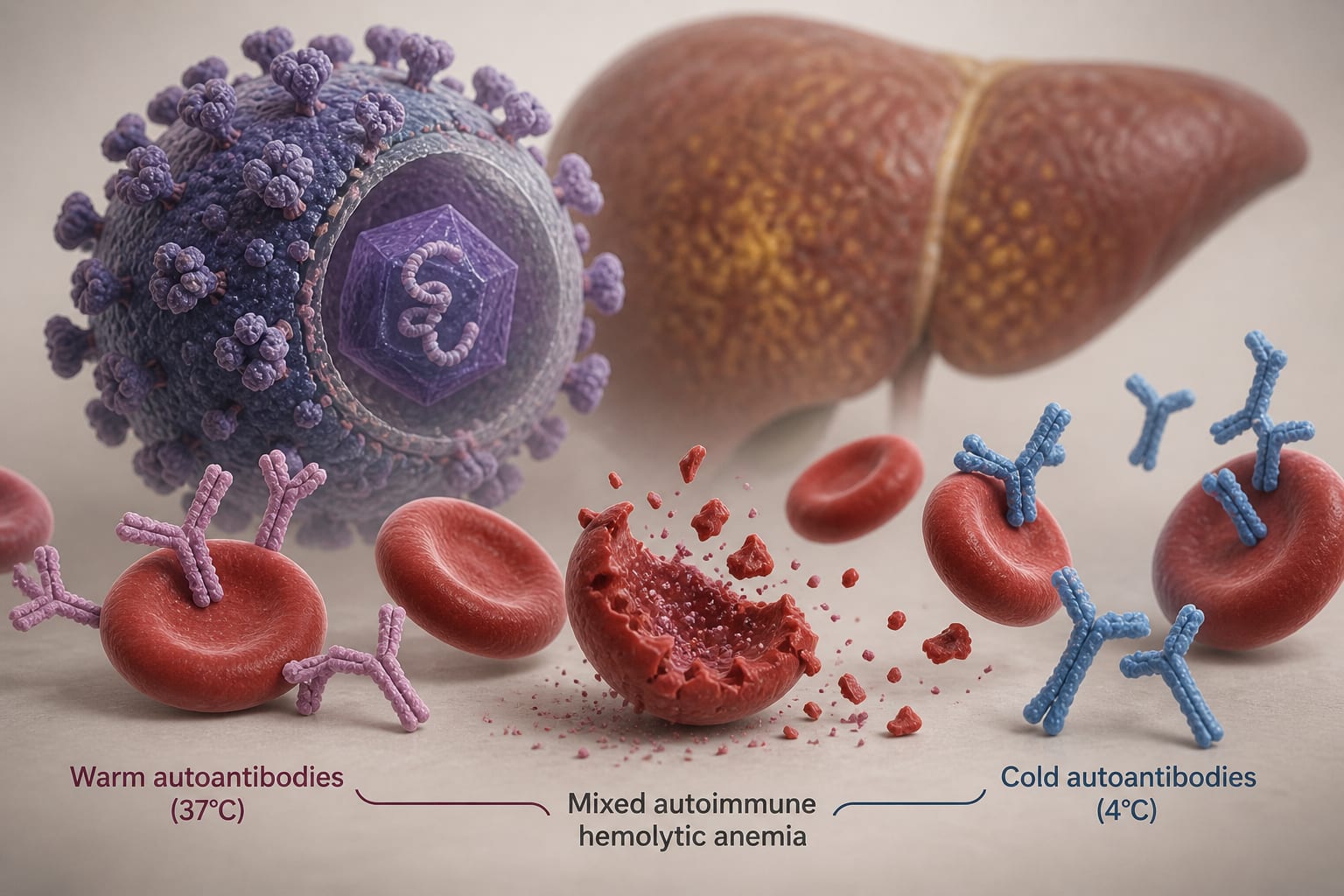
This case study presents a 59-year-old immunocompetent man who developed severe mixed autoimmune hemolytic anemia (AIHA) associated with acute cytomegalovirus (CMV) infection. Comprehensive immunohematologic assessment confirmed the diagnosis, revealing both warm and cold autoantibodies, and combination therapy, including antiviral and immunomodulatory treatments, effectively managed the condition.
Background
Cytomegalovirus (CMV) infection can lead to various clinical manifestations, including autoimmune hemolytic anemia (AIHA), which is rare in immunocompetent individuals. Mixed AIHA, characterized by the presence of both warm and cold autoantibodies, complicates diagnosis and management. Understanding the serologic patterns and treatment approaches is crucial for effective patient care, particularly given the infrequency of this condition in immunocompetent hosts.
Data Highlights
The patient presented with severe hemolytic anemia, with a hemoglobin level of 40 g/L and significant laboratory evidence of acute hemolysis, including erythrocyte-bound IgG, IgA, IgM, and C3d. An IgM cold agglutinin was detected at a titer of 1:128, indicating the presence of both warm and cold autoantibodies.
Key Findings
Severe mixed AIHA can occur in immunocompetent adults following CMV infection.
Diagnosis of mixed AIHA requires comprehensive immunohematologic testing beyond routine direct antiglobulin test (DAT).
Both warm-reactive IgG and cold-reactive IgM autoantibodies were identified in the patient.
Combination therapy, including antiviral and immunomodulatory treatments, effectively managed the patient's hemolysis.
Accurate subtyping of AIHA is essential for appropriate treatment and management.
Clinical Implications
Comprehensive immunohematologic testing is necessary for accurate diagnosis and effective management of mixed AIHA in patients with severe hemolytic anemia and recent CMV infection.
Conclusion
This case highlights the recognition of mixed AIHA in the context of CMV infection and the importance of thorough diagnostic evaluation and targeted treatment strategies.