Long-Term Anatomical Durability and Clinical Outcomes of Concomitant Laparoscopic Sleeve Gastrectomy and Hiatal Hernia Repair: Up to 10-Year Multicenter Analysis - Report - MDSpire
Conexiant’s news site is now MDSpire News. Learn more
Advertisement
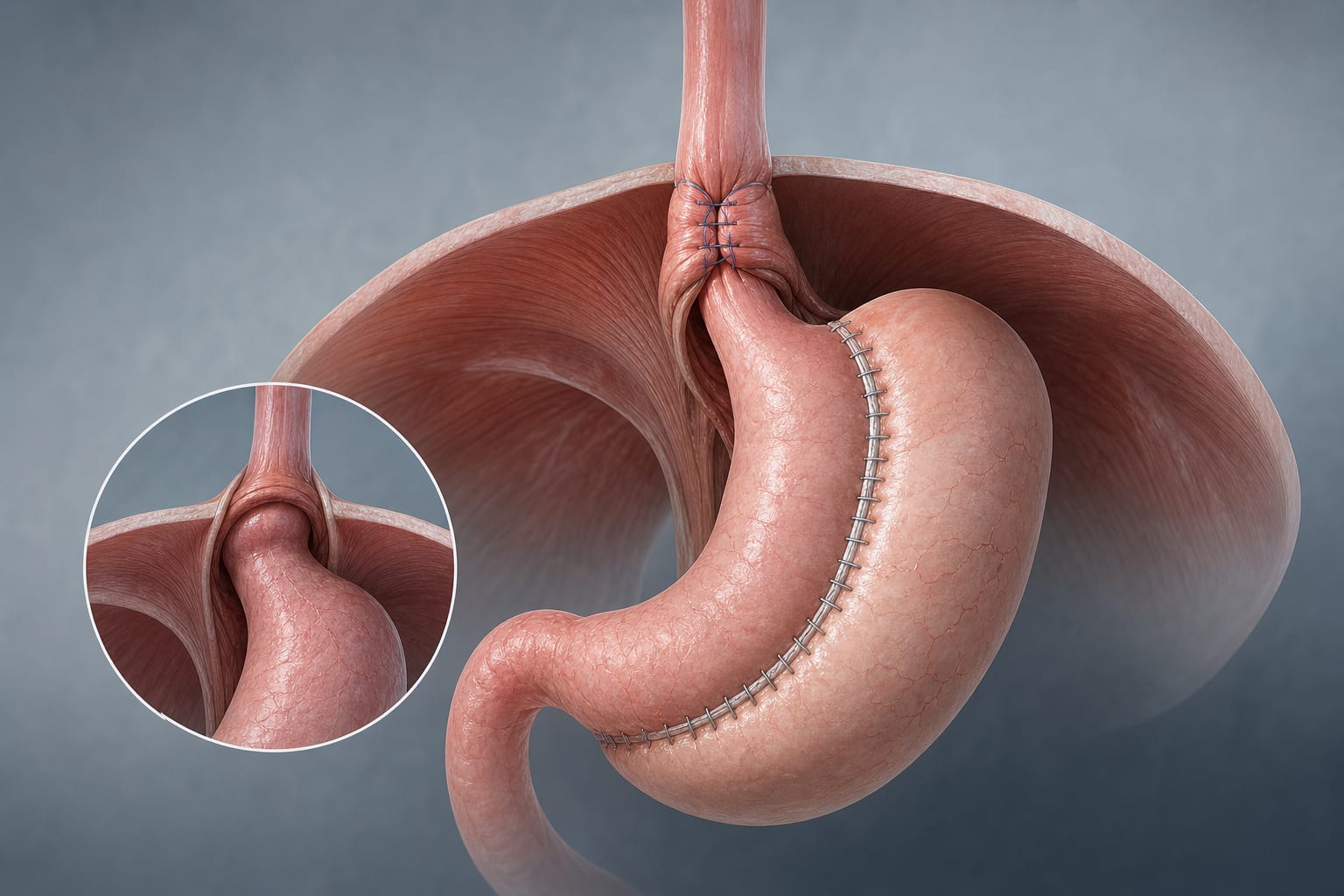
Ten-Year Multicenter Study on the Long-Term Anatomical Integrity and Clinical Results of Combined Laparoscopic Sleeve Gastrectomy and Hiatal Hernia Repair
Clinical Report: Long-Term Outcomes of Sleeve Gastrectomy with Hiatal Hernia Repair
Overview
This study evaluates the long-term anatomical integrity and clinical outcomes of patients undergoing laparoscopic sleeve gastrectomy with concomitant hiatal hernia repair. Findings indicate a significant prevalence of gastroesophageal reflux disease (GERD) postoperatively.
Background
Hiatal hernia is prevalent among patients with obesity, complicating the management of bariatric surgery. Sleeve gastrectomy is the most common bariatric procedure, yet its impact on GERD remains debated. Understanding the long-term effects of concurrent hiatal hernia repair during sleeve gastrectomy is crucial for optimizing patient outcomes.
Data Highlights
No numerical data or trial data provided in the source material.
Key Findings
Hiatal hernia affects 37%-39.8% of patients undergoing bariatric surgery.
Postoperative GERD rates after sleeve gastrectomy vary from 24% to 59%.
Concomitant hiatal hernia repair may restore anatomical integrity and reduce reflux risk.
Long-term data on the efficacy of hiatal hernia repair during sleeve gastrectomy is limited.
Postoperative GERD may be associated with long-term clinical failure and reintervention.
Clinical Implications
Surgeons should consider the potential impact of hiatal hernia repair on GERD outcomes during sleeve gastrectomy.
Conclusion
The study highlights the need for long-term data on the outcomes of sleeve gastrectomy with hiatal hernia repair, particularly concerning GERD and reintervention rates.
by Francesco Maria Carrano, Beatrice De Luca, Francesco Angrisani, Giulia Griguolo, Fabio Cesare Campanile, Nicola Perrotta, Cristian Eugeniu Boru, Luigi Angrisani, Gianfranco Silecchia