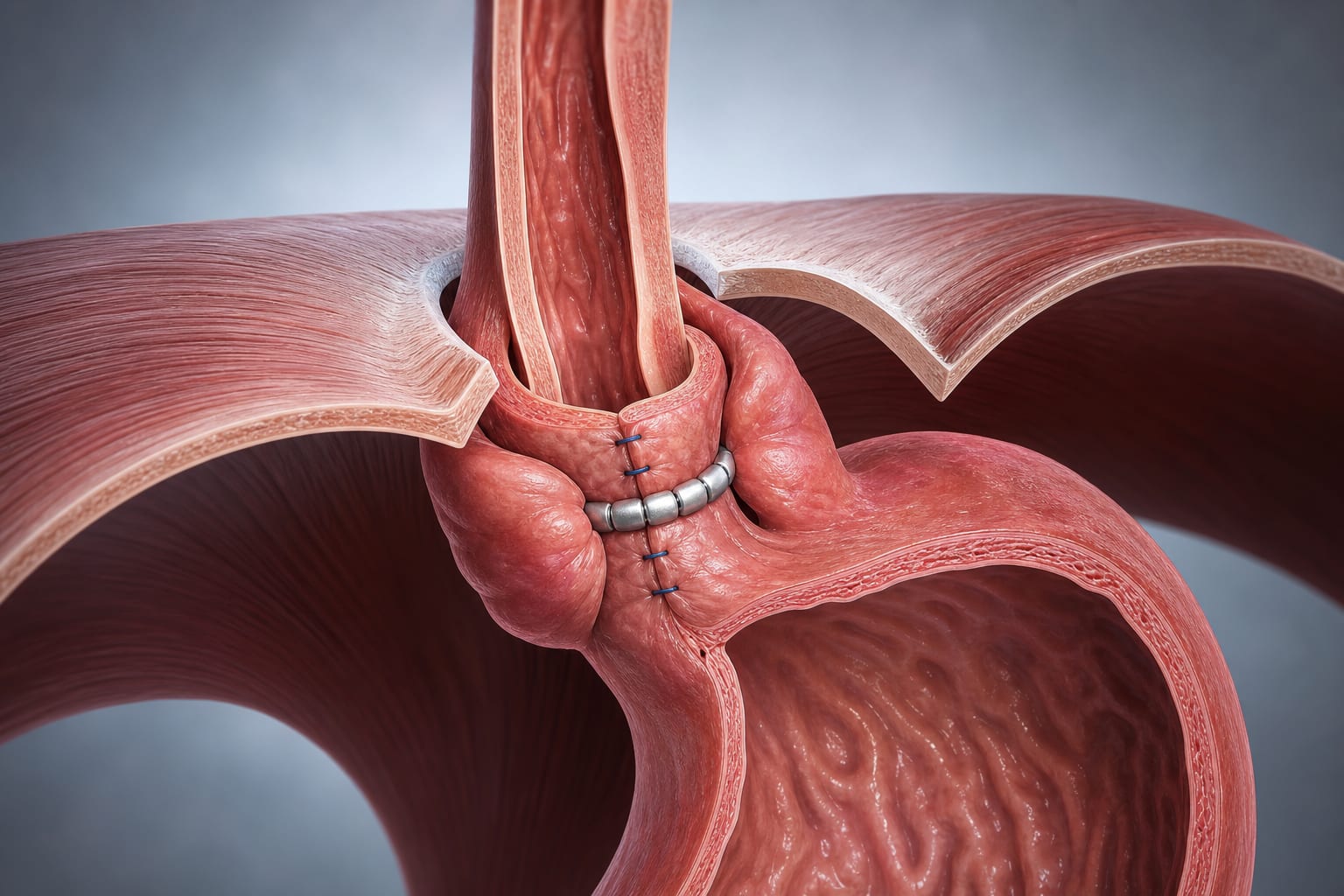
The pathogenesis and surgical treatment progress of gastroesophageal reflux disease
-
By
-
Longmiao Gu
-
Fan Wu
-
Jie Cheng
-
Xiaojun Shen
-
May 25, 2026
Clinical Report: Advancements in Understanding the Pathogenesis and Surgical Interventions for Gastroesophageal Reflux Disease
Overview
Gastroesophageal reflux disease (GERD) is increasingly prevalent worldwide, particularly in Western countries. Surgical interventions, including traditional fundoplication and novel minimally invasive techniques, are essential for managing severe cases or complications.
Background
GERD is a significant gastrointestinal disorder characterized by the reflux of gastric contents into the esophagus, leading to various symptoms that impact quality of life. The rising prevalence of GERD, influenced by lifestyle and dietary changes, necessitates a comprehensive understanding of its pathogenesis and treatment options. Surgical intervention is crucial for patients with refractory symptoms or complications, highlighting the need for advancements in surgical techniques.
Data Highlights
No numerical data provided in the source material.
Key Findings
- GERD prevalence is approximately 14% globally, with significant regional variations.
- Pathogenesis involves dysfunction of the lower esophageal sphincter and anatomical abnormalities such as hiatal hernia.
- Traditional fundoplication is effective but associated with complications like dysphagia and gas-bloat syndrome.
- Minimally invasive techniques, including robot-assisted surgery and magnetic sphincter augmentation, are gaining traction.
- The concept of 'asymptomatic elective repair' in hiatal hernia patients requires further exploration.
Clinical Implications
Understanding the multifactorial pathogenesis of GERD is essential for tailoring surgical interventions. The advancements in minimally invasive techniques may offer improved outcomes and reduced complications for patients requiring surgical management.
Conclusion
The ongoing evolution in the understanding and treatment of GERD underscores the importance of individualized surgical approaches. Continued research is necessary to optimize management strategies for this prevalent condition.
Related Resources & Content
- The New Gastroenterologist, 2025 -- Comprehensive Approaches to Managing Gastroesophageal Reflux Disease: Medical, Endoscopic, and Surgical Strategies
- Advancements and Current Insights on Anti-Reflux Esophagogastrostomy Following Proximal Gastrectomy: A Review of the Literature, 2025
- Surgical Interventions for Persistent Gastroesophageal Reflux Disease in Individuals with Systemic Sclerosis: A Comprehensive Review, 2021
- Long-term Clinical Results of RefluxStop Surgery for Acid Reflux Management: A Prospective Multicenter Study on Safety and Efficacy Over Five Years, 2025
- American Foregut Society Cooperative White Paper on Mechanisms of Pathologic Reflux and Antireflux Surgery, 2025
- American Society for Gastrointestinal Endoscopy guideline on the diagnosis and management of GERD: summary and recommendations, 2024
- American Foregut Society Cooperative White Paper on Mechanisms of Pathologic Reflux and Antireflux Surgery - Ninh T. Nguyen, Barham Abu Dayyeh, Kenneth Chang, John Lipham, Reginald Bell, Francis Paul Buckley, Christy M. Dunst, Ravinder K. Mittal, Nirav Thosani, Brant K. Oelschlager, Marcelo W. Hinojosa, Vitor Brunaldi, Rena Yadlapati, Peter J. Kahrilas, 2025
- American Society for Gastrointestinal Endoscopy guideline on the diagnosis and management of GERD: summary and recommendations - ScienceDirect
- Fundoplication significantly improves objective and subjective reflux outcomes—a meta-analysis | Surgical Endoscopy | Springer Nature Link
This content is an AI-generated, fully rewritten summary based on a published scholarly article. It does not reproduce the original text and is not a substitute for the original publication. Readers are encouraged to consult the source for full context, data, and methodology.