Clinical Report: Convergence of Physicochemical Properties in CDR3-VH Antibody Repertoires
Overview
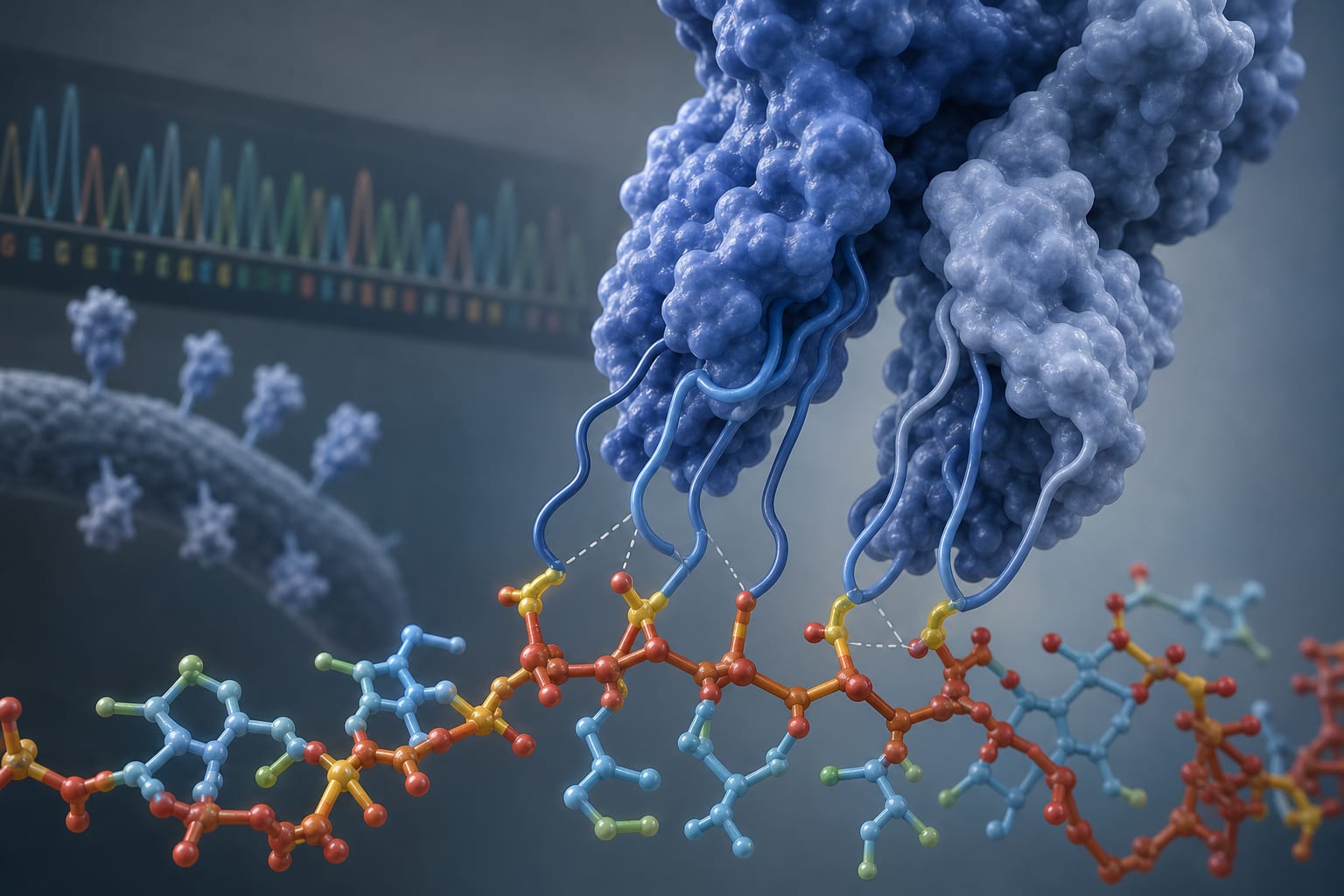
This study investigates the development of recombinant antibody binders targeting phosphorothioate-modified antisense oligonucleotides (PS-ASOs) using a next-generation sequencing-guided phage display strategy. Key findings include a reduction in repertoire diversity and the emergence of shared CDR3 physicochemical signatures associated with PS-ASO recognition.
Background
Phosphorothioate-modified antisense oligonucleotides (PS-ASOs) are increasingly used in therapeutic applications due to their enhanced stability and efficacy. However, generating high-affinity antibodies that can effectively recognize these modified oligonucleotides presents significant challenges due to their unique physicochemical properties. Understanding the antibody repertoire's response to PS-ASOs is crucial for advancing therapeutic antibody development.
Data Highlights
Deep sequencing revealed a marked reduction in repertoire diversity from Round 1 to Round 2, indicating clonal dominance. A shared enriched set of 113 CDR3-VH clonotypes was identified with distinct physicochemical profiles.
Key Findings
Reduction in repertoire diversity from Round 1 to Round 2 of selection.
Identification of 113 CDR3-VH clonotypes with increased positive charge and reduced hydrophobicity.
Functional assays showed that the scFv clone 12F2 preferentially binds to PS-ASOs.
12F2 produced detectable intracellular signals in ASO-treated cells.
Physicochemical signatures suggest convergent binding solutions for PS-ASO recognition.
Clinical Implications
The findings provide a framework for identifying antibody candidates against challenging polyanionic targets like PS-ASOs. Understanding the physicochemical properties associated with successful binding may inform future antibody development strategies.
Conclusion
This study highlights the importance of physicochemical characteristics in the antibody repertoire's adaptation to recognize phosphorothioate-modified oligonucleotides, paving the way for improved therapeutic antibody design.
by Riccardo Galasso, Francesco Coppolino, Alessia Berbiglia, Grete Francesca Privitera, Agata Famà, Giuseppe Valerio De Gaetano, Germana Lentini, Concetta Beninati