Clinical Report: Evaluating the Impact of Various Structured Exercise Regimens
Overview
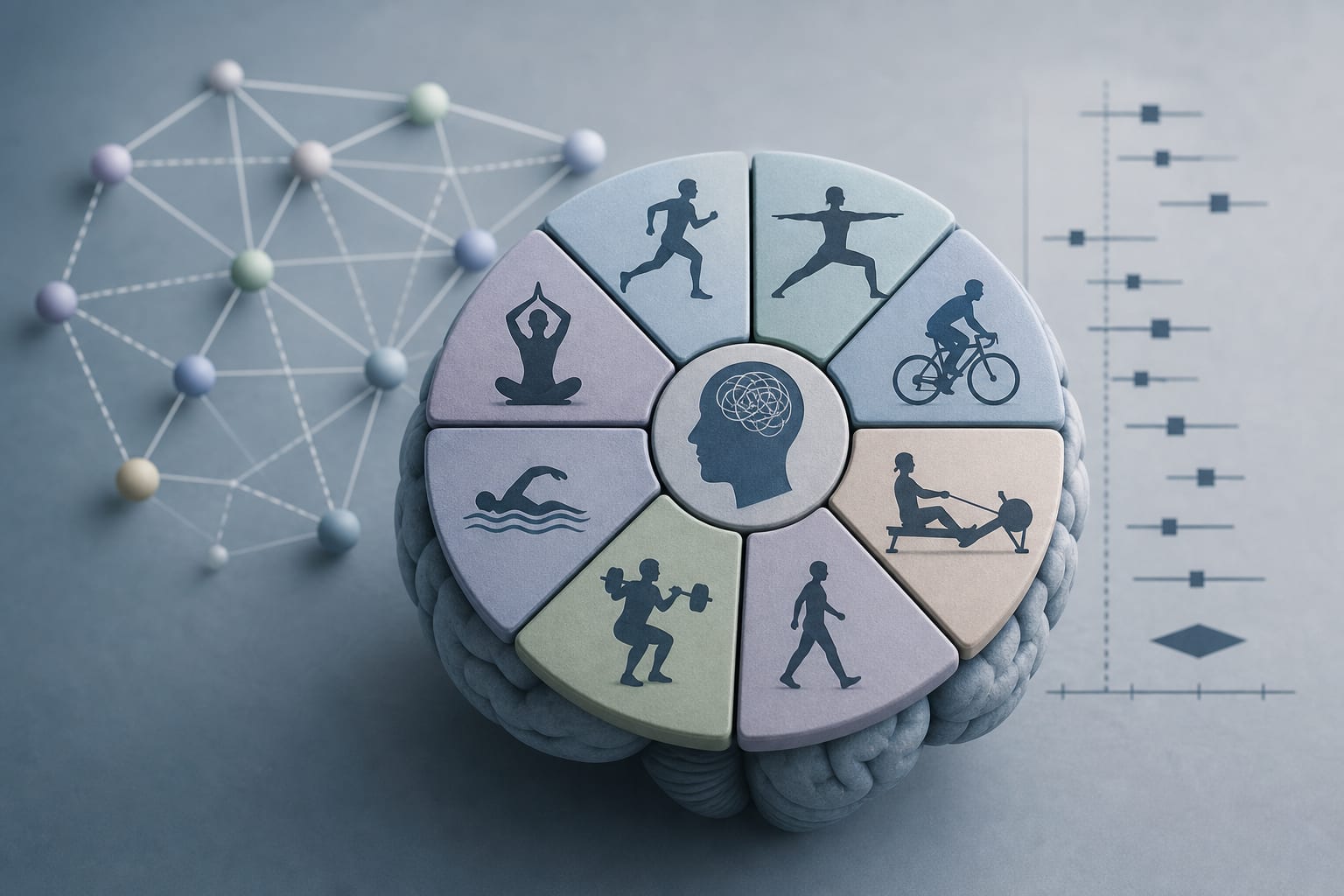
This network meta-analysis compares the effects of eight structured exercise modalities on depressive and anxiety symptoms in adults, based on 22 studies involving 1,830 participants. Findings indicate that all modalities are effective, with yoga, moderate-intensity continuous training, and high-intensity interval training showing significant potential for symptom alleviation.
Background
Depression and anxiety are prevalent mental health disorders affecting approximately 4.4% and 3.6% of the global population, respectively, significantly impacting cognitive function and social adaptation. Traditional treatments often face limitations, making exercise an appealing alternative due to its safety and cost-effectiveness. Understanding the comparative effectiveness of various exercise modalities can guide clinicians in developing tailored interventions for patients.
Data Highlights
Exercise Modality
Depression Improvement (SUCRA)
Anxiety Improvement (SUCRA)
Yoga
68.8%
72.2%
Moderate-Intensity Continuous Training
56.7%
56.2%
High-Intensity Interval Training
54.6%
57.4%
Tai Chi
Data Needed
Data Needed
Pilates
Data Needed
Data Needed
Resistance Training
Data Needed
Data Needed
Aerobic Exercise
Data Needed
Data Needed
Combined Exercise
Data Needed
Data Needed
Key Findings
All exercise modalities significantly improved depressive symptoms (SMD = -0.67) and anxiety symptoms (SMD = -0.77) compared to control groups, based on 22 studies.
Yoga ranked highest for both depression and anxiety symptom improvement.
No statistically significant differences were found among yoga, moderate-intensity continuous training, and high-intensity interval training.
Subgroup analyses indicated larger effect sizes in participants aged 60 years and older.
Potential publication bias was noted, but the overall conclusions remained robust.
Clinical Implications
Clinicians should consider incorporating structured exercise regimens into treatment plans for patients with depression and anxiety. Individualized exercise prescriptions should be based on patient preferences, symptom profiles, safety considerations, and the specific exercise modalities that align with the patient's needs.
Conclusion
The study highlights the effectiveness of various exercise modalities in alleviating symptoms of depression and anxiety. Future clinical practice should prioritize personalized exercise interventions to optimize mental health outcomes. Further validation of Pilates is needed due to limited data.