Immunomodulation by platelet-derived DKK1: potential for controlling disease and pathology in leishmaniasis and implications for other infectious diseases - Report - MDSpire
Advertisement
Immunomodulation by platelet-derived DKK1: potential for controlling disease and pathology in leishmaniasis and implications for other infectious diseases
Clinical Report: Platelet-Derived DKK1 as an Immunomodulator in Leishmaniasis
Overview
Revise to specify the immune responses influenced by DKK1 and its role in parasite survival.
Background
Leishmaniasis, caused by Leishmania major, represents a significant global health challenge, particularly in endemic regions. Understanding the immune mechanisms involved in this chronic inflammatory disease is crucial for developing effective treatments. The role of platelets and their derived factors, such as DKK1, in immune modulation during infections is an emerging area of research.
Data Highlights
No numerical data available in the source material.
Key Findings
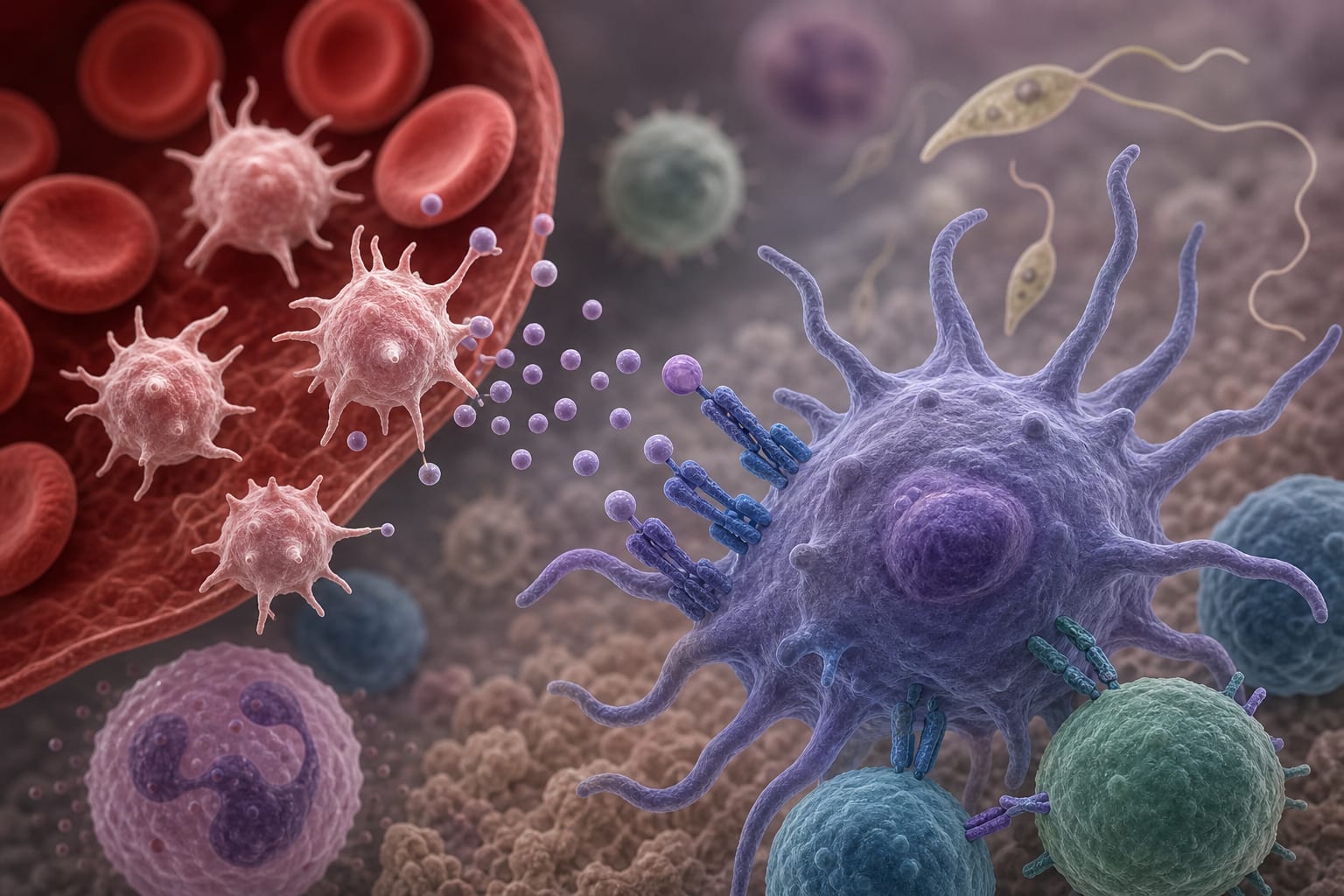
Platelet activation and DKK1 release are promoted by Leishmania major infection in BALB/c mice.
Enhanced leukocyte-platelet aggregation and recruitment of immune cells occur at inflammatory sites due to DKK1 signaling.
Protective Th1-associated immune responses may be diminished in the presence of sustained DKK1 signaling.
Platelet-derived DKK1 may have broader implications in the immunopathology of other infectious diseases.
Clinical Implications
The findings suggest that targeting platelet-derived DKK1 could be a potential strategy for modulating immune responses in leishmaniasis and possibly other infectious diseases. Understanding the role of DKK1 in immune regulation may inform future therapeutic approaches.
Conclusion
Platelet-derived DKK1 plays a significant role in shaping immune responses during Leishmania infection, highlighting its potential as an immunomodulatory target. Further research is needed to explore its translational relevance across various infectious diseases.