Adjuvant chemotherapy combined with pembrolizumab immunotherapy for primary triple-negative neuroendocrine carcinoma of the breast: a case report and literature review - Report - MDSpire
Advertisement
Adjuvant chemotherapy combined with pembrolizumab immunotherapy for primary triple-negative neuroendocrine carcinoma of the breast: a case report and literature review
Combination of Adjuvant Chemotherapy and Pembrolizumab for Primary Triple-Negative Neuroendocrine Breast Carcinoma
Overview
This report presents a case of a 71-year-old woman with primary triple-negative neuroendocrine breast carcinoma (NEBC) treated with adjuvant chemotherapy and pembrolizumab. The patient achieved a disease-free status at 12 months post-treatment, suggesting potential benefits of this regimen in a rare subtype of breast cancer.
Background
Neuroendocrine breast cancer (NEBC) is a rare and aggressive form of breast cancer, accounting for less than 1% of all breast tumors. The lack of standardized treatment guidelines for NEBC complicates management, necessitating exploration of existing therapies such as pembrolizumab, which has shown promise in other forms of triple-negative breast cancer (TNBC). Understanding the efficacy of pembrolizumab in NEBC could inform future treatment protocols.
Data Highlights
No numerical data was provided in the article.
Key Findings
A 71-year-old woman diagnosed with primary triple-negative NEBC underwent radical mastectomy and sentinel lymph node biopsy.
The patient received adjuvant therapy with paclitaxel, cisplatin, and pembrolizumab, which was well tolerated.
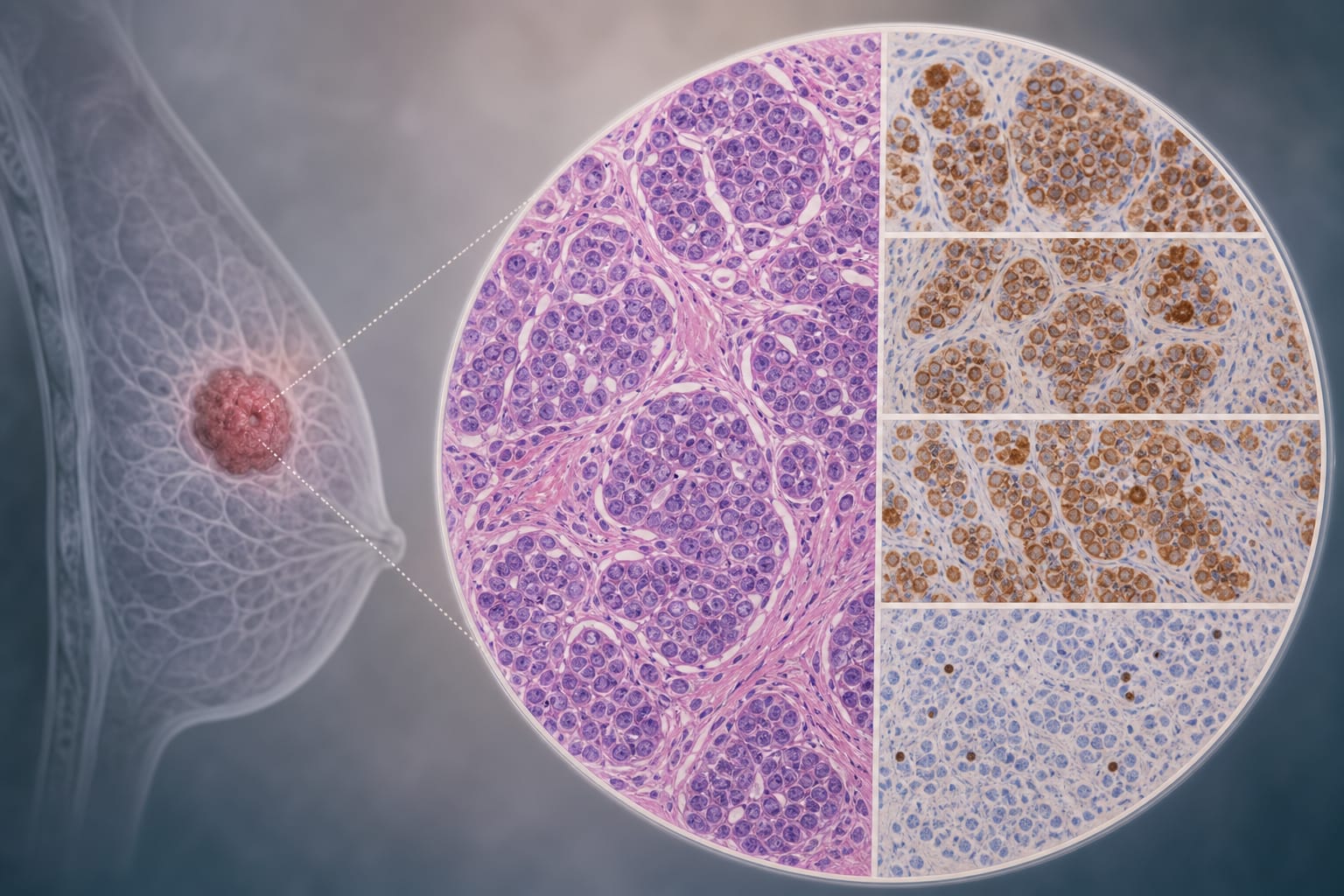
Histopathological analysis confirmed NEBC with PD-L1 positivity (CPS ≥10) and a germline BRCA1/2 mutation.
At 12 months post-treatment, the patient remained disease-free with no evidence of recurrence.
This case represents one of the first reports of combining pembrolizumab with chemotherapy in the adjuvant setting for primary triple-negative NEBC.
Clinical Implications
The successful treatment of this patient with pembrolizumab and chemotherapy may encourage further investigation into similar regimens for NEBC. Clinicians should consider the potential role of immunotherapy in managing rare breast cancer subtypes, particularly those with neuroendocrine features.
Conclusion
This case study highlights the potential of combining pembrolizumab with chemotherapy for treating primary triple-negative NEBC, warranting further research to establish effective treatment protocols for this rare cancer subtype.