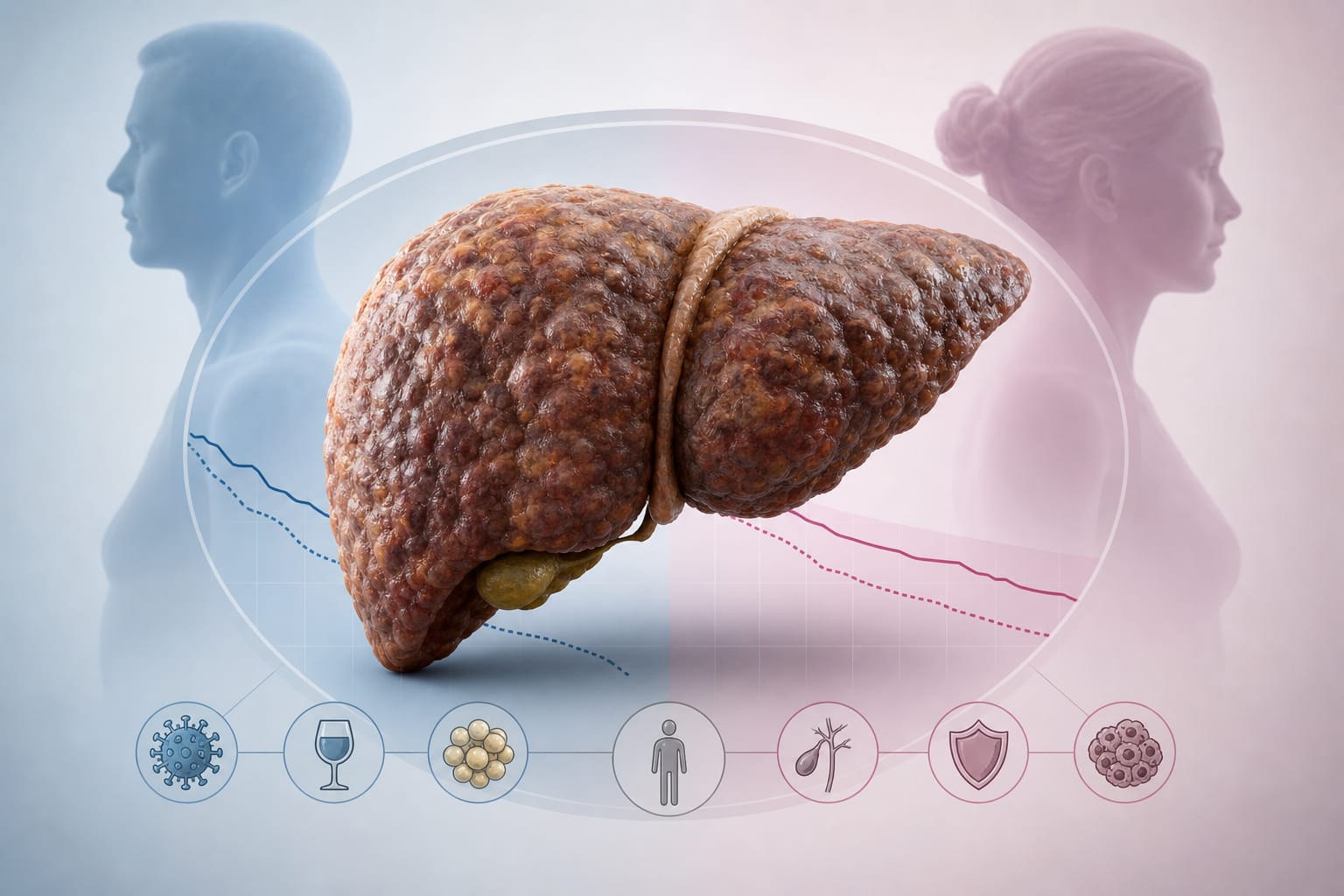
Gender-Based Variations in Long-Term Overall and Cause-Specific Mortality Among Cirrhosis Patients
Overview
This study evaluates sex-related differences in long-term overall and cause-specific mortality among adults with cirrhosis.
Background
Cirrhosis is a leading cause of mortality globally, with over 1 million deaths annually. The rising prevalence of cirrhosis, driven by metabolic dysfunction and alcohol-related diseases, necessitates a deeper understanding of sex-based differences in disease outcomes. Current evidence on mortality disparities between genders remains limited.
Data Highlights
No numerical data or trial data provided in the source material.
Key Findings
Biological sex significantly influences the cause and clinical severity of cirrhosis.
Females are more likely to experience cholestatic or autoimmune causes of cirrhosis, while males more frequently develop decompensation and hepatocellular carcinoma.
Prior studies suggest a female survival advantage, but this may not apply to all contexts, particularly in advanced disease.
Recent data indicate increasing cirrhosis-related morbidity among younger females.
Only one cohort study has explicitly examined sex differences in cirrhosis mortality, suggesting no difference in liver-related mortality by sex.
Clinical Implications
Healthcare professionals should consider sex as a critical factor when assessing cirrhosis patients, particularly regarding mortality outcomes. Understanding these differences can inform patient management and resource allocation.
Conclusion
The study highlights the need for further research into sex disparities in cirrhosis mortality to better understand the implications for patient care and outcomes.
For hepatologists and other physicians who treat patients with advanced liver disease, the gap between the number of patients who need transplant and the number of available organs is a familiar challenge.