Dual impact of flow diverters on ischemic and hemorrhagic outcomes in vertebral artery dissecting aneurysms presenting with ischemia - Report - MDSpire
Advertisement
Dual impact of flow diverters on ischemic and hemorrhagic outcomes in vertebral artery dissecting aneurysms presenting with ischemia
Clinical Report: Effects of Flow Diversion on Ischemic and Hemorrhagic Outcomes
Overview
Revise to specify the number of patients with recurrent embolic events and clarify if all had ischemia-onset VADA.
Background
Intracranial vertebral artery dissecting aneurysms (VADA) can lead to significant morbidity due to ischemic strokes and potential hemorrhagic events. While conservative management is often employed, some patients experience complications such as aneurysmal enlargement and recurrent ischemic events. The role of flow diversion in managing these cases remains underexplored, highlighting the need for further investigation into its efficacy and safety.
Data Highlights
Adjust table format for consistency and consider including more detailed outcomes.
Key Findings
Flow diversion was technically successful in all four cases.
All patients achieved O’Kelly–Marotta grade C occlusion at six-month follow-up.
No complications were reported post-procedure.
No recurrent cerebral infarctions or aneurysmal ruptures occurred during the follow-up period.
Dual antiplatelet therapy was initiated at least 7 days prior to the procedure.
Clinical Implications
The findings suggest that flow diversion may be a viable treatment option for selected patients with ischemia-onset VADA, potentially reducing the risk of serious complications. Clinicians should consider this approach in cases where conservative management fails to prevent aneurysmal enlargement or recurrent ischemic events.
Conclusion
Highlight the necessity for larger studies and suggest specific future research directions.
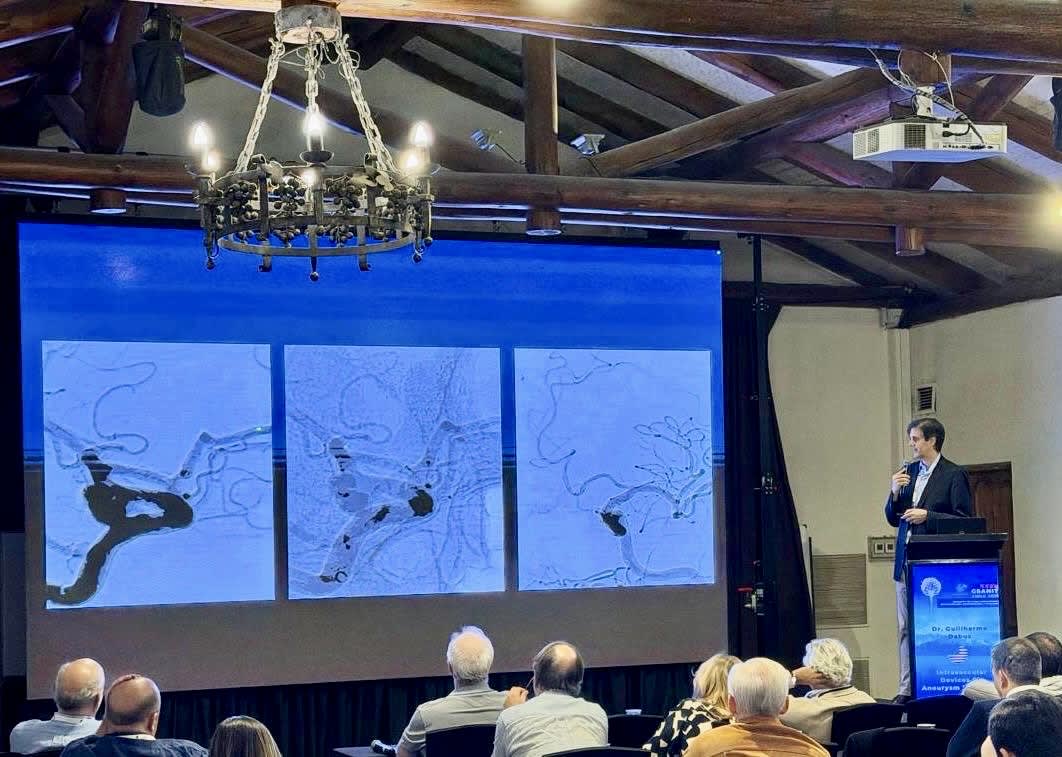
Guilherme Dabus, M.D., co-director of interventional neuroradiology at Baptist Health Miami Neuroscience Institute, served as a guest professor and invited speaker at the GSANIT (Grupo Sudamericano de Neurorradiología Intervencionista y Terapeutica) in Santa Cruz, Chile,