Intraoperative allogeneic blood transfusion is not associated with postoperative acute kidney injury and in-hospital mortality in liver transplantation patients: a propensity score matching analysis - Report - MDSpire
Advertisement
Intraoperative allogeneic blood transfusion is not associated with postoperative acute kidney injury and in-hospital mortality in liver transplantation patients: a propensity score matching analysis
Clinical Report: The Impact of Intraoperative Allogeneic Blood Transfusion on Postoperative Acute Kidney Injury and In-Hospital Mortality in Liver Transplant Recipients
Overview
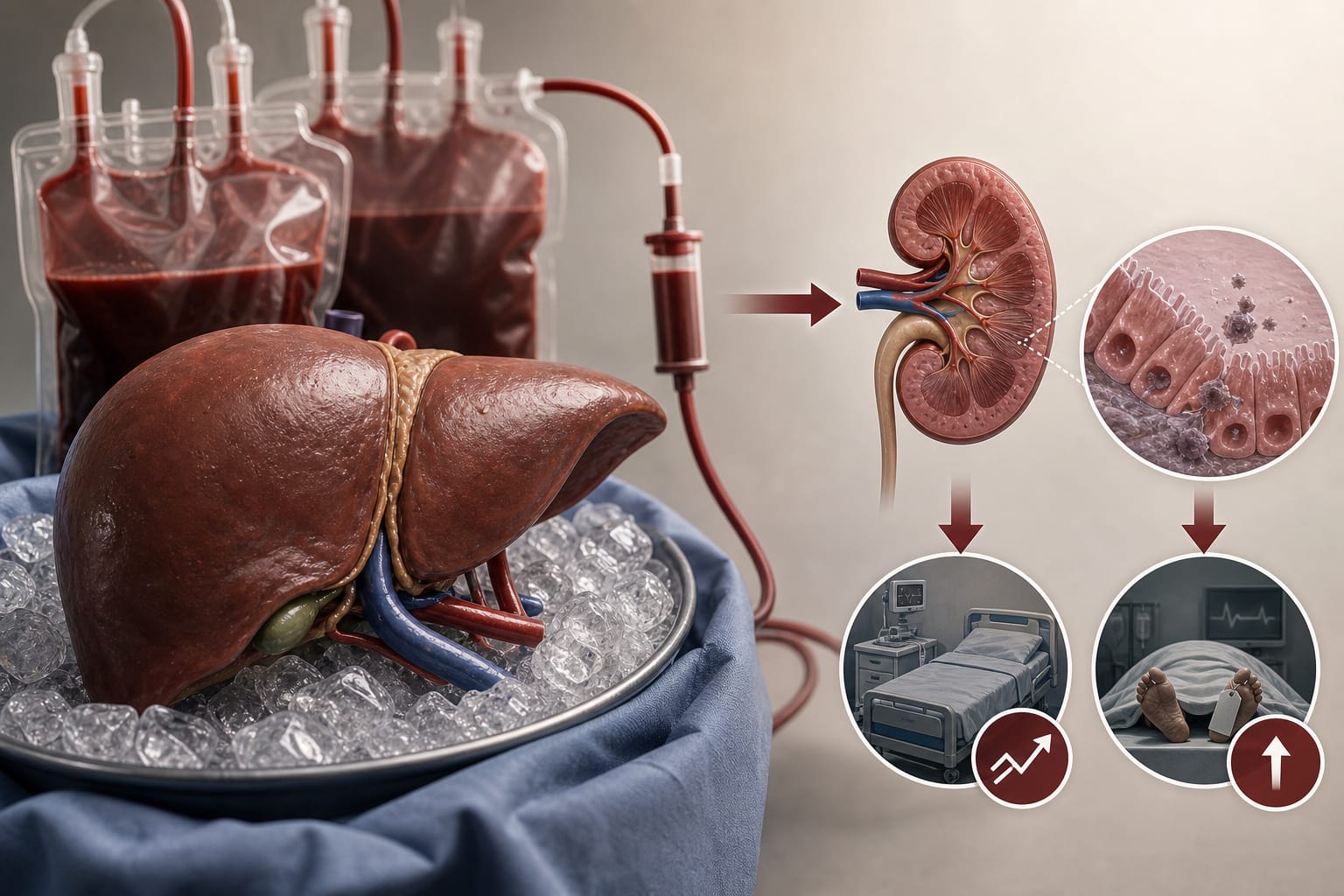
This study investigates the effects of intraoperative blood transfusion on postoperative acute kidney injury (AKI) and in-hospital mortality in liver transplant patients. It finds that blood transfusion is associated with increased risk of AKI.
Background
Liver transplantation is a critical procedure for patients with severe liver disease, often requiring blood transfusions due to significant intraoperative bleeding. Understanding the implications of blood transfusion on postoperative outcomes is essential, as previous studies have linked transfusion to complications. This study aims to clarify the relationship between intraoperative blood transfusion and postoperative AKI.
Data Highlights
Parameter
Unmatched Cohort
Matched Cohort
Post-LT AKI Odds Ratio
2.993 (95% CI 2.061–4.347, p < 0.0001)
1.861 (95% CI 1.053–3.290, p = 0.033)
In-Hospital Mortality Odds Ratio
2.692 (95% CI 1.313–5.522, p = 0.007)
1.000 (95% CI 0.281–3.562, p = 1.000)
Key Findings
517 out of 686 liver transplant patients received intraoperative blood transfusion.
Independent risk factors for intraoperative blood transfusion included sex, weight, liver cancer, and intraoperative bleeding.
In the unmatched cohort, intraoperative blood transfusion was associated with a significantly increased risk of postoperative AKI and in-hospital mortality.
After propensity score matching, intraoperative blood transfusion was associated with increased risk of AKI but not with in-hospital mortality.
In the matched cohort, the majority of patients received no more than 8 units of blood.
Clinical Implications
The findings indicate that intraoperative blood transfusion may increase the risk of postoperative AKI. Clinicians should consider these outcomes when managing blood transfusions during liver transplantation.
Conclusion
Intraoperative allogeneic blood transfusion does not significantly influence postoperative acute kidney injury in liver transplant patients.