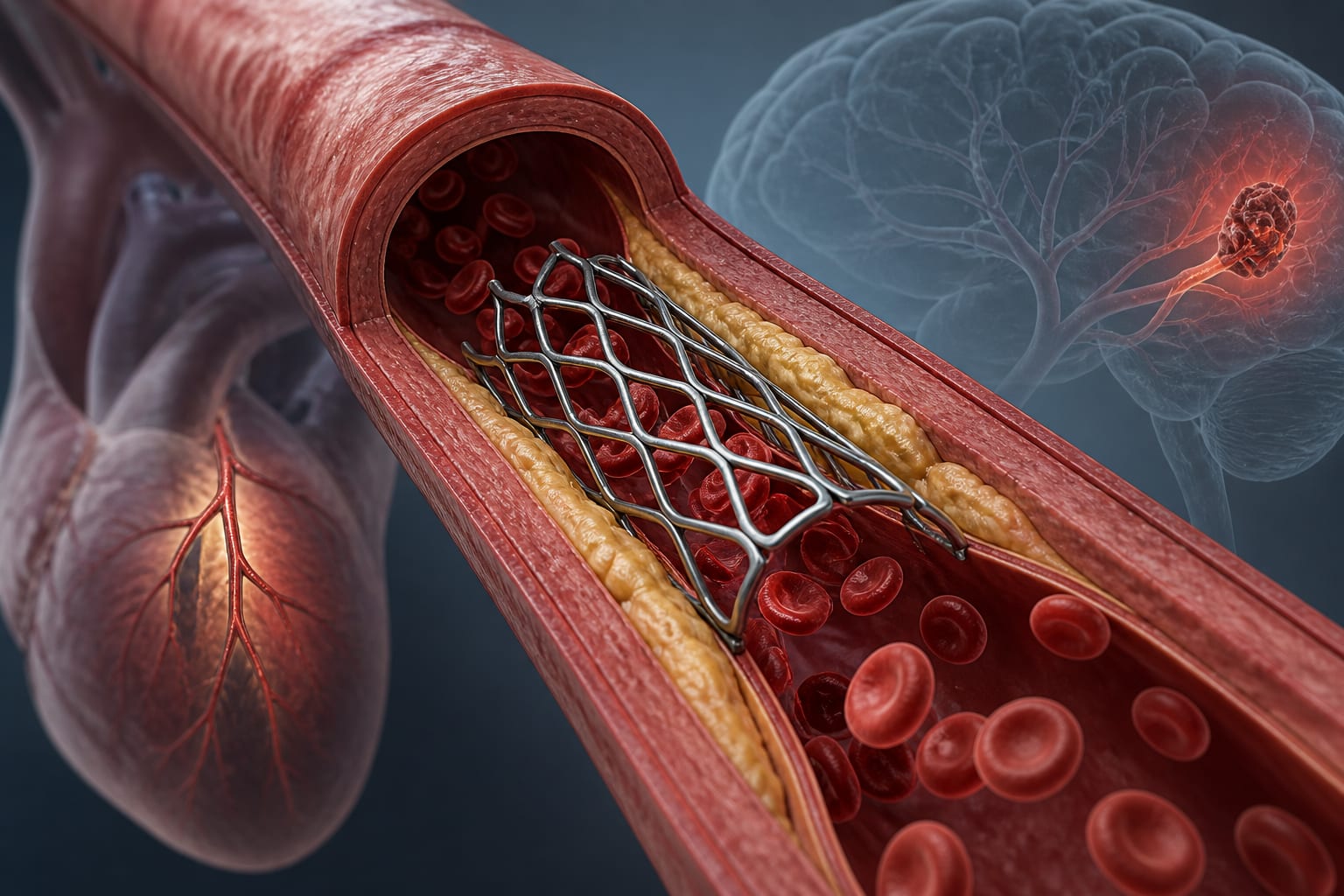
Atherosclerosis Risk in Women with Polycystic Ovary Syndrome: Beyond Comorbid Conditions
-
By
-
Katharine A Bate
-
Gemma A Figtree
-
December 17, 2025
Atherosclerosis Risk in Women with Polycystic Ovary Syndrome: Independent Association Beyond Comorbidities
Overview
Women with polycystic ovary syndrome (PCOS) have a significantly increased risk of atherosclerotic cardiovascular events, including acute myocardial infarction and ischemic stroke, independent of traditional comorbidities and medication use. This large Danish registry study highlights the importance of recognizing PCOS as an independent risk factor for cardiovascular disease in young women.
Background
PCOS is the most common endocrinopathy in reproductive-age women, affecting approximately 10–13% globally. It is associated with increased prevalence of hypertension, type 2 diabetes, and dyslipidemia, all known cardiovascular risk factors. Previous studies and meta-analyses have suggested an elevated risk of cardiovascular disease in women with PCOS, but the role of comorbidities and treatments had not been fully elucidated. The current study by Havers-Borgersen et al. addresses these gaps using a large nationwide cohort.
Data Highlights
| Outcome | PCOS Group (%) | Control Group (%) | Hazard Ratio (HR) |
|---|---|---|---|
| 25-year cumulative incidence of composite cardiovascular outcome (acute coronary syndrome + ischemic stroke) | 3.4 | 2.0 | 1.82 |
| Acute myocardial infarction | Not specified | Not specified | 1.86 |
| Ischemic stroke | Not specified | Not specified | 1.83 |
| Recurrent cardiovascular events (prior event before PCOS diagnosis) | 7.3 | 3.9 | Not specified |
| Recurrent cardiovascular events (during follow-up) | 65.3 | 59.7 | Not specified |
| All-cause mortality (adjusted for comorbidities) | Not specified | Not specified | 1.15 (95% CI 0.98–1.35) |
Key Findings
- Women with PCOS had a 25-year cumulative incidence of composite cardiovascular events of 3.4% versus 2.0% in controls.
- PCOS was independently associated with increased risk of acute myocardial infarction (HR 1.86) and ischemic stroke (HR 1.83) after adjusting for multiple comorbidities.
- Recurrent cardiovascular events were more frequent in women with PCOS both before and after diagnosis compared to controls.
- The association between PCOS and cardiovascular outcomes persisted after adjusting for use of various medications, including statins, metformin, and hormonal therapies.
- All-cause mortality was not significantly increased after adjustment for comorbidities, suggesting the increased cardiovascular risk is not fully explained by mortality differences.
- Limitations include lack of data on PCOS phenotype, body mass index, and potential underdiagnosis of milder PCOS cases due to reliance on hospital registry data.
Clinical Implications
Clinicians should recognize PCOS as an independent risk factor for atherosclerotic cardiovascular disease beyond traditional comorbidities. Early cardiovascular risk assessment and targeted prevention strategies are warranted in women with PCOS, including during reproductive years. Integration of cardiovascular education and risk modification in gynecologic care may improve long-term outcomes.
Conclusion
This large nationwide study provides robust evidence that PCOS independently increases the risk of atherosclerotic cardiovascular events in women. These findings underscore the need for heightened cardiovascular vigilance and tailored risk management in this population.
References
Based on findings from:
Atherosclerosis risk in women with polycystic ovarian syndrome: it’s not just the comorbidities
Katharine A Bate, Gemma A Figtree. European Journal Of Preventive Cardiology, 2025.
https://academic.oup.com/eurjpc/advance-article/doi/10.1093/eurjpc/zwaf767/8382678
This content is an AI-generated, fully rewritten summary based on a published scholarly article. It does not reproduce the original text and is not a substitute for the original publication. Readers are encouraged to consult the source for full context, data, and methodology.