A two-stage workflow for vitiligo diagnosis: clinical characteristic classification and large language model (LLM)–based report generation - Report - MDSpire
Advertisement
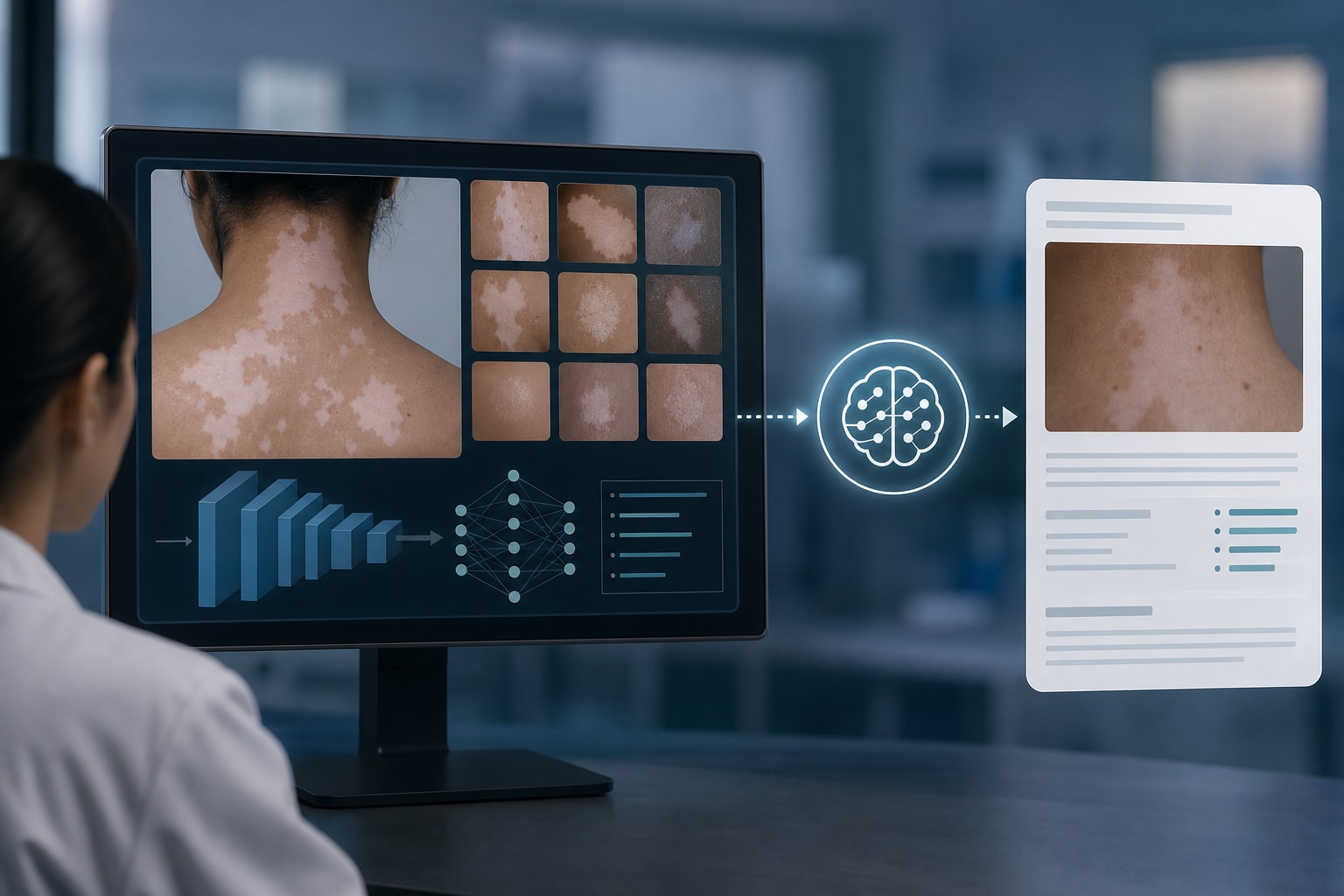
A two-stage workflow for vitiligo diagnosis: clinical characteristic classification and large language model (LLM)–based report generation
Clinical Report: A Dual-Phase Approach for Diagnosing Vitiligo
Overview
Revise to emphasize the AI system's role in enhancing diagnostic accuracy and transparency.
Background
Vitiligo is a prevalent depigmenting disorder often misdiagnosed due to its similarity to other skin conditions. Accurate diagnosis is crucial as it directly impacts treatment strategies and patient outcomes. The integration of AI in dermatology has the potential to improve diagnostic precision and support clinicians in decision-making.
Data Highlights
Metric
Value
AUC
0.9906 (95% CI: 0.9844–0.9968)
Sensitivity
98.29%
Specificity
93.73%
Accuracy (Location)
88.12%
Accuracy (Edge Morphology)
86.78%
Key Findings
The AI model achieved an AUC of 0.9906 for distinguishing vitiligo.
Sensitivity was recorded at 98.29%, and specificity at 93.73%.
Accurate classification of typical location and edge morphology was achieved with 88.12% and 86.78% accuracy, respectively.
The AI model significantly outperformed dermatologists in diagnostic sensitivity using an independent image set.
Structured clinical reports generated by the LLM included diagnostic suggestions and treatment plans.
Clinical Implications
The AI-assisted diagnostic system can enhance the accuracy of vitiligo diagnosis, particularly in settings with limited resources. By providing interpretable reports, it supports clinicians in making informed decisions regarding patient management.
Conclusion
Highlight the implications for patient outcomes and suggest areas for future research.