Clinical Report: Cardiac Magnetic Resonance Imaging Biomarkers in Diabetes
Overview
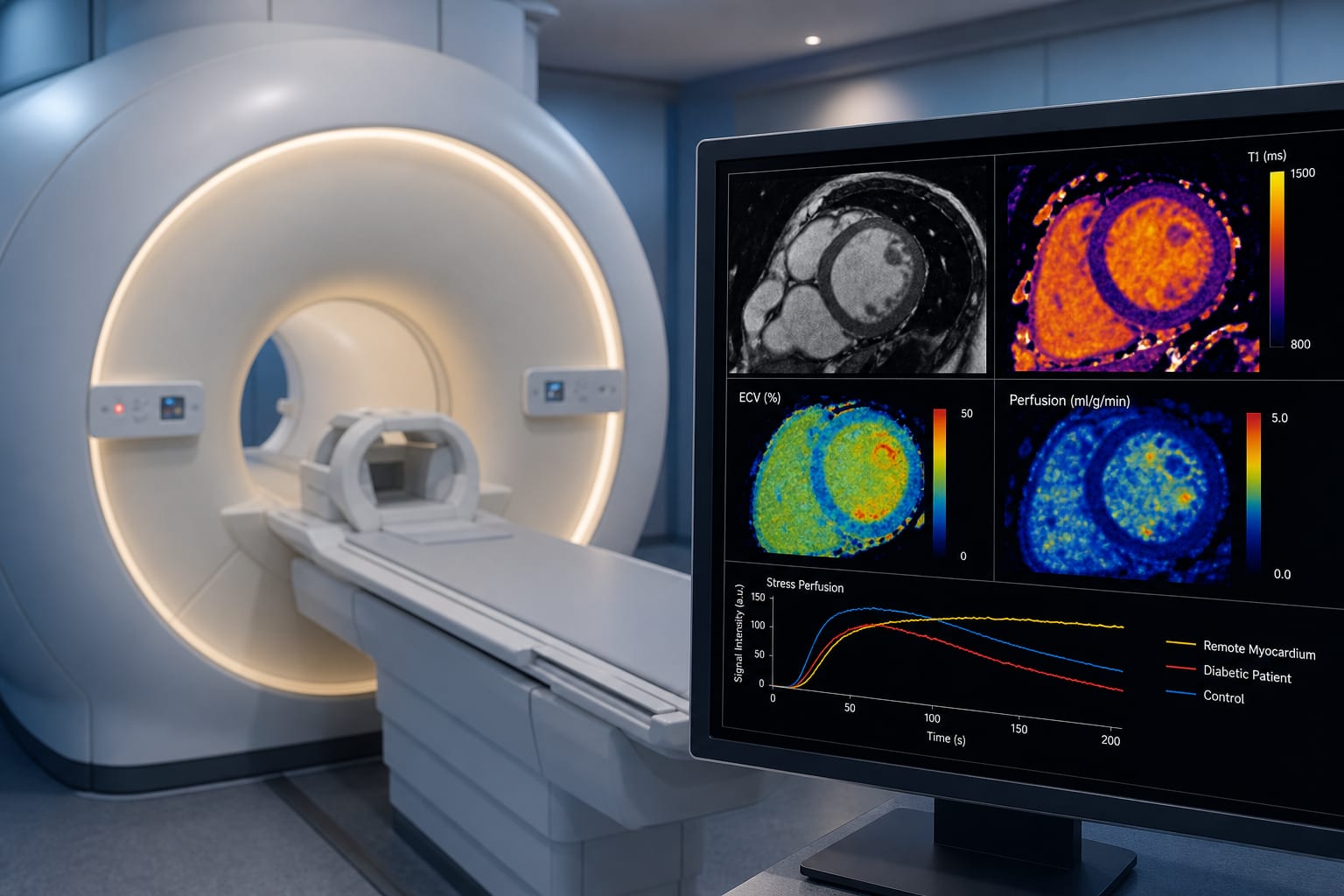
This comprehensive review and meta-analysis highlight the role of cardiac magnetic resonance (CMR) imaging biomarkers in detecting cardiovascular issues in diabetes. Key findings include elevated extracellular volume fraction (ECV), reduced myocardial perfusion reserve index (MPRI), and increased prevalence of late gadolinium enhancement (LGE) in diabetic patients.
Background
Cardiovascular disease (CVD) is a leading cause of morbidity and mortality in diabetes mellitus (DM), with diabetic patients facing a significantly higher risk of heart-related complications. Traditional diagnostic methods often fail to detect early subclinical changes, necessitating the exploration of advanced imaging techniques like CMR. CMR biomarkers have the potential to provide critical insights into myocardial involvement and facilitate early detection of cardiovascular issues in this high-risk population.
Data Highlights
Outcome
Standardized Mean Difference (SMD)
p-value
ECV
0.838
0.003
MPRI
1.48
0.033
LGE Prevalence
0.583
<0.001
Key Findings
CMR identified subclinical myocardial changes in diabetic patients.
Significantly elevated ECV was observed in the diabetic cohort (SMD = 0.838, p = 0.003).
Reduced myocardial perfusion reserve index (MPRI) was noted (SMD = 1.48, p = 0.033).
Higher prevalence of late gadolinium enhancement (LGE) was found (SMD = 0.583, p < 0.001).
Native T1 showed no significant differences across studies.
Overall between-study heterogeneity was low (I2 = 97.4%).
Clinical Implications
The findings underscore the importance of utilizing CMR biomarkers for early detection of cardiovascular abnormalities in diabetic patients. Clinicians should consider incorporating CMR into routine assessments for high-risk individuals to improve risk stratification and management strategies.
Conclusion
CMR biomarkers offer valuable insights into myocardial changes in diabetes, highlighting the need for further research to validate these findings in larger, standardized studies. Early detection of cardiovascular issues can significantly impact patient outcomes in this vulnerable population.