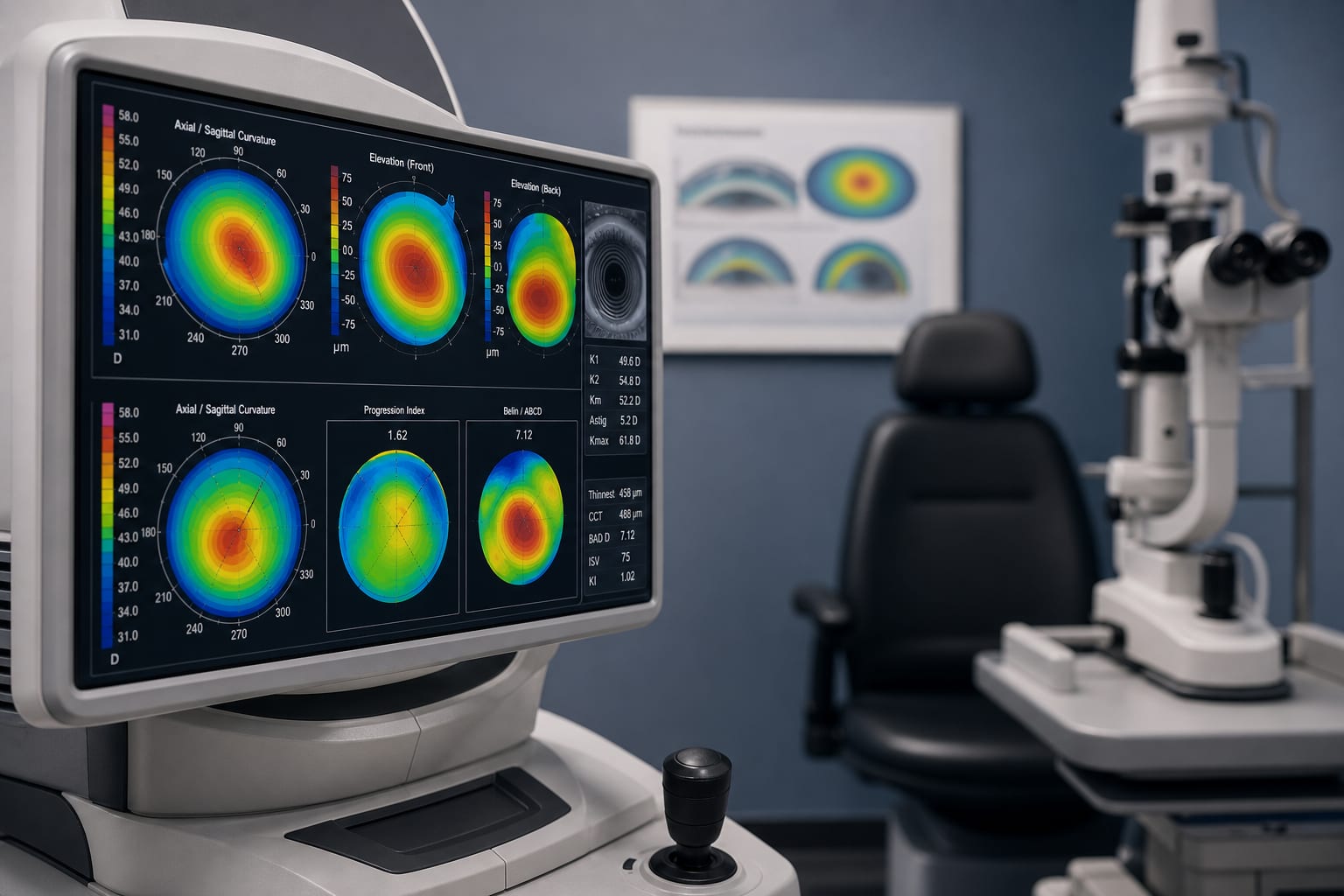
Clinical Report: Utilizing Tear Fluid Biomarkers and Machine Learning for Early Identification of Keratoconus
Overview
This study explores the integration of tear fluid biomarkers and machine learning (ML) algorithms for the early diagnosis of keratoconus (KC). The findings suggest that ML models utilizing tear biomarkers can enhance diagnostic accuracy and facilitate timely intervention in KC patients.
Background
Keratoconus is a progressive corneal disorder that can lead to significant visual impairment. Current diagnostic methods often fail to detect early-stage KC, highlighting the need for innovative approaches. The use of tear fluid biomarkers combined with machine learning presents a promising avenue for improving early detection and management of this condition.
Data Highlights
No numerical data or trial data provided in the source material.
Key Findings
['Tear fluid contains biomarkers that may indicate the presence and progression of keratoconus.', 'Inflammatory cytokines are elevated in the tears of KC patients, suggesting a role in corneal weakening.', 'Machine learning models can analyze complex biomarker interactions to improve diagnostic accuracy for KC.', 'Combining corneal topography data with ML enhances early detection of keratoconus.', 'Logistic regression models using tear biomarker profiles can predict KC progression effectively.']
Clinical Implications
The integration of tear fluid biomarkers with machine learning could revolutionize the early diagnosis of keratoconus, allowing for timely interventions. Clinicians should consider incorporating these innovative diagnostic tools to enhance patient outcomes.
Conclusion
The study underscores the potential of combining tear biomarkers and machine learning for the early identification of keratoconus, paving the way for improved diagnostic strategies in clinical practice.