Efficacy of Right Ventricle-to-Pulmonary Artery Conduit as a Pulmonary Blood Source at Unifocalization of Major Aortopulmonary Collateral Arteries - Report - MDSpire

Efficacy of Right Ventricle-to-Pulmonary Artery Conduit as a Pulmonary Blood Source at Unifocalization of Major Aortopulmonary Collateral Arteries

  • By

  • Erika Yuasa

  • Takaya Hoashi

  • Takuro Kojima

  • Akinori Hirano

  • Ryusuke Hosoda

  • Yuji Fuchigami

  • Yukino Iijima

  • Takaaki Suzuki

  • June 22, 2026

  • 0 min

Share

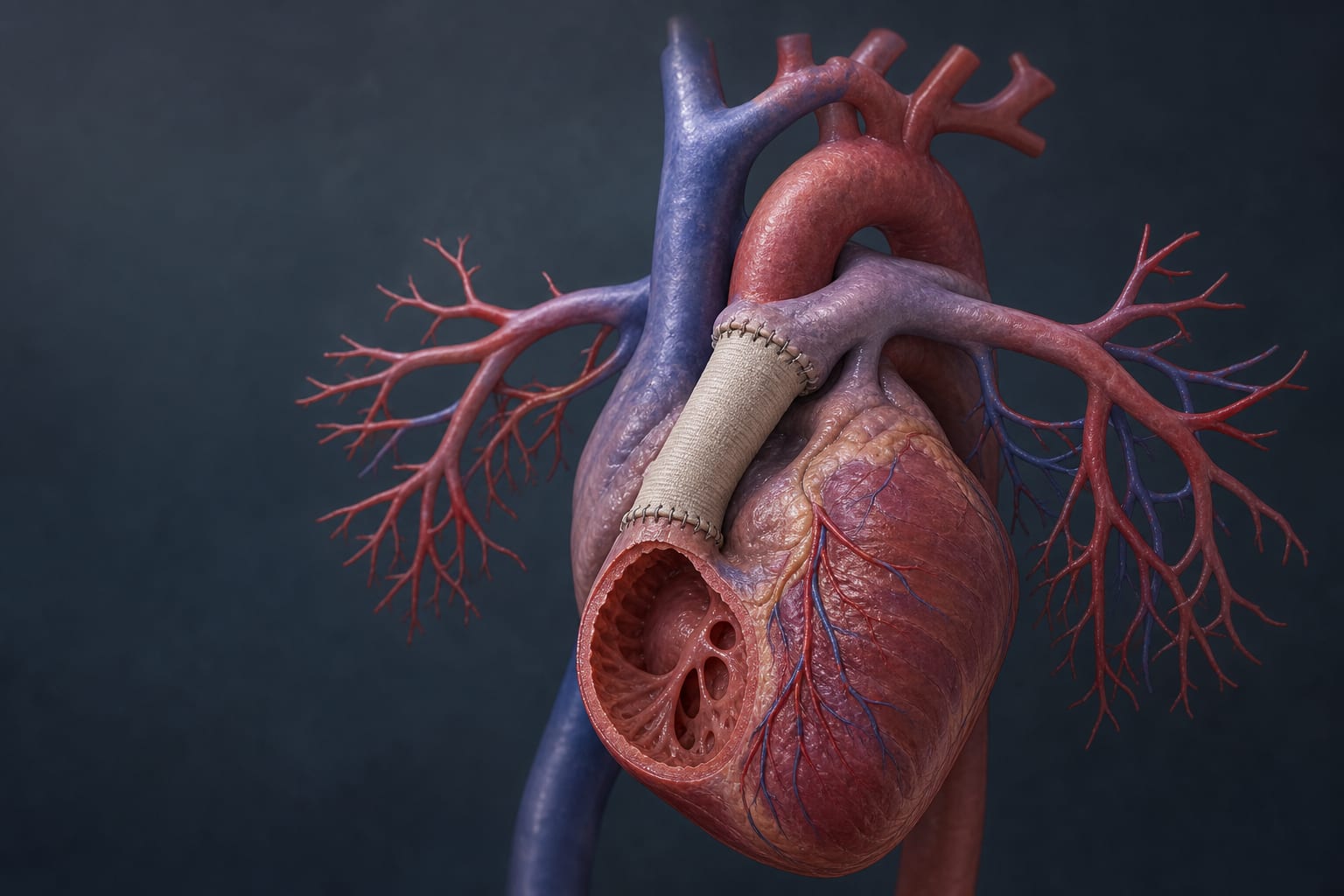
Effectiveness of Right Ventricle-Pulmonary Artery Conduit During Unifocalization

Overview

This study evaluates the clinical outcomes of patients with pulmonary atresia and ventricular septal defect who underwent unifocalization using a right ventricle-to-pulmonary artery conduit. The findings include data on VSD closure rates and right ventricular pressure based on the type of pulmonary blood flow source used.

Background

Pulmonary atresia with ventricular septal defect (PA/VSD) and major aortopulmonary collateral arteries (MAPCAs) present significant surgical challenges. Unifocalization aims to establish effective pulmonary blood flow and facilitate VSD closure, yet the optimal approach remains debated. Understanding the effectiveness of different conduits is crucial for improving surgical outcomes in this patient population.

Data Highlights

Patient CharacteristicsCount
Male5
Female7
22q11.2 deletion syndrome5
Absent cPA2
Diminutive cPA3
Sizable cPA5
Unilateral cPA2

Key Findings

  • The study included a cohort of 12 patients with PA/VSD or hemi-truncus.
  • VSD closure was indicated when the pulmonary to systemic blood flow ratio exceeded 1.0.
  • All surgeries were performed by three primary operators over a follow-up period of 13.2 years.
  • Conduits were constructed using expanded polytetrafluoroethylene (ePTFE) grafts with handmade trileaflet valves.
  • Different strategies were employed based on the morphology of the central pulmonary artery.

Clinical Implications

The choice between systemic-to-pulmonary shunt and right ventricle-to-pulmonary artery conduit may influence outcomes in patients undergoing unifocalization.

Conclusion

The study evaluates the type of pulmonary blood flow source in achieving surgical outcomes in patients with PA/VSD and MAPCAs.

Related Resources & Content

  1. Pediatric Cardiology, 2024 -- Impact of Aortopulmonary Collaterals on Pulmonary Artery Development in Staged Reconstruction for Single Ventricle Patients
  2. Pediatric Cardiology, 2025 -- Advantages of Embolizing Aorto-Pulmonary Collaterals in Pediatric Patients with Complex Congenital Heart Conditions
  3. Pediatric Cardiology, 2024 -- Stenting Techniques for Maintaining Ductal Blood Flow: Historical Perspectives and Future Directions
  4. Pulmonary Atresia with Ventricular Septal Defect and Major Aortopulmonary Collateral Arteries (PA-VSD-MAPCA[s]) | Adult and Pediatric Cardiac
  5. Pediatric Cardiology — Transcatheter Closure of Congenital Right Atrial Fistula Using the Amplatzer Occluder: A Case Report
  6. Pulmonary Atresia with Ventricular Septal Defect and Major Aortopulmonary Collateral Arteries
  7. https://article.imrpress.com/journal/RCM/25/3/10.31083/j.rcm2503084/74462ad12d9e194924bb773810f8b25f.pdf
  8. Fate of right ventricle to pulmonary artery conduits after complete repair of pulmonary atresia and major aortopulmonary collaterals - PubMed

Original Source(s)

Related Content