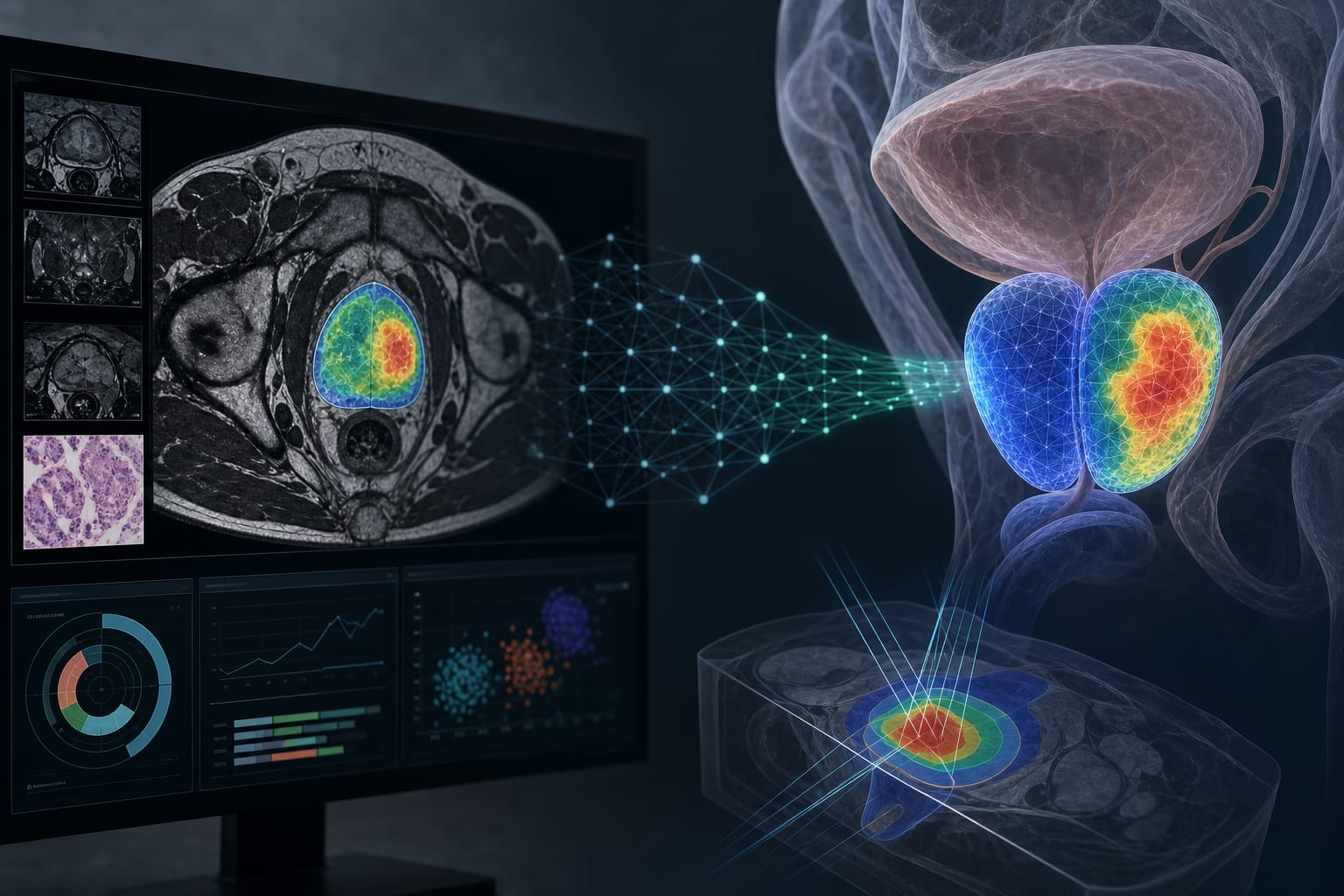
Clinical Report: Utilizing Artificial Intelligence for Tailored Diagnosis and Management of Prostate Cancer
Overview
This comprehensive review highlights the increasing role of artificial intelligence (AI) in the diagnosis and treatment of prostate cancer. AI-driven models enhance diagnostic accuracy and efficiency.
Background
Prostate cancer is a leading cause of cancer-related mortality among men, with rising incidence rates necessitating improved diagnostic and treatment strategies. Early detection and personalized treatment are critical.
Data Highlights
No specific numerical data or trial results were provided in the source material.
Key Findings
AI models improve diagnostic accuracy by integrating imaging, pathological, and clinical data.
AI enhances segmentation and grading of prostate cancer, reducing variability among medical professionals.
AI is utilized in surgical procedures, radiation therapy, and targeted drug development.
Many AI models remain underutilized in practical settings.
AI assists in identifying biomarkers and therapeutic targets.
Clinical Implications
The application of AI in prostate cancer diagnosis and treatment is being explored for its potential benefits.
Conclusion
Further efforts are needed to ensure the practical application of AI in clinical settings.