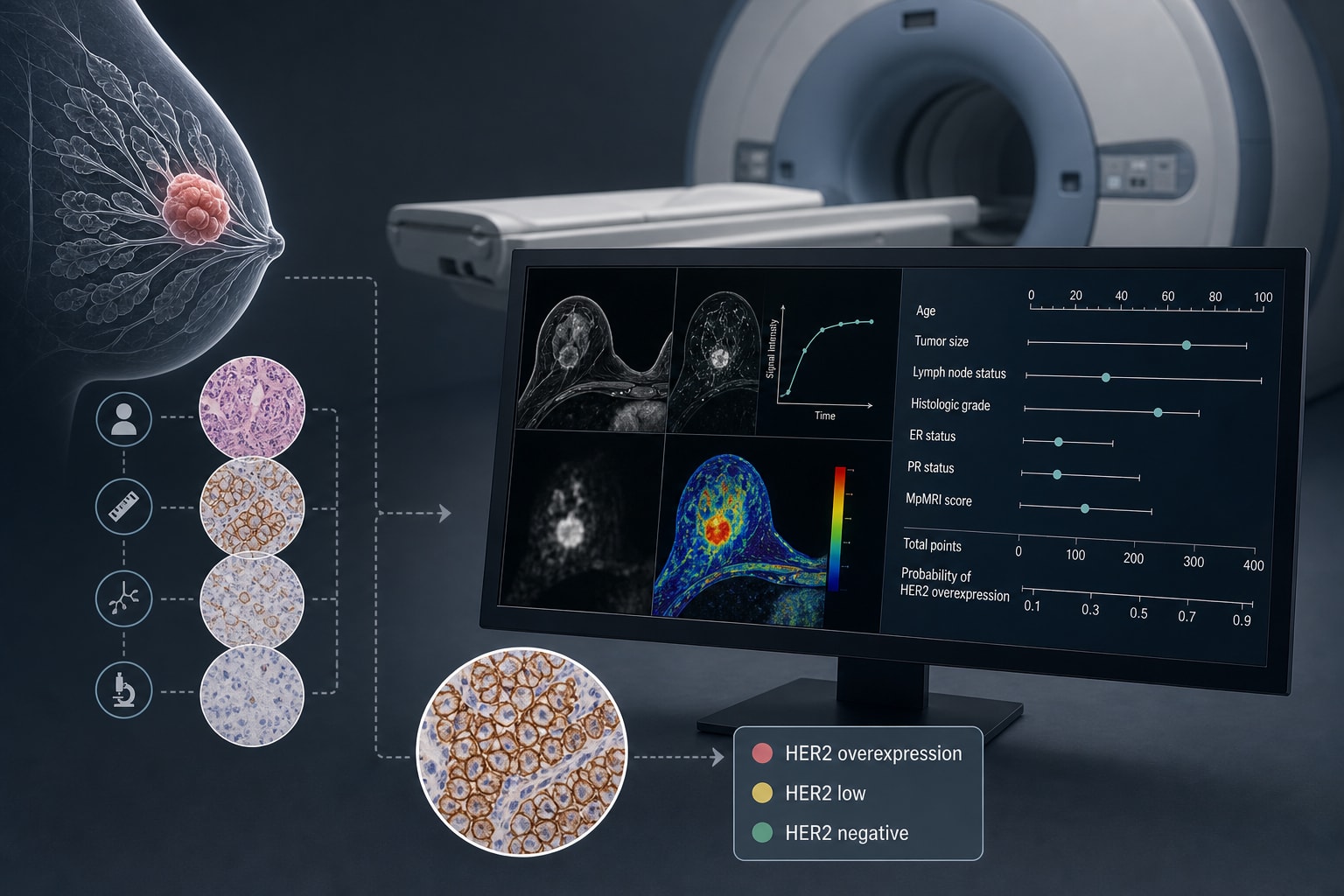
Clinical Report: mpMRI Nomogram for Predicting HER2 Status in Breast Cancer
Overview
This study developed and validated a nomogram combining multiparametric MRI and clinicopathological variables to predict HER2 status in breast cancer patients. The nomogram demonstrated significant predictive accuracy, with AUC values indicating its potential as a noninvasive tool for guiding targeted therapy selection.
Background
HER2 expression is crucial for determining treatment options in breast cancer, influencing prognosis and therapeutic strategies. Traditional assessment methods, such as immunohistochemistry and fluorescence in situ hybridization, have limitations, including sampling errors and dynamic changes in HER2 status. There is a pressing need for reliable, noninvasive methods to evaluate HER2 expression longitudinally, particularly as new therapies targeting HER2-low expression emerge.
Data Highlights
{'format': 'Ensure the table is properly formatted for clarity.'}
Key Findings
The nomogram integrates mpMRI parameters with clinicopathological factors for HER2 status prediction.
Significant differences in CA125, Ki-67, ADC-min, and ME were observed among HER2 subgroups.
The nomogram achieved AUCs of 0.762 and 0.738 for differentiating HER2-over/HER2-low from HER2-zero in training and validation datasets, respectively.
It effectively differentiates between HER2-over and HER2-low subtypes, with AUCs of 0.719 and 0.772.
This tool addresses the clinical need for noninvasive HER2 status assessment in breast cancer.
Clinical Implications
The mpMRI-based nomogram provides a promising noninvasive approach to predict HER2 status, potentially guiding therapy selection for breast cancer patients. Its integration into clinical practice may enhance the accuracy of treatment decisions, particularly in light of evolving therapeutic options for HER2-low expression.
Conclusion
The developed nomogram represents a significant advancement in noninvasive HER2 status prediction, offering a valuable tool for clinicians in the management of breast cancer. Further validation and integration into clinical workflows are warranted to optimize patient outcomes.
The Lank Center for Genitourinary Oncology at Dana-Farber Cancer Institute presents a succinct summary of all the renal cell carcinoma clinical updates you need to know from AACR 2026.