Clinical Report: Increased NHHR at Hospital Admission Correlates with Higher Post-Stroke Depression Symptoms
Overview
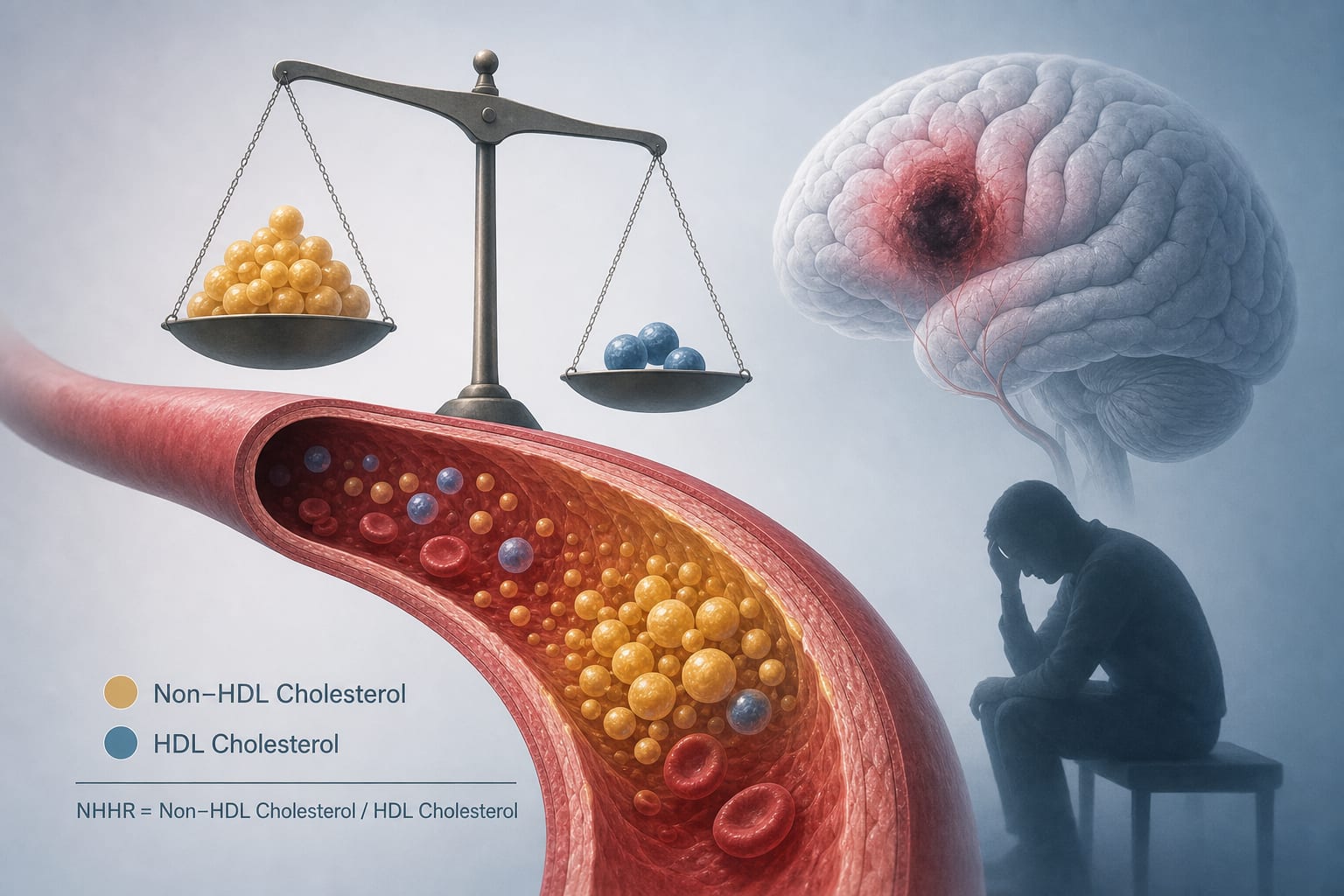
This study investigates the association between the non-high-density lipoprotein to high-density lipoprotein cholesterol ratio (NHHR) and post-stroke depressive symptoms in acute ischemic stroke patients. Elevated NHHR at admission was found to correlate with increased odds of depressive symptoms at 90 days post-stroke.
Background
Post-stroke depression (PSD) is a prevalent complication affecting approximately 30% of acute ischemic stroke (AIS) survivors, significantly impacting rehabilitation and overall recovery. Identifying reliable biomarkers for early detection of PSD is crucial for timely intervention. The NHHR may reflect lipid metabolism and inflammatory status.
Data Highlights
Parameter
Value
Patients Analyzed
518
Patients with Elevated Depressive Symptoms
179
Odds Ratio for Elevated Symptoms per Unit Increase in NHHR
1.35
P-value
0.029
Key Findings
179 out of 518 AIS patients exhibited elevated post-stroke depressive symptoms at 90 days.
Higher NHHR levels were independently associated with increased odds of elevated depressive symptoms (OR = 1.35, P = 0.029).
A linear relationship was observed between NHHR and depressive symptoms without significant nonlinearity.
No significant interactions were found across various demographic and health-related subgroups.
Clinical Implications
The findings indicate that NHHR can be utilized as a biomarker for identifying AIS patients at risk for developing post-stroke depressive symptoms.
Conclusion
Elevated NHHR at hospital admission is associated with increased depressive symptoms in AIS patients.