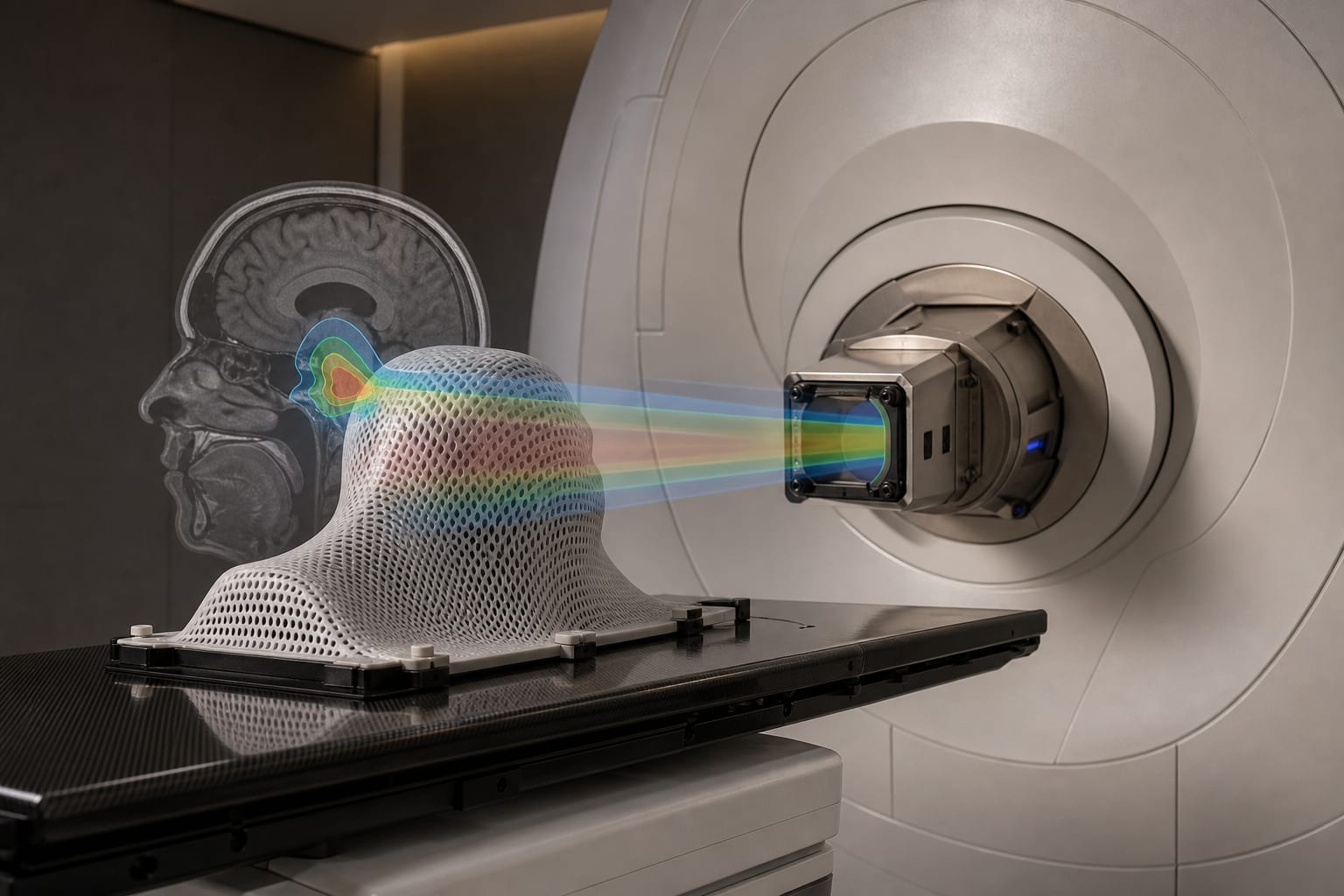
Long-term outcomes of adjuvant proton radiotherapy (PRT) for residual pituitary adenoma (PA) in adults – a retrospective, single institute experience - Report - MDSpire
Clinical Report: Long-term Effects of Adjuvant Proton Radiotherapy for Residual Pituitary Adenomas in Adults
Overview
This study evaluates the long-term outcomes of adjuvant proton radiotherapy (PRT) in adults with residual pituitary adenomas (PAs) following subtotal surgical resection. The findings indicate that PRT may provide effective tumor control while minimizing damage to surrounding tissues.
Background
Pituitary adenomas are common intracranial tumors that can lead to significant morbidity due to their endocrine effects and local mass effects. Surgical resection is often incomplete, necessitating additional treatment options such as radiotherapy. Proton beam radiotherapy offers potential advantages in sparing normal tissues compared to conventional radiotherapy techniques.
Data Highlights
No numerical data available in the source material.
Key Findings
22 adult patients with residual PAs received adjuvant PRT after subtotal resection.
PRT was chosen over CyberKnife®-SRS or conventional RT based on multidisciplinary decision-making.
Long-term follow-up data were collected at multiple intervals post-treatment.
PRT aims to improve tumor control while reducing the risk of damage to adjacent neurovascular structures.
Clinical evidence supporting PRT in this context remains limited, necessitating further research.
Clinical Implications
The study highlights the potential role of PRT in managing residual pituitary adenomas, particularly in cases where further surgical intervention is not feasible. Clinicians should consider the dosimetric advantages of PRT when planning treatment for complex cases.
Conclusion
Adjuvant proton radiotherapy may offer a viable option for patients with residual pituitary adenomas, providing effective tumor control with reduced risk to surrounding tissues. Further studies are needed to establish definitive treatment protocols.
by Fabian J. K. Allmendinger, Maximilian Deng, Sebastian Regnery, Lars Wessel, Katharina Kozyra, Felix Englert, Ricarda Wickert, Jannik Walter, Lucas Mose, Thomas Tessonnier, Sandro M. Krieg, Jürgen Debus, Laila König, Tanja Adena-Eichkorn
U.S. News & World Report has recognized Dana-Farber/Boston Children’s Cancer and Blood Disorders Center as the #1 pediatric cancer program in the nation in its 2026-2027 Best Children’s Hospitals report.