Clinicogenomic Features and Outcomes of Adenoid Cystic Carcinoma With Central Nervous System Metastases: A Single-Institution Cohort Study - Report - MDSpire
Clinical and Genomic Characteristics of Adenoid Cystic Carcinoma with CNS Metastasis
Overview
This study investigates the clinical characteristics, treatment modalities, and outcomes of 17 patients with adenoid cystic carcinoma (ACC) and central nervous system (CNS) involvement. It highlights the heterogeneity of CNS disease patterns and the molecular features associated with ACC.
Background
Adenoid cystic carcinoma is a rare malignancy with a propensity for perineural invasion and distant metastasis, particularly to the lungs. CNS involvement in ACC is uncommon and presents significant clinical challenges, as it can arise through various mechanisms, including hematogenous spread and neurotropic extension.
Data Highlights
No numerical data or trial data were provided in the source material.
Key Findings
ACC accounts for approximately 1% of all head and neck cancers and up to 10% of salivary gland tumors.
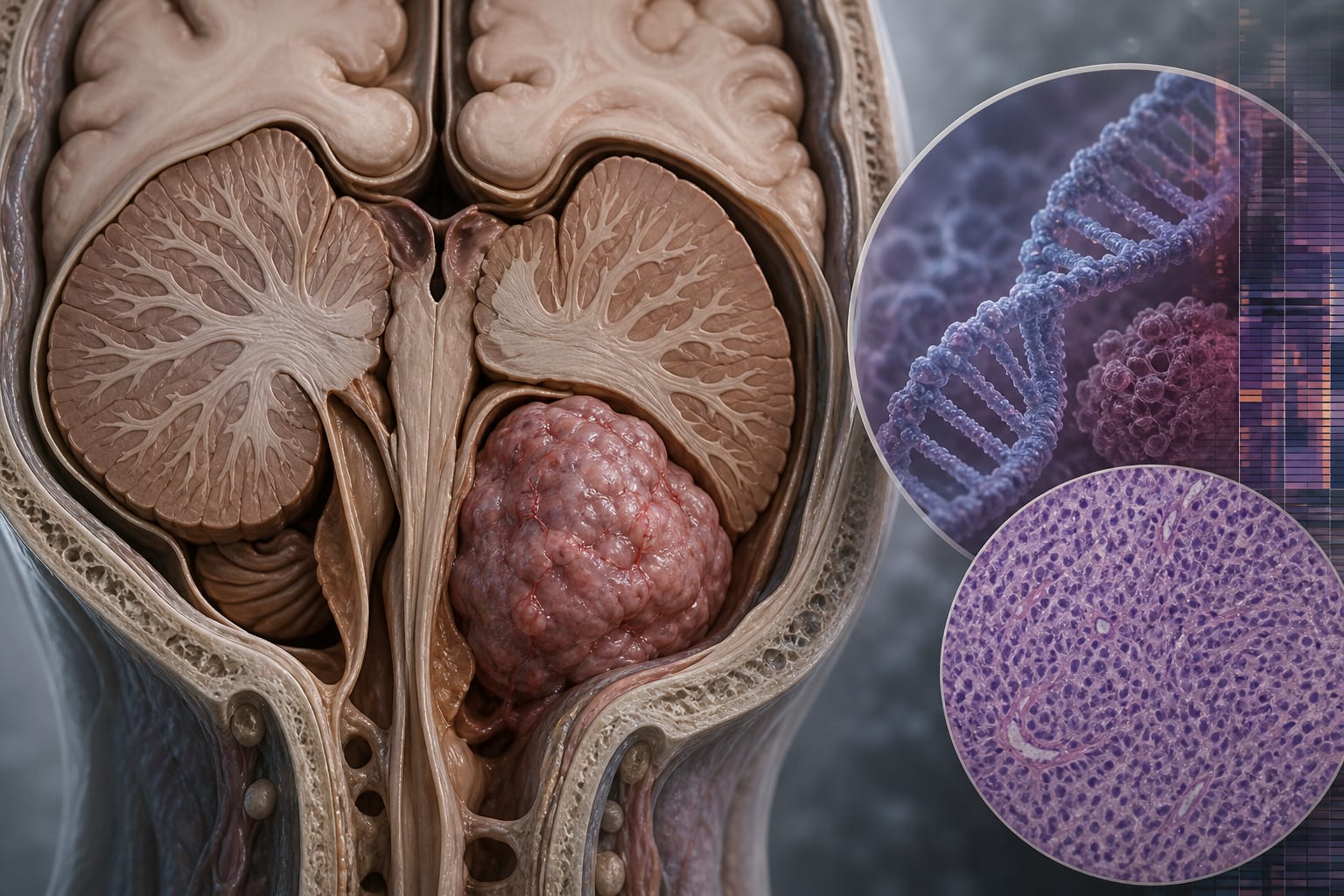
CNS involvement in ACC can manifest as hematogenous parenchymal metastasis, leptomeningeal disease, or neurotropic extension.
Genomic studies have identified distinct ACC subgroups, including those with NOTCH1 alterations linked to aggressive behavior.
Complete surgical resection is challenging due to perineural extension and complex anatomical sites.
No systemic therapies are specifically approved for ACC, although some cytotoxic and targeted therapies may provide stabilization.
Clinical Implications
Clinicians should consider the heterogeneity of CNS disease patterns when planning management strategies.
Conclusion
This study provides insights into the clinical and genomic characteristics of ACC with CNS metastasis and the complexity of its management.