Clinical Report: Enhancing Immunotherapy for Advanced Gastric Cancer
Overview
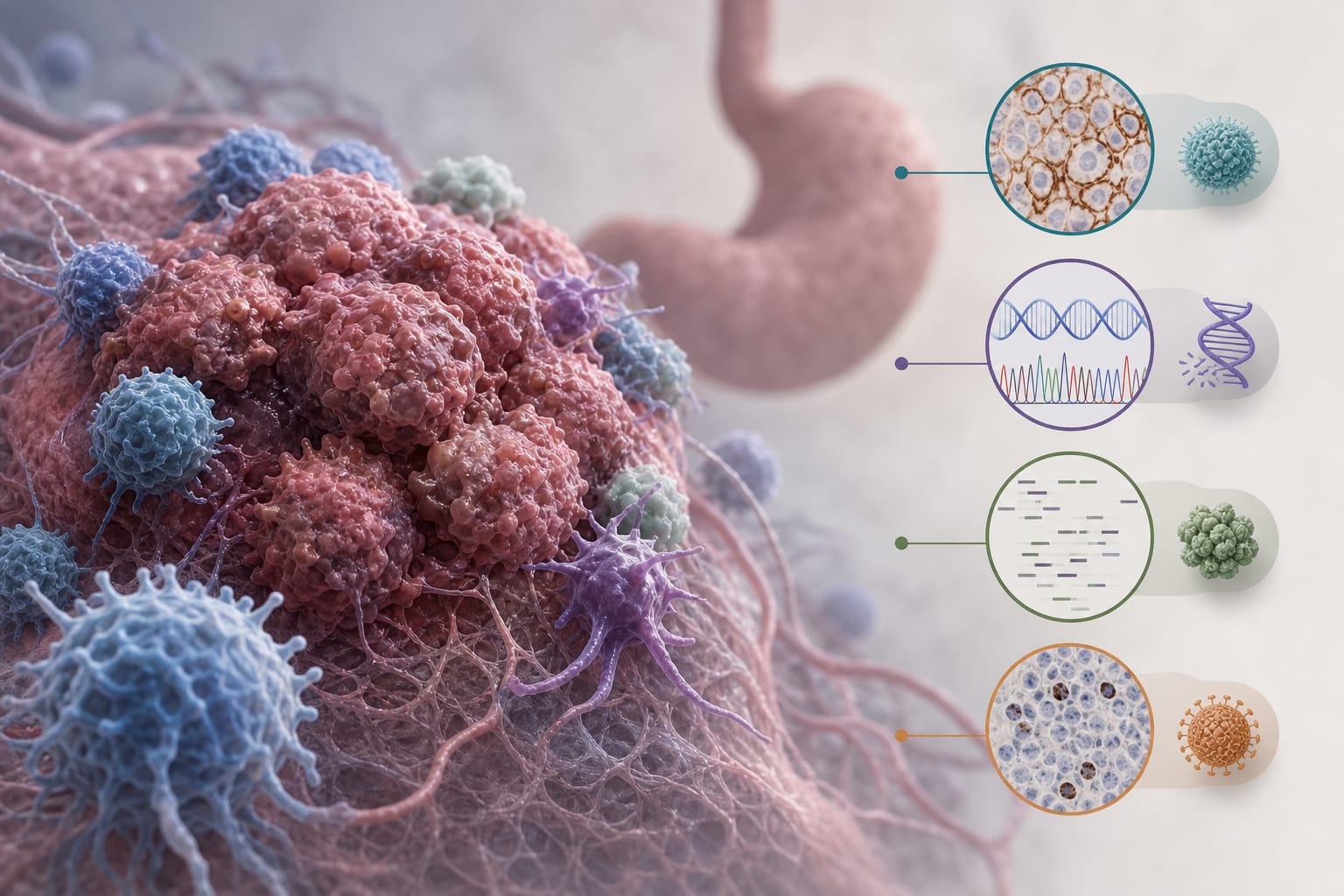
This review discusses the role of biomarkers in optimizing immunotherapy for advanced gastric cancer, highlighting established and emerging biomarkers that can guide patient selection for immune checkpoint inhibitors.
Background
Gastric cancer is a significant global health issue, being the fifth most diagnosed cancer and a leading cause of cancer-related deaths. The advent of immunotherapy, particularly immune checkpoint inhibitors, has shown variable responses among patients. Identifying reliable biomarkers is essential for selecting patients who are most likely to benefit from these therapies.
Data Highlights
No numerical data is available in the source material.
Key Findings
Immune checkpoint inhibitors have improved treatment outcomes for biologically selected patient subgroups in advanced gastric cancer.
Key biomarkers include PD-L1 combined positive score, microsatellite instability-high status, and tumor mutational burden.
Emerging biomarkers such as TMEscore and circulating tumor DNA dynamics are being evaluated for their predictive capabilities.
Clinical trials highlight limitations of current biomarkers, including assay variability and dynamic PD-L1 expression.
A tiered approach to biomarker interpretation is proposed to distinguish clinically actionable markers from investigational tools.
Clinical Implications
Understanding the limitations and variability of biomarkers is crucial for optimizing treatment strategies.
Conclusion
A comprehensive understanding of biomarkers is essential for advancing precision immunotherapy in gastric cancer.