Clinical Report: Undetected Occult Clival Chordoma Revealed by CSF Rhinorrhea
Overview
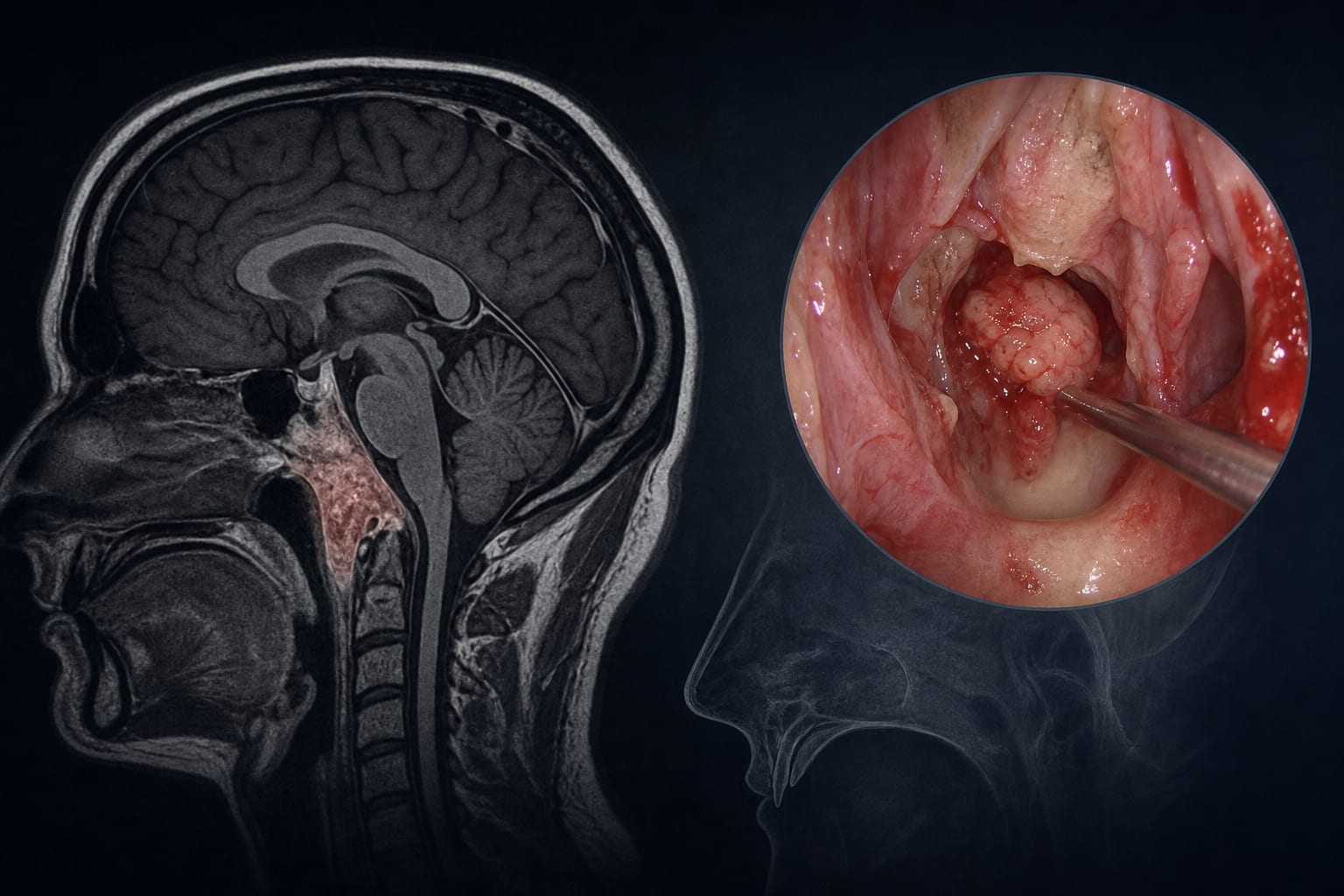
This case study presents a 39-year-old man with purulent meningitis due to an occult clival chordoma, initially indicated by cerebrospinal fluid (CSF) rhinorrhea. The chordoma was identified during surgical intervention.
Background
Chordomas are rare tumors that occur along the craniospinal axis. Spontaneous CSF leaks can result in serious complications such as bacterial meningitis. Understanding the relationship between CSF rhinorrhea and potential neoplasms is important for diagnosis and management.
Data Highlights
CSF Findings
Results
White Blood Cell Count
35.97 × 10⁹/L
Neutrophil Count
34.0 × 10⁹/L (94.4%)
Opening Pressure
14.7 mmHg
Protein
3.38 g/L
Glucose
0.04 mmol/L
Chloride Level
117.4 mmol/L
Key Findings
Chordomas account for approximately 0.1% to 0.2% of all intracranial tumors.
Persistent CSF rhinorrhea can indicate an underlying skull-base tumor, even when imaging does not reveal a mass.
In this case, a clival chordoma was diagnosed during endoscopic repair of a CSF fistula.
CSF analysis revealed significant pleocytosis and low glucose levels, consistent with purulent meningitis.
Clinical Implications
Clinicians should consider the possibility of occult tumors in patients presenting with CSF rhinorrhea and meningitis, even when imaging studies are inconclusive. A multidisciplinary approach is essential for effective management and timely intervention.
Conclusion
This case highlights the importance of thorough evaluation in patients with CSF rhinorrhea.