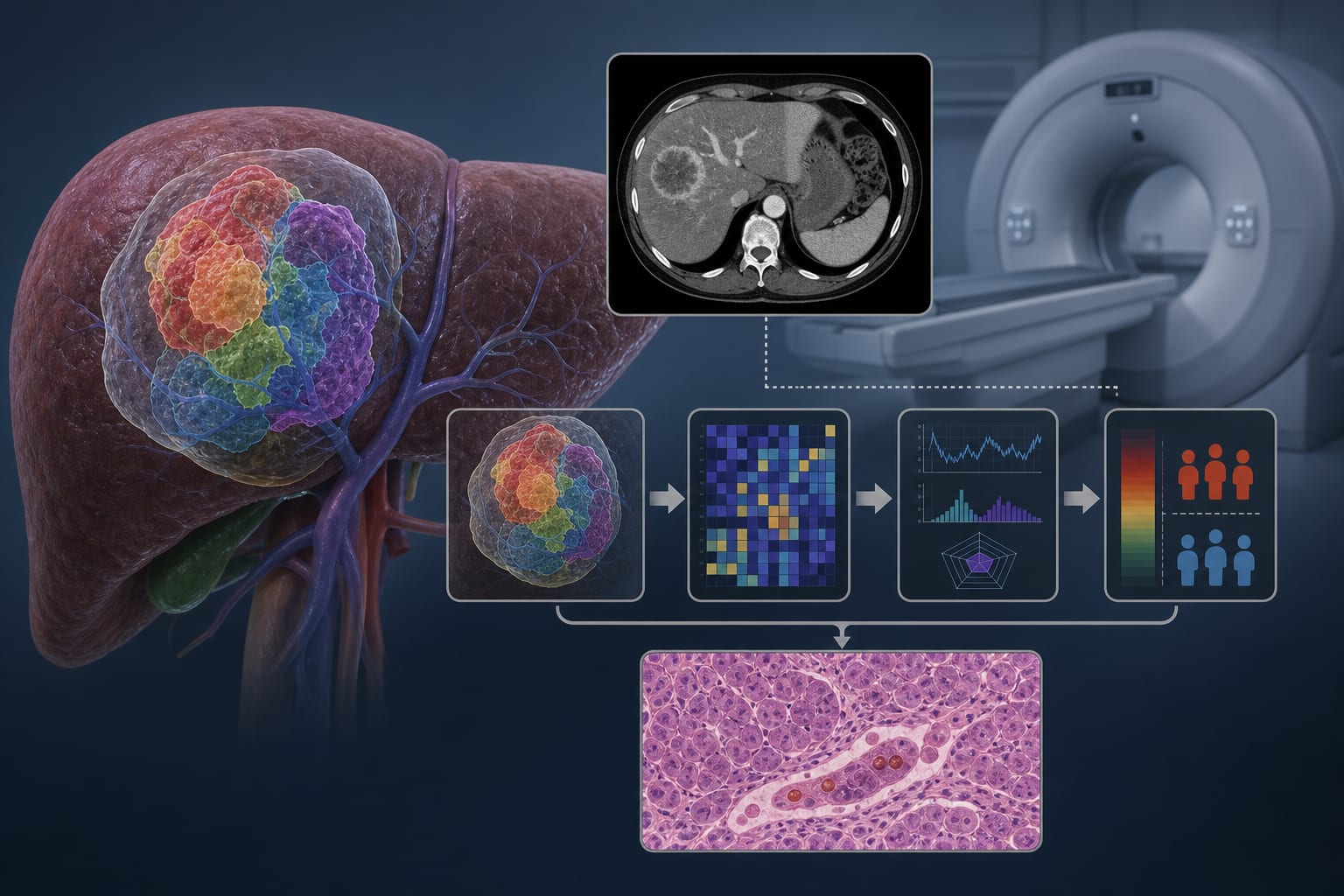
Clinical Report: Utilization of AI and Machine Learning Techniques for Prognostic and Diagnostic Insights in Ovarian Cancer
Overview
This report discusses the significant advancements in AI and machine learning for improving the diagnosis and prognosis of ovarian cancer. It highlights the potential of these technologies to enhance the accuracy of imaging techniques and biomarker analysis, ultimately leading to better patient outcomes.
Background
Ovarian cancer is a leading cause of mortality among gynecological cancers, often diagnosed at advanced stages due to its asymptomatic nature and lack of effective screening methods. Traditional diagnostic approaches rely heavily on subjective assessments, which can lead to variability in outcomes. The integration of AI and machine learning offers a promising avenue to improve diagnostic accuracy and personalize treatment strategies.
Data Highlights
No specific numerical data provided in the source material.
Key Findings
AI models, particularly deep learning algorithms, have shown high accuracy in diagnosing ovarian cancer.
Radiomics can differentiate between benign and malignant tumors and predict genetic mutations.
Integration of multiomics data with imaging data enhances predictive models for ovarian cancer.
AI-based models have outperformed human experts in identifying ovarian cancer in ultrasound images.
Recent meta-analyses indicate high pooled performance for AI in ultrasound-based initial diagnosis.
Clinical Implications
Healthcare professionals should consider incorporating AI and machine learning tools into their diagnostic workflows to enhance the accuracy of ovarian cancer detection. Continuous validation against established guidelines is essential to ensure the reliability and generalizability of these AI models in clinical practice.
Conclusion
The utilization of AI and machine learning in ovarian cancer diagnosis and prognosis represents a significant advancement in the field, with the potential to improve patient outcomes through more accurate and personalized approaches.