Multi-cohort transcriptomics integration for building and validating a diagnostic model of peripheral blood septic shock - Report - MDSpire

Multi-cohort transcriptomics integration for building and validating a diagnostic model of peripheral blood septic shock

  • By

  • Ling Li

  • Kexun Li

  • Weiwei Qian

  • Hui Jiang

  • Hongqiong Peng

  • Yang Zhang

  • Zhengjun Chen

  • Xia Zeng

  • May 25, 2026

  • 0 min

Share

Integration of Transcriptomic Data to Develop a Diagnostic Model for Septic Shock

Overview

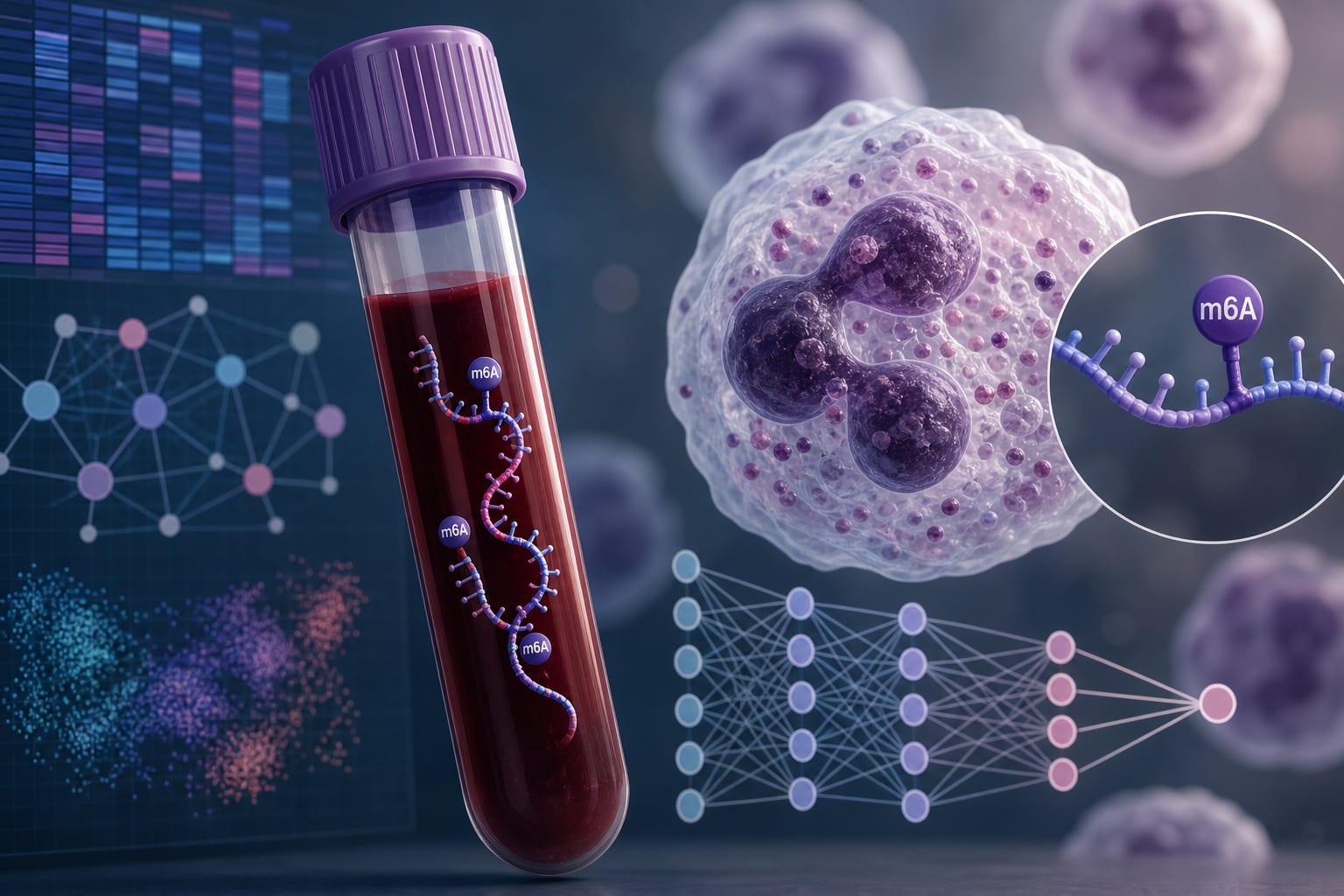
This study identifies a five-gene diagnostic signature for septic shock using transcriptomic data from multiple cohorts. The model demonstrates high accuracy in predicting septic shock and elucidates the regulatory role of the METTL14/YTHDF1-mediated m6A-S100A12 axis in neutrophils.

Background

Sepsis and septic shock are leading causes of mortality in intensive care units, highlighting the need for improved diagnostic tools. Current clinical markers are insufficient for early diagnosis and risk stratification, necessitating the exploration of molecular biomarkers. Advances in transcriptomic studies provide a promising avenue for identifying robust diagnostic signatures in septic shock.

Data Highlights

GeneFunction
S100A12Neutrophil activation marker
MMP8Matrix metalloproteinase involved in tissue remodeling
PGLYRP1Peptidoglycan recognition protein
CEACAM8Cell adhesion molecule
MMP9Matrix metalloproteinase involved in inflammation

Key Findings

  • Identified 76 candidate genes associated with septic shock from five GEO cohorts.
  • Developed a five-gene ANN diagnostic model with high AUC across multiple cohorts.
  • All five genes showed significantly elevated levels in peripheral blood of sepsis patients.
  • Neutrophil expansion was significant, with gene expression correlating with disease severity.
  • Elucidated the METTL14/YTHDF1-mediated m6A-S100A12 regulatory axis in neutrophils.

Clinical Implications

The five-gene diagnostic model provides a novel tool for early detection of septic shock, potentially improving patient outcomes. Understanding the m6A regulatory mechanisms may open new therapeutic avenues targeting neutrophil function in sepsis.

Conclusion

This research establishes a molecular basis for diagnosing septic shock and highlights the METTL14/m6A pathway as a promising target for future interventions.

Related Resources & Content

  1. Critical Care (Springer), 2025 -- Predictive enrichment using biomarkers in studies of critically-ill patients with sepsis: a systematic review
  2. Open Forum Infectious Diseases -- Investigating Gene Expression Markers Linked to Neutrophil Extracellular Traps for Assessing Mortality Risk in Neonatal Sepsis
  3. Frontiers in Immunology -- Integrated multi-omics deciphers sepsis immune dysregulation: a dual-pathway targeted small-molecule therapy improves survival and ameliorates multi-organ dysfunction
  4. Infection -- Artificial intelligence reveals clinical sepsis phenotypes linked to plasma proteomic changes
  5. About Sepsis | Sepsis | CDC
  6. SeptiCyte RAPID receives 510(k) clearance by FDA | MLO Online
  7. About Sepsis | Sepsis | CDC
  8. SeptiCyte RAPID receives 510(k) clearance by FDA | MLO Online

Original Source(s)

Related Content