Multimodal treatment and long-term survival in a rare case of melanoma with pancreatic and splenic metastases: a case report and literature review - Report - MDSpire
Conexiant’s news site is now MDSpire News. Learn more
Advertisement
Comprehensive Management and Survival Outcomes in a Unique Case of Melanoma with Metastases to the Pancreas and Spleen: A Case Study and Review of Existing Literature
Clinical Report: Comprehensive Management and Survival Outcomes in Melanoma
Overview
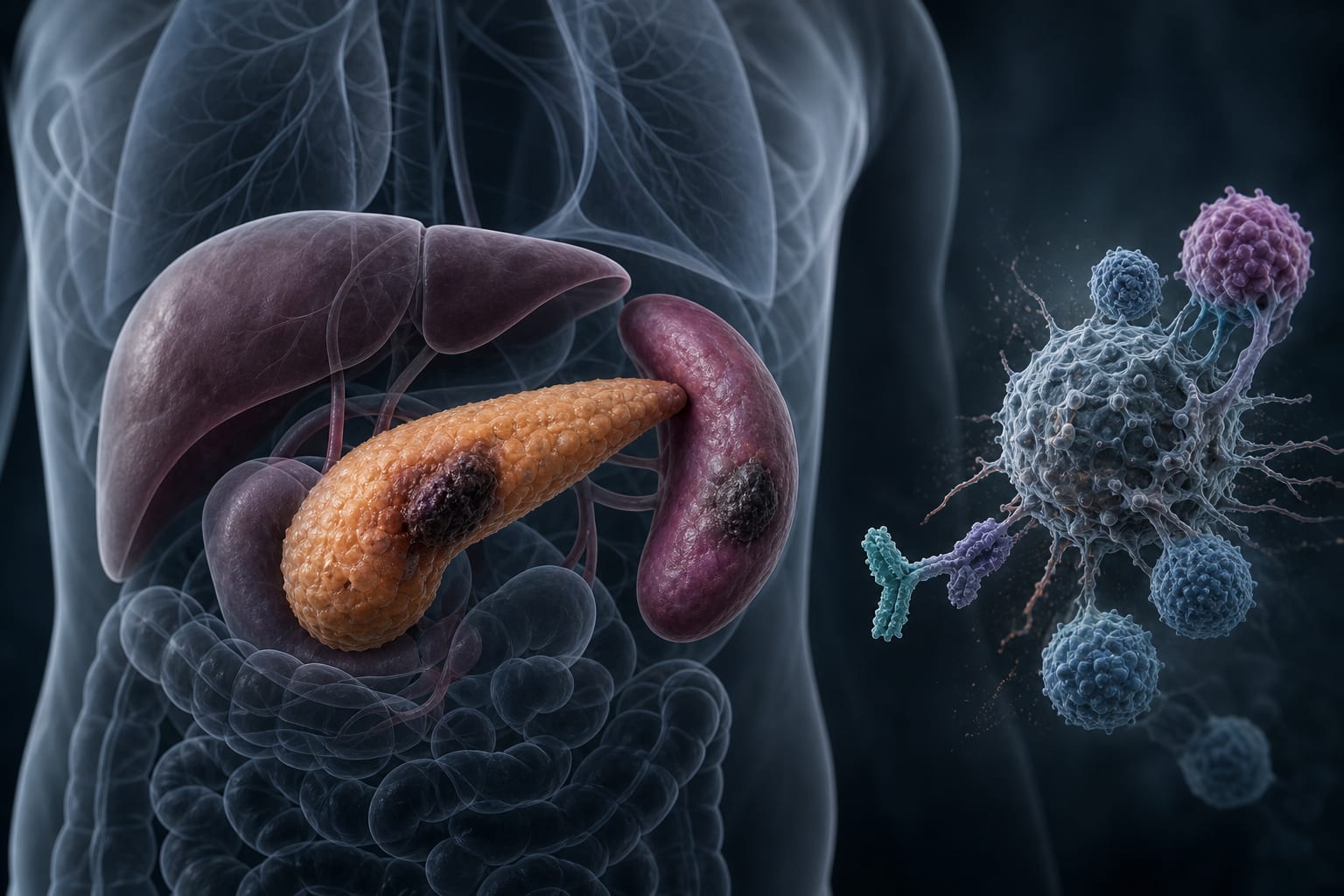
This report details a rare case of a 55-year-old man with rapidly progressive metastatic melanoma, including pancreatic and splenic metastases. Following a multimodal treatment approach, the patient achieved long-term survival, highlighting the importance of targeted therapy and surgical intervention.
Background
Melanoma is a highly aggressive skin cancer with a significant potential for metastasis, often leading to complex management challenges. Metastases to the pancreas and spleen are particularly rare, complicating treatment strategies. Understanding the management of such cases is essential for improving patient outcomes and survival rates.
Data Highlights
No numerical data or trial data provided in the source material.
Key Findings
A 55-year-old man developed widespread metastatic melanoma within 5 months post lower-extremity melanoma resection.
Metastases included lesions in the pancreas and spleen, which are exceptionally rare in melanoma cases.
The patient underwent various treatment regimens, including toripalimab, anlotinib, and temozolomide.
Surgical resection of pancreatic and splenic metastases revealed a BRAF V600 mutation, allowing for targeted therapy with dabrafenib and trametinib.
As of March 6, 2025, the patient remains stable with long-term survival.
The case emphasizes the need for multidisciplinary collaboration in managing complex metastatic melanoma.
Clinical Implications
This case underscores the potential benefits of surgical resection and targeted therapy in select patients with melanoma and rare metastatic sites. Continuous molecular monitoring and a multidisciplinary approach are crucial for optimizing treatment outcomes.
Conclusion
The management of melanoma with pancreatic and splenic metastases requires innovative treatment strategies and collaboration among healthcare professionals. This case contributes to the understanding of potential favorable outcomes in similar complex scenarios.