Clinical Report: In-depth Examination of Clinical Characteristics, ECG Findings, and Imaging Modalities in de Winter Syndrome
Overview
This study examines the clinical characteristics, ECG findings, and imaging features of de Winter syndrome in 105 patients. It highlights the importance of recognizing the de Winter pattern in ECGs to facilitate timely intervention and reduce mortality.
Background
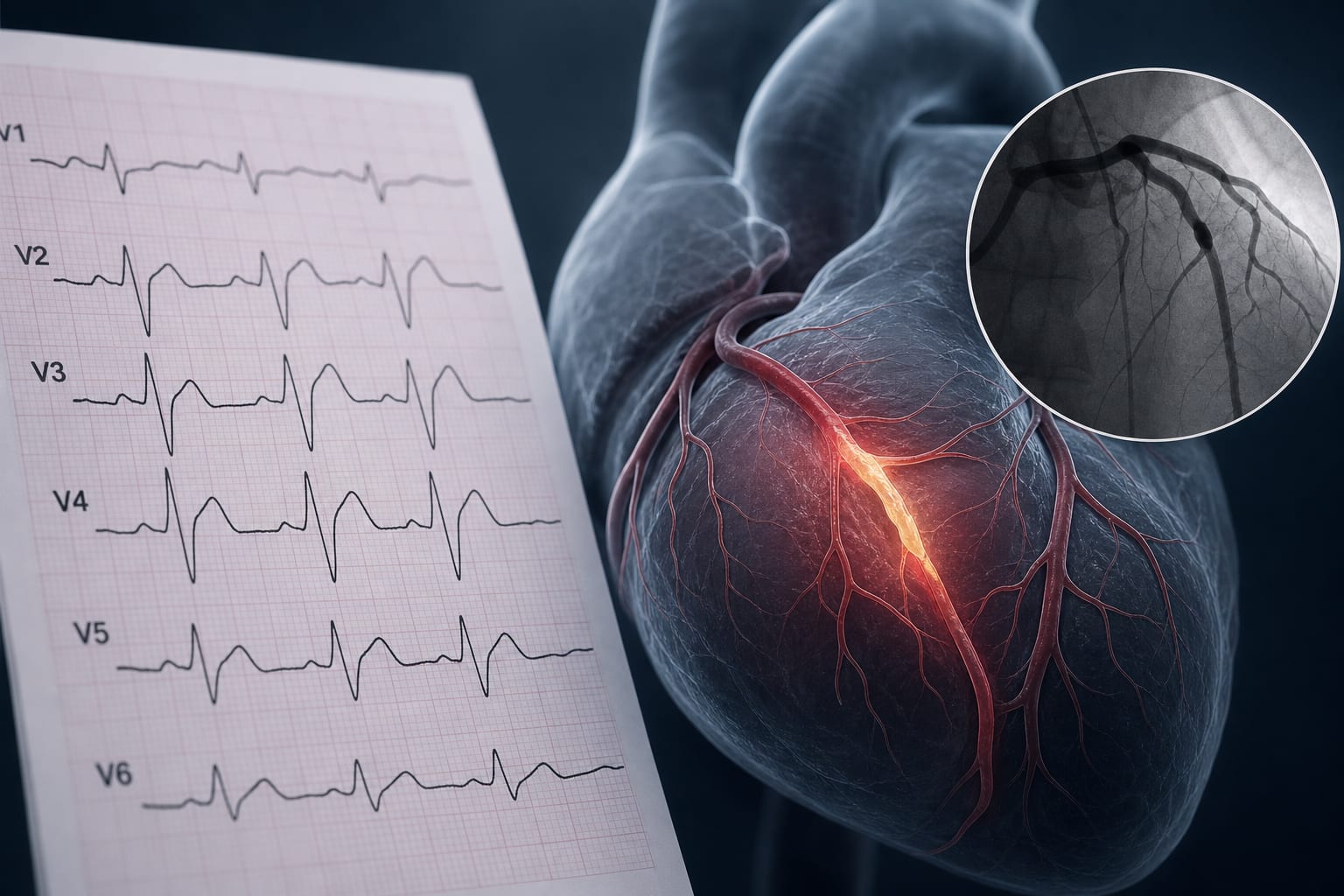
De Winter syndrome is a rare ECG pattern associated with acute coronary occlusion, often misdiagnosed due to the absence of classic ST-segment elevation. Early recognition is crucial for timely reperfusion therapy, which can significantly impact patient outcomes. This study consolidates existing knowledge to enhance understanding and recognition of this syndrome among clinicians.
Data Highlights
Characteristic
Value
Median Age
53.7 ± 13.9 years
Male Patients
98 (93.3%)
Smoking
51 (48.5%)
Hypertension
32 (30.5%)
Chest Pain
103 (98.0%)
Coronary Angiography - LAD Lesions
88 (84.6%)
Major Complications
28 (32.6%)
Key Findings
The cohort had a median age of 53.7 years, predominantly male (93.3%).
Chest pain was the primary symptom in 98% of patients.
The de Winter pattern was most frequently observed in leads V4 (91.4%) and V3 (90.5%).
Dynamic ECG changes were noted, with 22.9% progressing to STEMI.
Coronary angiography revealed single-vessel disease in 64.4% of cases, primarily affecting the LAD artery.
Major complications occurred in 32.6% of hospitalized patients, with acute heart failure being the most common.
Clinical Implications
Clinicians should maintain a high index of suspicion for de Winter syndrome in middle-aged male patients presenting with chest pain and risk factors like smoking and hypertension. Prompt recognition of the de Winter ECG pattern can facilitate timely intervention and improve patient outcomes.
Conclusion
Recognizing the de Winter syndrome as a STEMI-equivalent is essential for timely diagnosis and intervention. Improved awareness among healthcare professionals can lead to better management of patients with this condition.