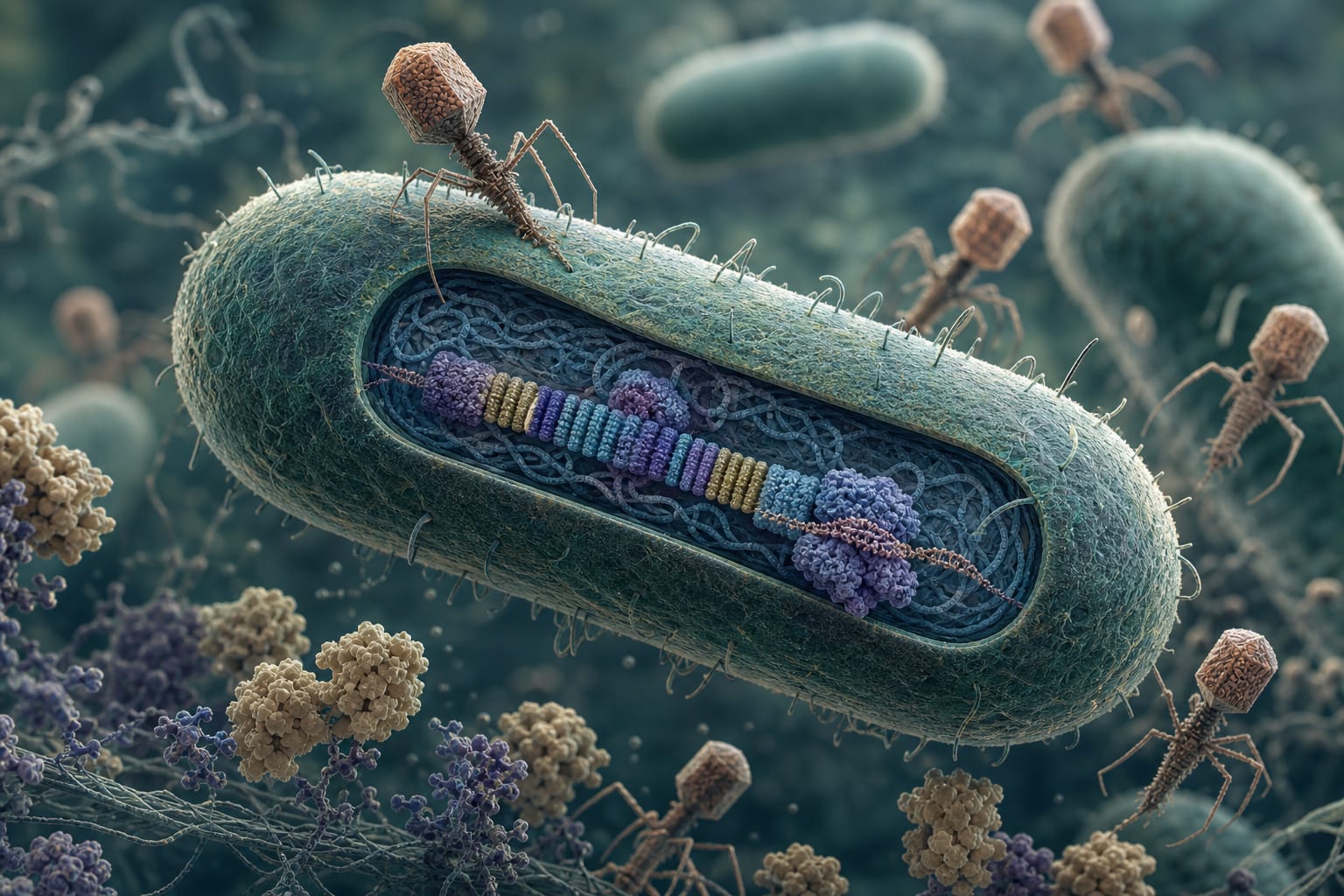
Clinical Report: Defense Mechanisms: Vital Protection Against Infections
Background
Understanding the mechanisms of immunity is crucial for developing strategies to combat infections. Both bacteria and eukaryotes have evolved complex systems to defend against pathogens, with innate and adaptive components playing significant roles.
Data Highlights
No numerical data or trial data available in the source material.
Key Findings
Bacteria utilize various defense systems, including apoptosis-like mechanisms and restriction enzymes.
The CRISPR–Cas system allows bacteria to develop adaptive immunity by remembering past infections.
Adaptive immunity was previously thought to be exclusive to jawed vertebrates, but complex systems exist in jawless fishes.
Vertebrate immunity integrates both adaptive and non-adaptive components for effective defense.
Invertebrates primarily rely on innate immune mechanisms, with limited evidence of adaptive immunity.
Clinical Implications
The findings emphasize the importance of understanding immune mechanisms for developing targeted therapies against infections. Knowledge of both innate and adaptive systems can inform clinical practices and public health strategies.
Conclusion
The review illustrates the evolutionary diversity of immune systems across organisms, highlighting the complexity and adaptability of defenses against infections.
Heart rate monitoring and atrial fibrillation detection had the strongest supporting evidence, but investigators found limited evidence for broader outpatient self-monitoring applications.