Association Between Goiter and Type 2 Diabetes in a Chinese Cohort
Overview
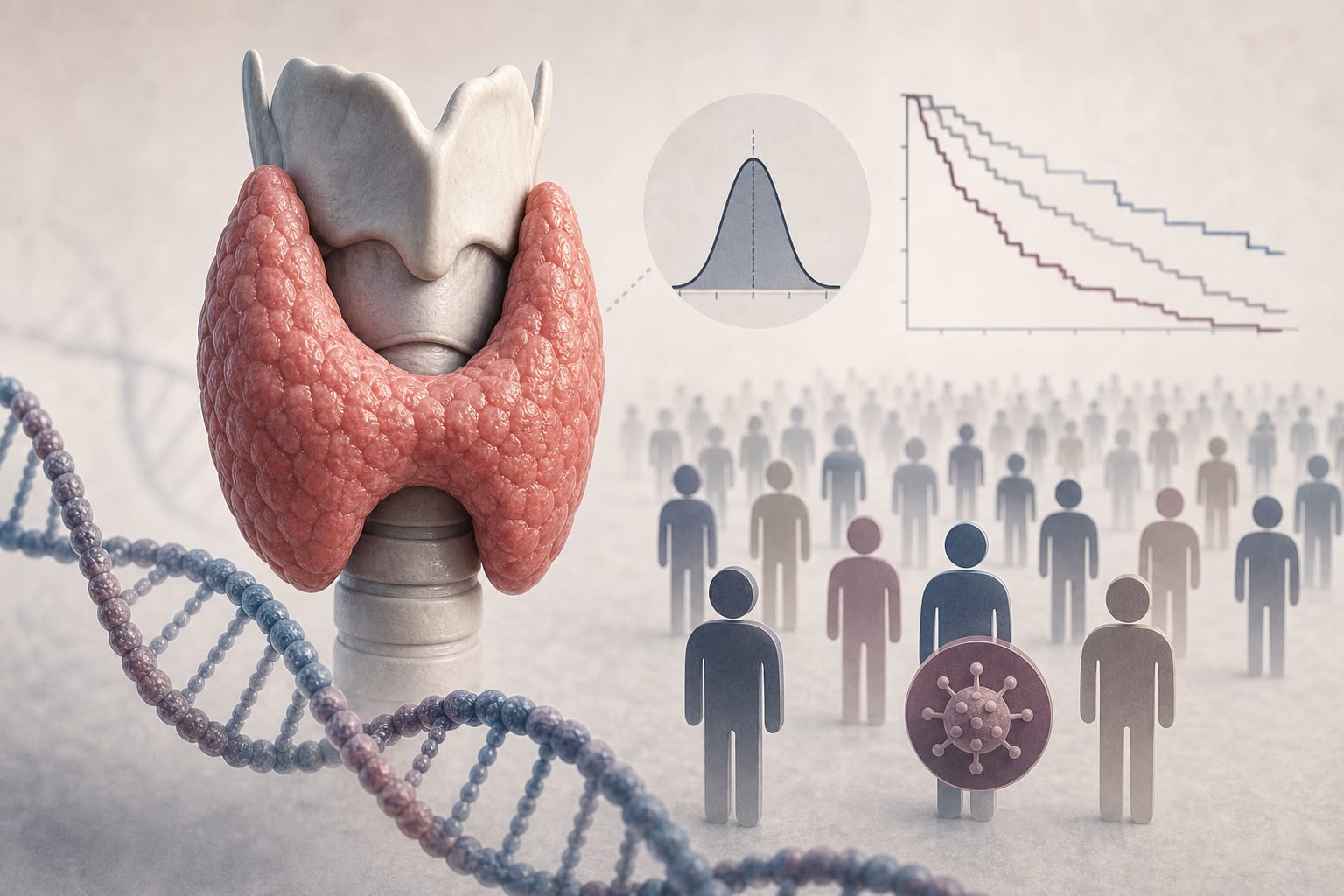
This cross-sectional study of 63,848 participant-wave observations from the China Health and Nutrition Survey (CHNS) found a significant positive association between goiter and type 2 diabetes mellitus (T2DM), with an adjusted odds ratio of 2.62. The findings suggest that individuals with goiter have an increased risk of T2DM independent of demographic, anthropometric, lifestyle, and clinical factors.
Background
Goiter is a morphological enlargement of the thyroid gland, distinct from functional thyroid disorders characterized by hormonal imbalances. Type 2 diabetes mellitus (T2DM) is a chronic metabolic disease marked by hyperglycemia and insulin resistance. While thyroid dysfunction and diabetes often coexist, the independent relationship between goiter as a structural abnormality and T2DM risk remains underexplored, especially in large population-based Chinese cohorts. Understanding this association could inform metabolic risk stratification and guide future research into underlying mechanisms.
Data Highlights
Parameter
Value
Total participant-wave observations
63,848
Number with T2DM
2,109
Number with goiter
155
Adjusted odds ratio (goiter vs. T2DM)
2.62 (95% CI: 1.29–4.81)
Multivariable model AUC (goiter + covariates)
0.809
Key Findings
Goiter is positively associated with increased risk of T2DM after adjusting for age, gender, education, BMI, smoking, and hypertension.
The adjusted odds ratio for T2DM in individuals with goiter was 2.62 (95% CI: 1.29–4.81).
The combined multivariable model including goiter and covariates demonstrated good discriminatory power for T2DM risk (AUC = 0.809).
The study design was cross-sectional, limiting causal or predictive inferences.
Goiter may serve as an independent morphological marker linked to glucose metabolism dysregulation.
Clinical Implications
Clinicians should be aware of the potential increased risk of T2DM in patients presenting with goiter, even in the absence of overt thyroid dysfunction. This association underscores the importance of metabolic screening in individuals with thyroid enlargement. However, given the observational nature of the data, further longitudinal studies are needed before integrating goiter status into routine diabetes risk assessment protocols.
Conclusion
This large-scale cross-sectional analysis identifies a significant association between goiter and T2DM in a Chinese population, highlighting the need for prospective research to clarify causality and underlying mechanisms. These findings contribute to a more comprehensive understanding of the interplay between thyroid morphology and metabolic disease.
Related Resources & Content
China Health and Nutrition Survey (CHNS) Database -- 1989-2018 Data
Epidemiological studies on thyroid disorders and diabetes -- Various Authors
Recent advances in T2DM pharmacotherapy -- Clinical Reviews