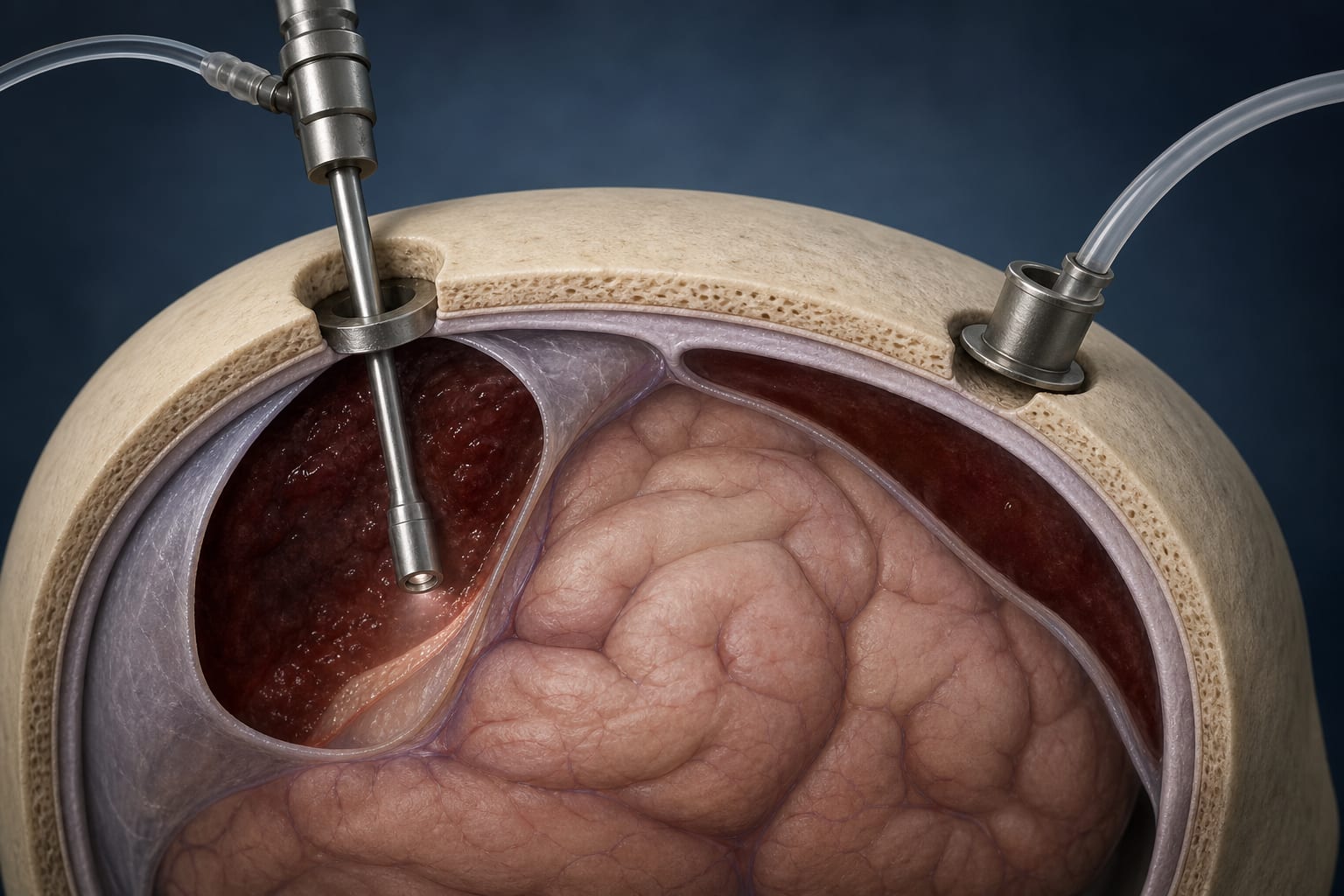
Prompt Titanium Mesh Cranioplasty After Infected Craniotomy Site Debridement
Overview
Immediate titanium mesh cranioplasty following debridement and bone flap removal for infected craniotomy sites shows promising outcomes with a majority of patients achieving long-term resolution without further surgery. Compared to delayed cranioplasty, immediate titanium mesh placement may reduce complications related to unprotected brain and improve cosmetic and surgical outcomes.
Background
Surgical site infection (SSI) after craniotomy occurs in 0.5% to 11% of cases and is influenced by factors such as irradiation, CSF leak, and emergency surgery. Standard management of infected bone flaps involves debridement, bone flap removal, antibiotic therapy, and delayed cranioplasty with synthetic materials. Delayed cranioplasty carries risks including cosmetic deformity, brain vulnerability, skin contraction, and additional surgical costs. Titanium implants have been successfully used in infected spinal surgeries, prompting investigation into their immediate use in cranioplasty.
Data Highlights
Outcome
Number of Patients (n=19)
Long-term resolution without further procedure
14
Re-operation for persistent infection (mesh removal)
2
Re-operation for poor skin quality/wound breakdown (mesh replaced with PEEK)
1
Re-operation for cosmetic reasons (mesh replaced)
2
Key Findings
Immediate titanium mesh cranioplasty was performed in 19 patients after infected bone flap removal, mostly post-tumor craniotomies.
Two patients required mesh removal due to persistent infection; both had prior chemo-radiotherapy.
Three patients underwent mesh replacement due to wound healing issues or cosmetic concerns.
Fourteen patients achieved long-term infection resolution without additional surgery.
Delayed titanium cranioplasty has a reported complication rate of 26.4%, with infection accounting for 20% in post-infectious cases.
Immediate titanium mesh cranioplasty offers advantages including reduced brain vulnerability, prevention of scalp adhesion, and improved cosmesis.
Clinical Implications
Immediate titanium mesh cranioplasty can be considered a safe and effective option following debridement of infected craniotomy sites, potentially reducing the risks associated with delayed cranioplasty such as brain exposure and skin contraction. This approach may also facilitate easier subsequent surgeries and improve cosmetic outcomes, especially in patients with smaller bone defects or those requiring temporary coverage before custom prosthesis placement.
Conclusion
Prompt titanium mesh cranioplasty after infected bone flap removal demonstrates favorable infection control and cosmetic results, representing a viable alternative to delayed cranioplasty. Further studies may solidify its role in standard neurosurgical practice.
References
Mukherjee et al. 2014 -- Review of delayed titanium cranioplasty complications
Talwar 2020 -- Literature review of immediate cranioplasty outcomes
Baptist Health Foundation announced that it has received a $2 million donation from Anthony and Joyce Esernia to establish a new endowed chair at Baptist Health Miami Neuroscience Institute.