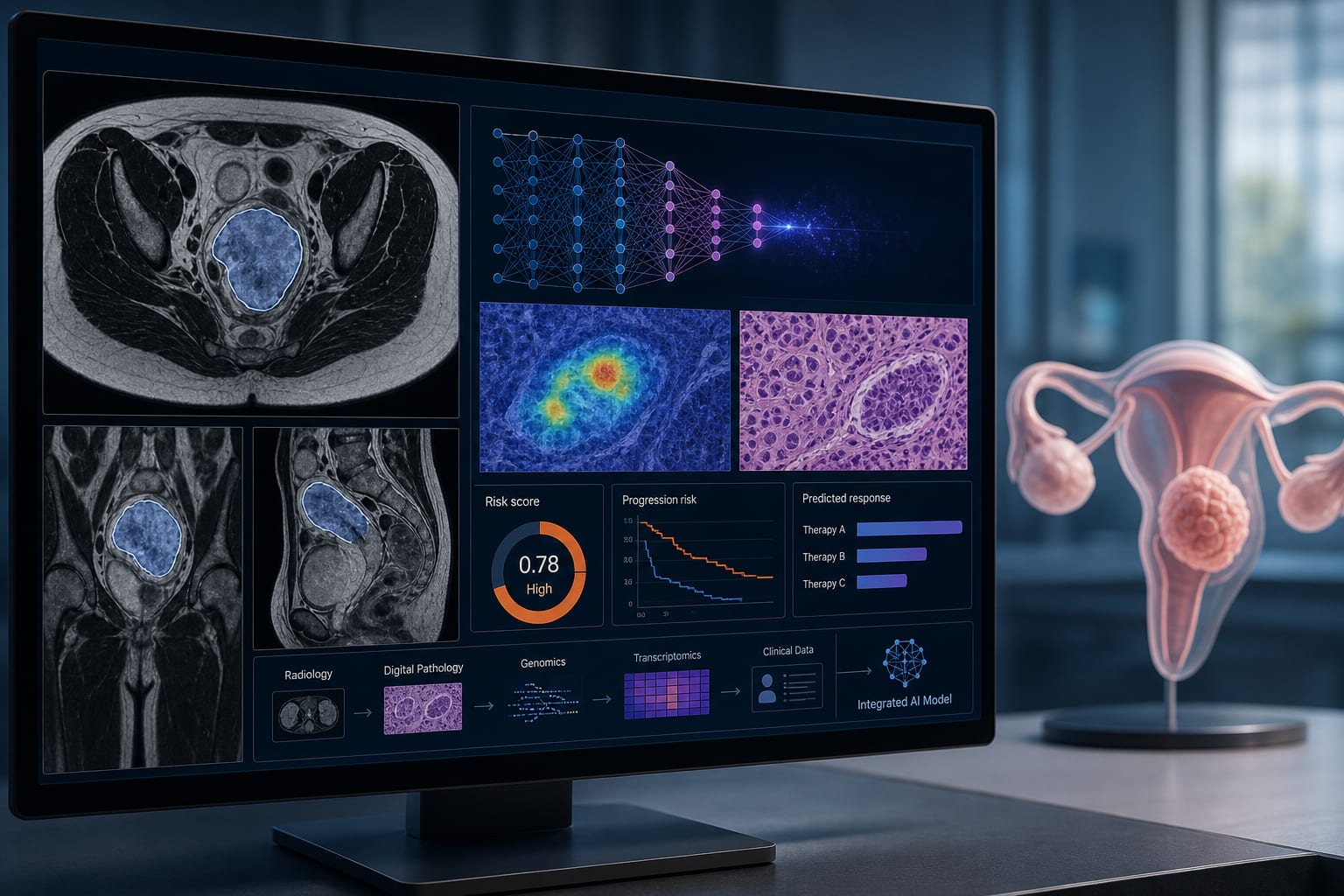
Clinical Report: Dose Estimation Using 3D Transformer Models in HDR Brachytherapy
Overview
This study investigates a novel 3D transformer-based deep learning model for dose prediction in high-dose-rate brachytherapy for cervical cancer. The model aims to enhance accuracy and efficiency in predicting dose distributions, addressing limitations of traditional methods.
Background
High-dose-rate brachytherapy (HDRBT) is a standard treatment for locally advanced cervical cancer, often combined with external beam radiation therapy. Accurate dose distribution prediction is crucial for optimizing treatment efficacy and minimizing risks to surrounding organs. Current methods face challenges in handling complex geometries and interpatient variations, necessitating improved predictive tools.
Data Highlights
Metric
Value
Average HRCTV Volume
94.6 cm³
Number of Patients
24
CT-based Treatment Plans
96
Key Findings
The proposed transformer model effectively captures global context in dose prediction.
Quantitative dose differences were assessed using dose-volume histogram (DVH) metrics.
3D gamma analysis and Dice similarity coefficient (DSC) were utilized for performance evaluation.
This study is the first to apply transformer mechanisms for predicting 3D dose distribution in HDR interstitial brachytherapy.
Hybrid architectures combining CNNs and self-attention mechanisms show promise in enhancing dose prediction accuracy.
Clinical Implications
The development of a transformer-based model for dose prediction could streamline treatment planning in HDR brachytherapy, potentially leading to improved patient outcomes. Clinicians may benefit from enhanced predictive accuracy, allowing for more tailored treatment approaches.
Conclusion
The introduction of a 3D transformer model represents a significant advancement in the field of brachytherapy dose prediction, addressing existing limitations and paving the way for improved treatment planning methodologies.