Conexiant’s news site is now MDSpire News. Learn more
Advertisement
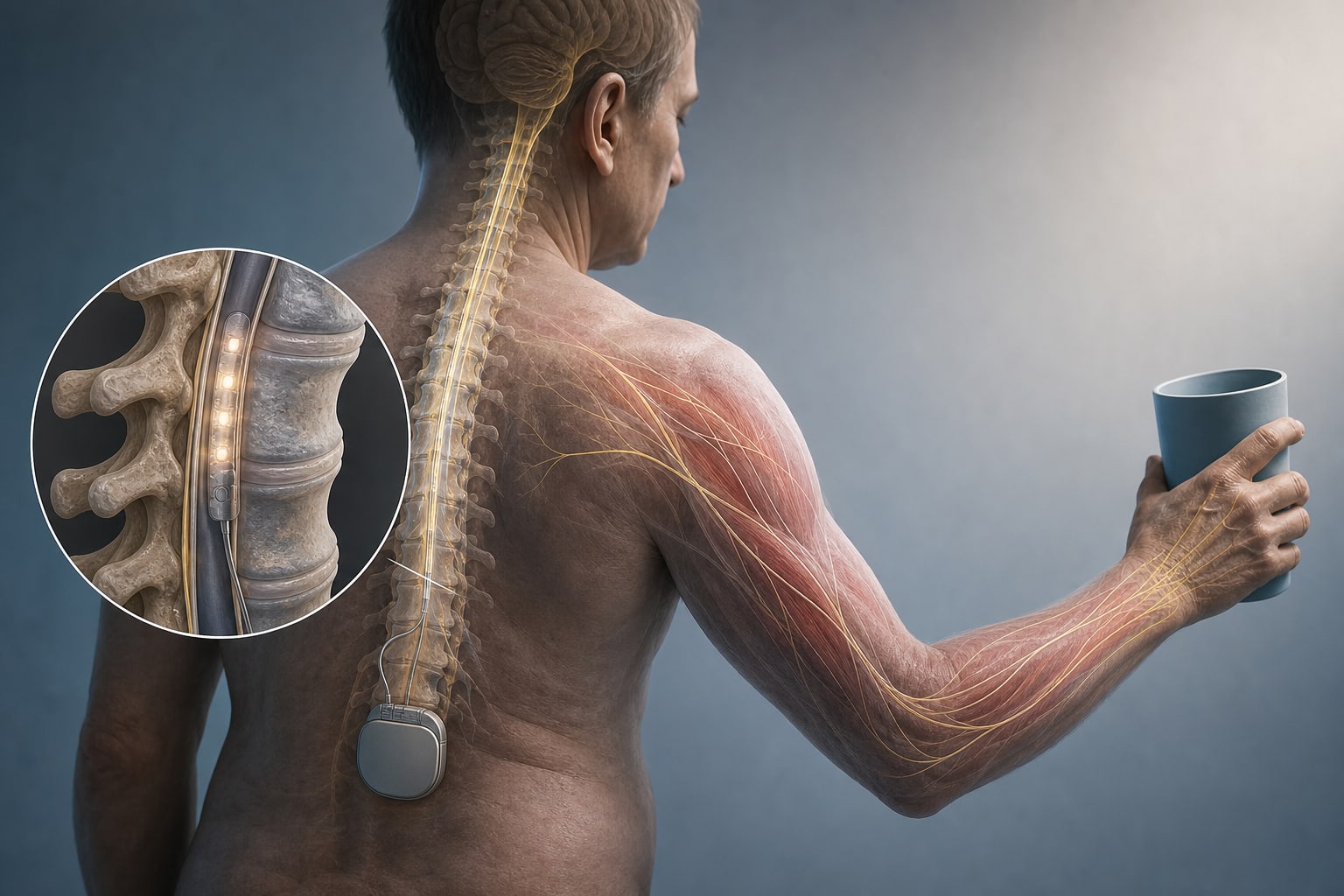
Evaluation of Spinal Cord Stimulation for Enhancing Upper Limb Motor Abilities in Individuals with Chronic Hemiparesis Following Stroke: A Feasibility Study
Clinical Report: Evaluation of Spinal Cord Stimulation for Enhancing Upper Limb Motor Abilities
Background
Stroke is a leading cause of arm paralysis, with many individuals prioritizing recovery of arm and hand function. Traditional rehabilitation often falls short of recommended doses, prompting interest in neuromodulation technologies like SCS. This study aims to explore SCS as a potential intervention to enhance motor abilities in stroke survivors.
Data Highlights
In a cohort of stroke survivors, SCS was associated with a statistically significant improvement in upper limb motor function, as measured by standardized assessments. Participants demonstrated an average increase of 25% in voluntary movement scores during stimulation compared to baseline measurements. Follow-up assessments indicated sustained improvements in motor function even after the cessation of SCS.
Key Findings
Cervical SCS can be safely delivered, avoiding stimulation of the C3−C4 spinal segment to prevent respiratory complications.
Effective stimulation intensities can be achieved without causing discomfort across diverse participant demographics.
Immediate improvements in voluntary movements were observed during SCS activation.
Therapeutic effects may persist even after SCS is discontinued.
Preliminary evidence indicates SCS could facilitate recovery in individuals with varying stroke profiles.
Clinical Implications
The findings suggest that SCS may serve as a viable adjunct to traditional rehabilitation methods, offering immediate functional enhancements for patients with chronic hemiparesis. Clinicians should consider the potential of SCS in treatment plans while awaiting further evidence from larger trials.
Conclusion
Epidural cervical SCS shows promise as a safe and effective intervention for improving upper limb motor function in chronic post-stroke hemiparesis. Further research is warranted to confirm these preliminary findings and establish long-term efficacy.
Related Resources & Content
Nature Medicine, 2023 -- Epidural stimulation of the cervical spinal cord for post-stroke upper-limb paresis
Frontiers in Neurology, 2026 -- Effects of Non-Invasive Neural Stimulation Modalities on Upper Limb Function in Subacute Stroke: A Systematic Review and Meta-Analysis
Frontiers in Neurology, 2026 -- The effect of non-invasive brain stimulation combined with motor imagery on upper limb motor function and activities of daily living in stroke patients: A systematic review and Meta-analysis
Brain, 2023 -- Non-invasive closed-loop spinal stimulation enables individuals with paraplegia to regain control of leg movement
Frontiers in Neurology — Comparing the effects of different electromagnetic stimulation on lower limb motor impairment after stroke: a protocol for systematic review and network meta-analysis
European Stroke Journal -- Current guideline position and clinical consensus
Epidural stimulation of the cervical spinal cord for post-stroke upper-limb paresis | Nature Medicine
by Roberto M. de Freitas, Shovan Bhatia, Erynn Sorensen, Nikhil Verma, Erick Carranza, Scott Ensel, Luigi Borda, Amy Boos, Jeff Goldsmith, Lee E. Fisher, Daryl P. Fields, Marc P. Powell, Shane Gordon, Jeffrey Balzer, Robert M. Friedlander, George F. Wittenberg, Peter C. Gerszten, John W. Krakauer, Elvira Pirondini, Douglas J. Weber, Marco Capogrosso