Potential role of maintaining physiological testosterone levels in improving glucose metabolism among normal-weight Japanese women: a pilot exploratory study - Report - MDSpire
Clinical Report: Impact of Testosterone Levels on Glucose Metabolism in Women
Overview
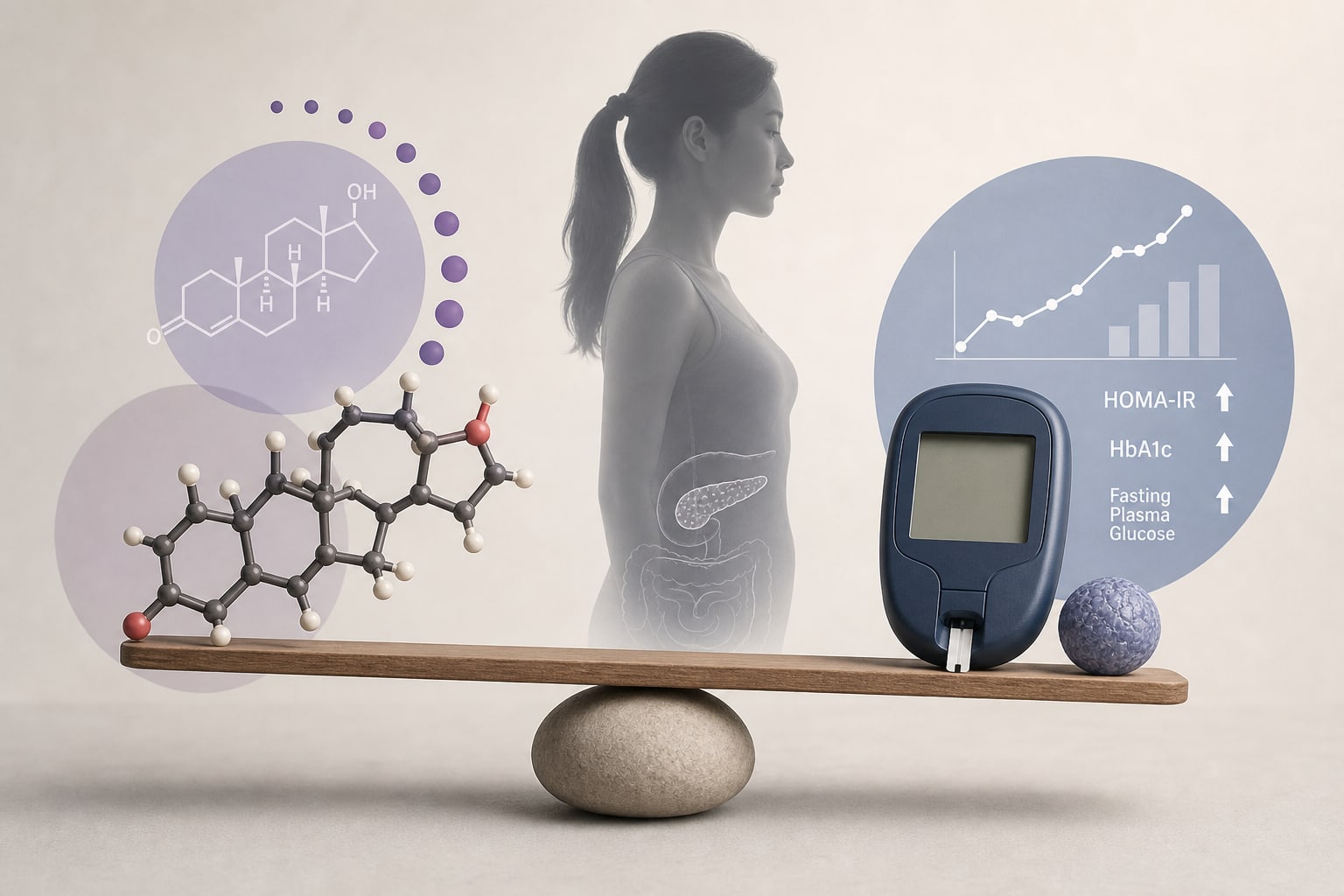
This study investigates the relationship between serum total testosterone levels and glucose metabolism in normal-weight Japanese women. Findings indicate significant inverse correlations between testosterone levels and glucose metabolism indices.
Background
Understanding the role of testosterone in glucose metabolism is crucial, particularly in women where obesity-related data dominate the literature. This study focuses on normal-weight women to eliminate confounding factors associated with obesity.
Data Highlights
Parameter
Correlation Coefficient (ρ)
p-value
HbA1c
-0.341
0.004
Fasting Glucose
-0.327
0.006
HOMA-IR
-0.274
0.023
Key Findings
Total testosterone levels are inversely correlated with HbA1c, fasting glucose, and HOMA-IR.
Significant associations remain after adjusting for BMI and lifestyle factors.
Associations with HbA1c and fasting glucose are attenuated after adjusting for age and menopausal status.
The inverse association between testosterone and HOMA-IR remains significant after adjusting for age and menopausal status.
Clinical Implications
These findings suggest that maintaining physiological testosterone levels may be important for glucose metabolism in normal-weight women. Clinicians should consider the role of androgens in metabolic health assessments, particularly in women without obesity-related complications.
Conclusion
This study provides evidence that low total testosterone levels are associated with impaired glucose metabolism in normal-weight women.