Efficacy of interventions in peripheral arterial and venous malformations of the limbs in children: protocol for a systematic review - Report - MDSpire
Advertisement
Efficacy of interventions in peripheral arterial and venous malformations of the limbs in children: protocol for a systematic review
Clinical Report: Effectiveness of Treatment Approaches for Limb pAVMs in Pediatrics
Overview
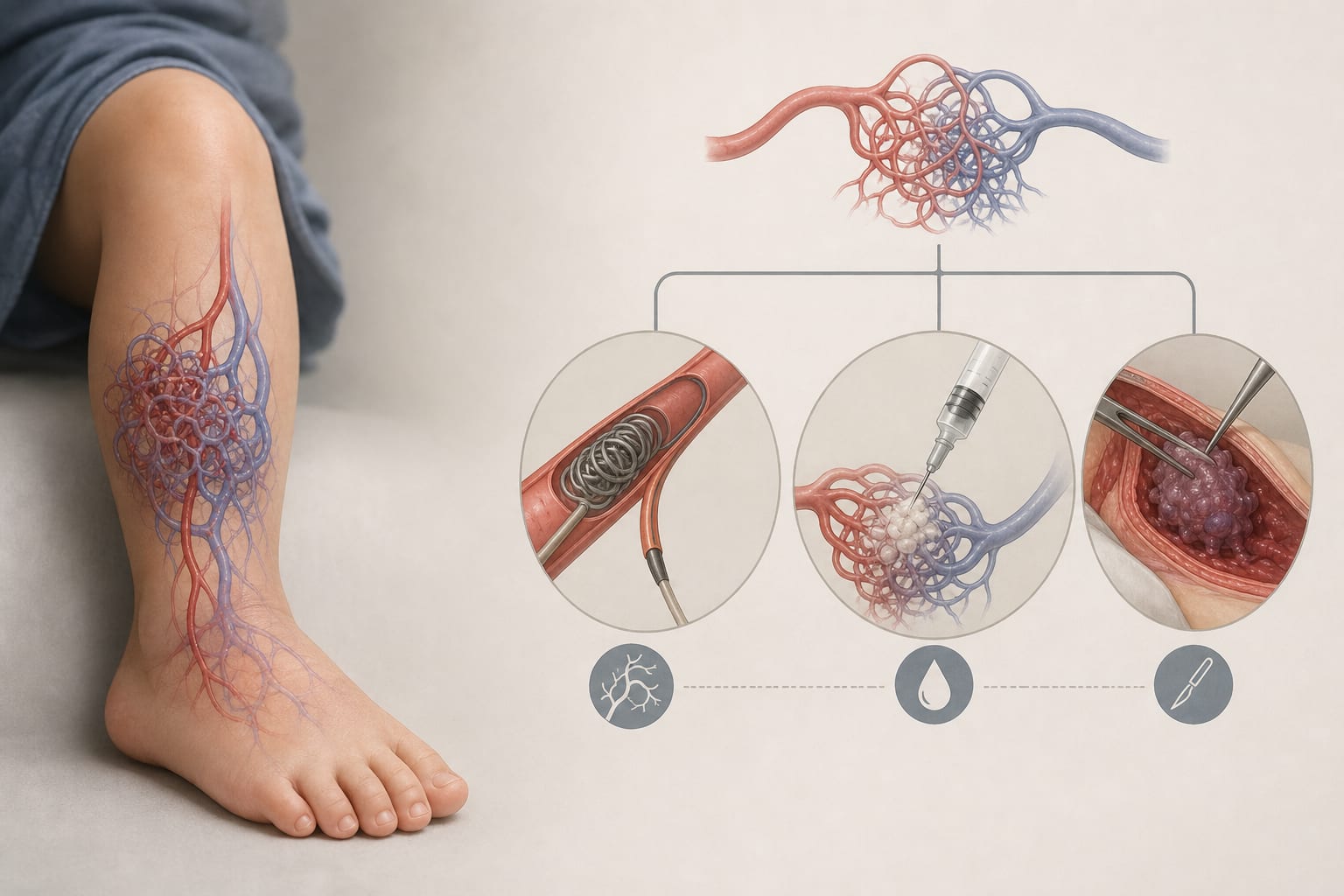
This systematic review protocol aims to evaluate the effectiveness of various treatment approaches for pediatric limb peripheral arteriovenous malformations (pAVMs). The study will focus on short-term symptom improvement, adverse events, and quality of life outcomes, addressing the current lack of high-quality evidence in this area.
Background
Peripheral arteriovenous malformations (pAVMs) are common congenital vascular anomalies in children, particularly affecting the limbs. These conditions can lead to significant complications, including pain, mobility issues, and impaired growth. The complexity of pAVMs in pediatric patients necessitates effective treatment strategies, yet existing research is limited and often lacks standardization.
Data Highlights
This study will conduct a systematic review of clinical studies on pediatric limb pAVMs, focusing on treatment efficacy and safety.
Key Findings
Pediatric extremity pAVMs account for 35%-45% of all cases of pAVMs.
Endovascular embolization is the first-line treatment due to its minimal invasiveness.
Current literature lacks high-quality randomized controlled trials on treatment efficacy.
Existing studies often have small sample sizes and lack standardized intervention criteria.
Multidisciplinary approaches may enhance treatment outcomes and reduce complications.
Clinical Implications
Clinicians should be aware of the complexities involved in treating pediatric limb pAVMs and the need for a multidisciplinary approach. The findings from this systematic review may provide valuable insights for evidence-based treatment strategies and improve patient outcomes.
Conclusion
This systematic review aims to clarify the effectiveness of treatment options for pediatric limb pAVMs, addressing a significant gap in the current literature. The results may guide clinicians in making informed decisions regarding intervention strategies.
A four-factor staging system stratified response rates from 90.9% to 37.5% in a retrospective cohort study, although the model showed only moderate discrimination (C statistic, 0.68) and requires external validation
Three amino acid metabolism genes showed diagnostic signal in testicular tissue, though small sample sizes and computational methods limit clinical translation.