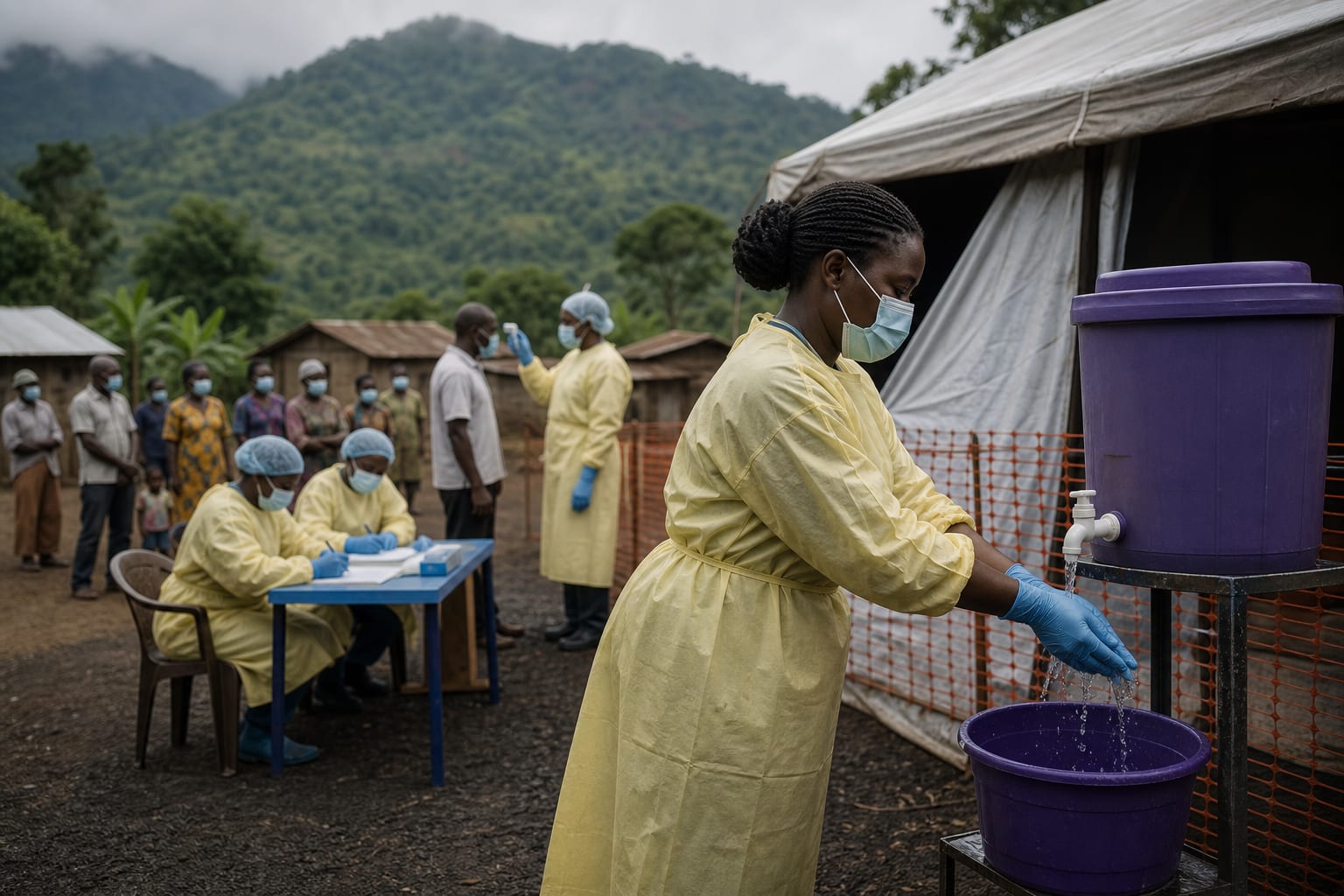
Clinical Report: The Importance of Public Health Principles in Managing Bundibugyo Ebola
Overview
The ongoing Bundibugyo Ebola outbreak in Central and East Africa highlights the critical need for effective public health interventions in the absence of vaccines and therapeutics.
Background
The resurgence of Ebola, particularly the Bundibugyo strain, poses significant challenges in regions with limited healthcare resources. The lack of licensed vaccines or therapeutics necessitates reliance on non-pharmaceutical interventions to manage outbreaks effectively.
Data Highlights
No numerical data provided in the source material.
Key Findings
['The Bundibugyo Ebola outbreak has been declared a Public Health Emergency of International Concern by WHO.', 'No licensed vaccines or therapeutics exist for Bundibugyo ebolavirus, necessitating reliance on non-pharmaceutical measures.', 'Supportive clinical care, including hydration and treatment of secondary infections, can improve survival rates.', 'Excessive travel restrictions during outbreaks can hinder humanitarian efforts and are not supported by evidence.', 'Community trust and culturally sensitive communication are essential for effective public health interventions.']
Clinical Implications
Healthcare providers must prioritize early case detection, isolation, and community engagement to control Ebola outbreaks.
Conclusion
The Bundibugyo Ebola outbreak illustrates the necessity of robust public health strategies in managing infectious disease threats.