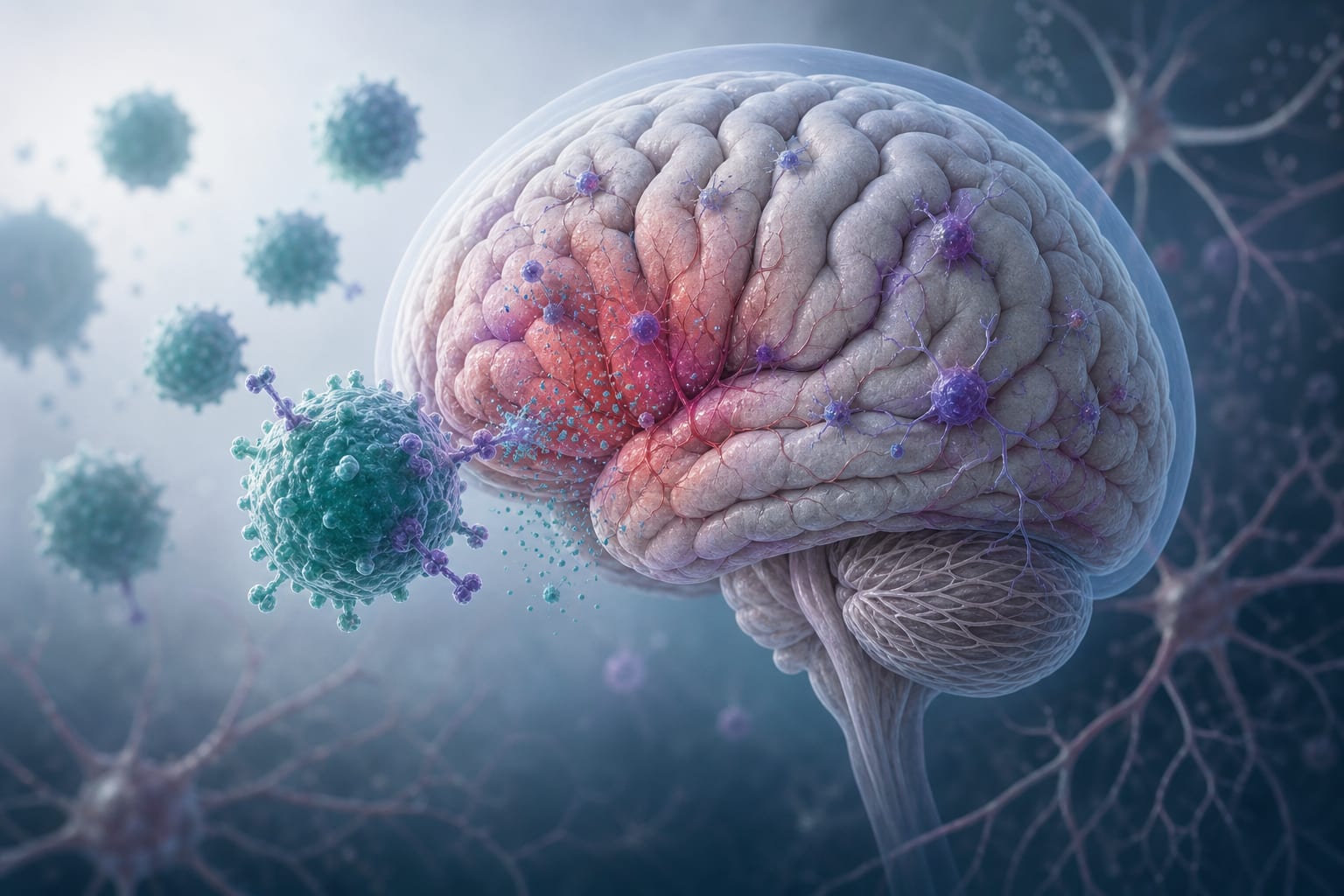
Clinical Report: New Perspectives on Neurotoxicity Related to CAR T-cell Therapy
Overview
This editorial discusses the evolving understanding of CAR T-cell therapy-related neurotoxicity, particularly focusing on immune effector cell-associated neurotoxicity syndrome (ICANS) and late-onset neurotoxicity syndromes.
Background
The rapid expansion of CAR T-cell therapy since its FDA approval in 2017 necessitates a deeper understanding of its associated toxicities, especially neurological complications. ICANS is a significant concern, affecting approximately 27% of treated patients across all grades and 10.5% at high grade, with potential to become life-threatening. Understanding the mechanisms and manifestations of these toxicities is crucial for optimizing patient care.
Data Highlights
According to a meta-analysis of 75 trials, ICANS occurs in approximately 27% of treated patients across all grades and 10.5% at high grade.
Key Findings
ICANS presents with symptoms such as aphasia, altered consciousness, cognitive impairment, and seizures.
Late-onset neurotoxicity syndromes have been observed, particularly in patients receiving BCMA-directed CAR T-cell therapies.
Mechanisms of ICANS include cytokine-mediated endothelial activation and blood-brain barrier disruption.
Myeloid-derived IL-1 and IL-6 production are associated with ICANS severity.
Clinical assessment of ICANS remains challenging.
Clinical Implications
Healthcare professionals should be aware of the neurological complications associated with CAR T-cell therapy.
Conclusion
The editorial discusses the understanding and management of neurotoxicity related to CAR T-cell therapy.
Harold Burstein, MD, PhD, and Ana C. Garrido-Castro, MD discuss results from the Saci-IO HR+ trial, which were presented at the 2026 ESMO Breast Cancer Congress.