Editorial: Enhancing quality of life in individuals with neurodevelopmental disorders: pathways to inclusion and well-being - Report - MDSpire

Editorial: Enhancing quality of life in individuals with neurodevelopmental disorders: pathways to inclusion and well-being

  • By

  • Antonio M. Amor

  • Cristina Mumbardó-Adam

  • Miguel Á. Verdugo

  • Luigi Croce

  • June 19, 2026

  • 0 min

Share

Clinical Report: Improving Life Quality for Those with Neurodevelopmental Disorders

Overview

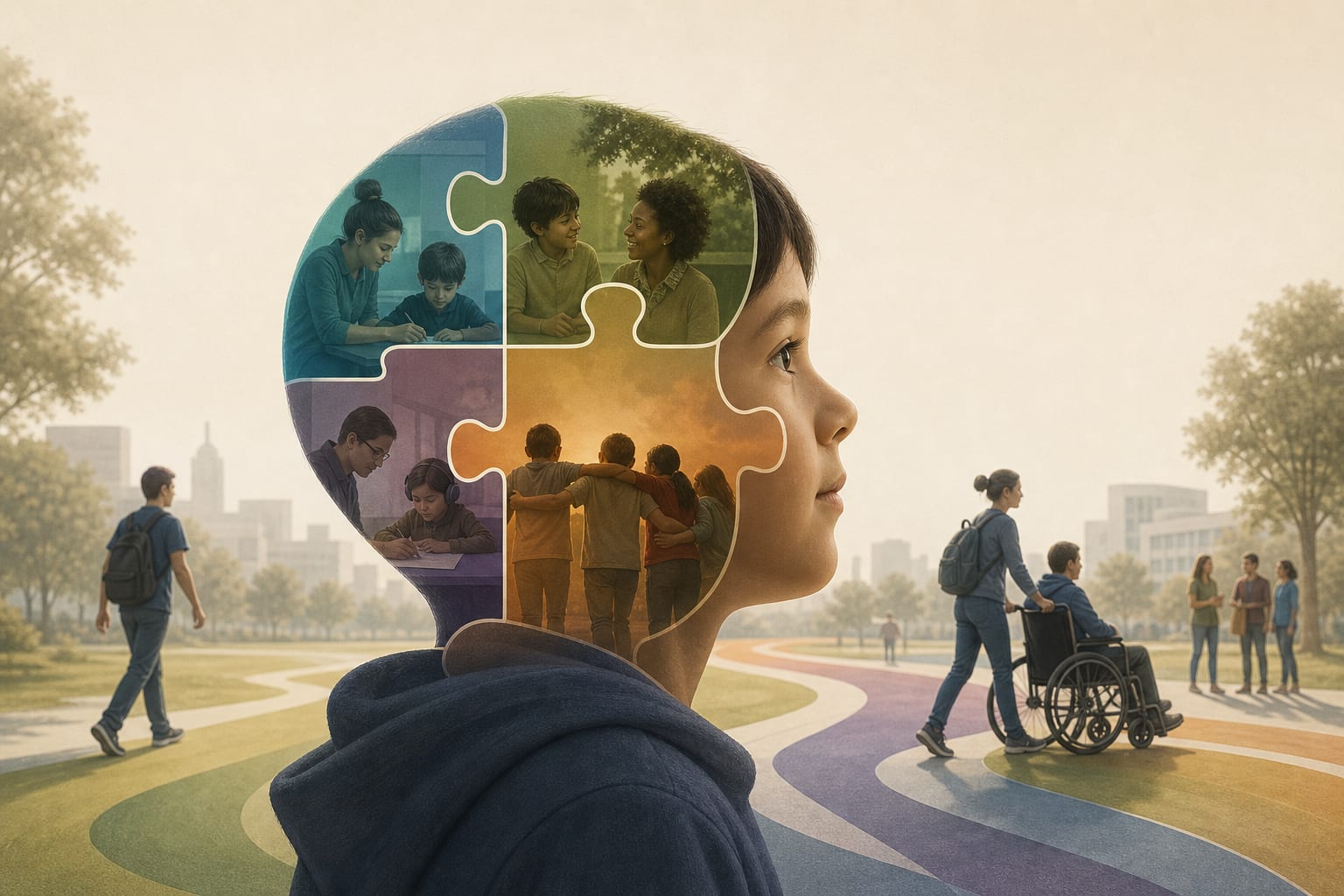
This editorial discusses the shift from deficit-based approaches to a socio-ecological paradigm for individuals with neurodevelopmental disorders (NDD). It emphasizes the importance of multidimensional quality of life (QoL) assessments.

Background

The recognition of neurodevelopmental disorders has evolved, highlighting the need for holistic support that considers both personal strengths and environmental factors. Quality of life assessments are crucial for understanding individual needs.

Data Highlights

Ten studies addressed QoL as an outcome variable, with findings indicating differences in QoL based on various factors such as diagnosis and support systems.

Key Findings

  • Ramsdal et al. found that competitive integrated employment improved interpersonal relationships and emotional well-being in adults with intellectual disability.
  • Aguayo et al. identified themes of independence and well-being in caregivers of adults with cerebral palsy.
  • Sforza et al. reported lower QoL in children with tuberous sclerosis complex compared to those with idiopathic autism spectrum disorder.
  • Dong et al. revealed lower QoL in parents of children with intellectual disabilities compared to the general population.
  • Gómez-Vela et al. found lower school participation rates among students with disabilities compared to their peers without disabilities.
  • Wurth et al. demonstrated that diagnosis acceptance and perceived challenges predicted QoL in adults with ADHD and ASD.

Clinical Implications

Understanding the factors influencing QoL can guide the development of support strategies.

Conclusion

The editorial highlights the importance of a socio-ecological approach in enhancing the quality of life for individuals with neurodevelopmental disorders.
Related Resources & Content

  1. Frontiers in Psychiatry, 2026 -- Enhancing the social skills and social competence for children and adolescents with autism spectrum disorder
  2. BMC Psychiatry (Springer), 2025 -- Caregiver psychiatric symptoms, assessment delay, and access to supports for children with neurodevelopmental conditions
  3. Frontiers in Psychiatry, 2026 -- Measuring the quality of life of students with autism in Chilean general education schools
  4. Frontiers in Medicine, 2026 -- Theoretical framework of the neuro and psychomotor therapist for developmental age: an Italian perspective for paediatric rehabilitation of neurodevelopmental disabilities
  5. WHO, 2026 -- Caregiver skills training for families of children with developmental delays or disabilities: caregiver well-being: facilitators’ and participants’ guides
  6. Cognitive behavioral therapy effects on global functioning, domain-specific functioning, and quality of life in adult ADHD: A comprehensive meta-analysis - ScienceDirect, 2026
  7. Caregiver skills training for families of children with developmental delays or disabilities: caregiver well-being: facilitators’ and participants’ guides
  8. Cognitive behavioral therapy effects on global functioning, domain-specific functioning, and quality of life in adult ADHD: A comprehensive meta-analysis - ScienceDirect
  9. Acceptance and Commitment Training for Parents of Children With Autism Spectrum Disorder: A Randomized Clinical Trial - PubMed

Original Source(s)

Related Content