Comparative study of three treatment approaches on overall survival and treatment response in nasopharyngeal carcinoma patients: network meta-analysis of RCTs (4221 patients) - Report - MDSpire
Advertisement
Comparative study of three treatment approaches on overall survival and treatment response in nasopharyngeal carcinoma patients: network meta-analysis of RCTs (4221 patients)
Clinical Report: Network Meta-Analysis of Treatment Modalities for NPC
Overview
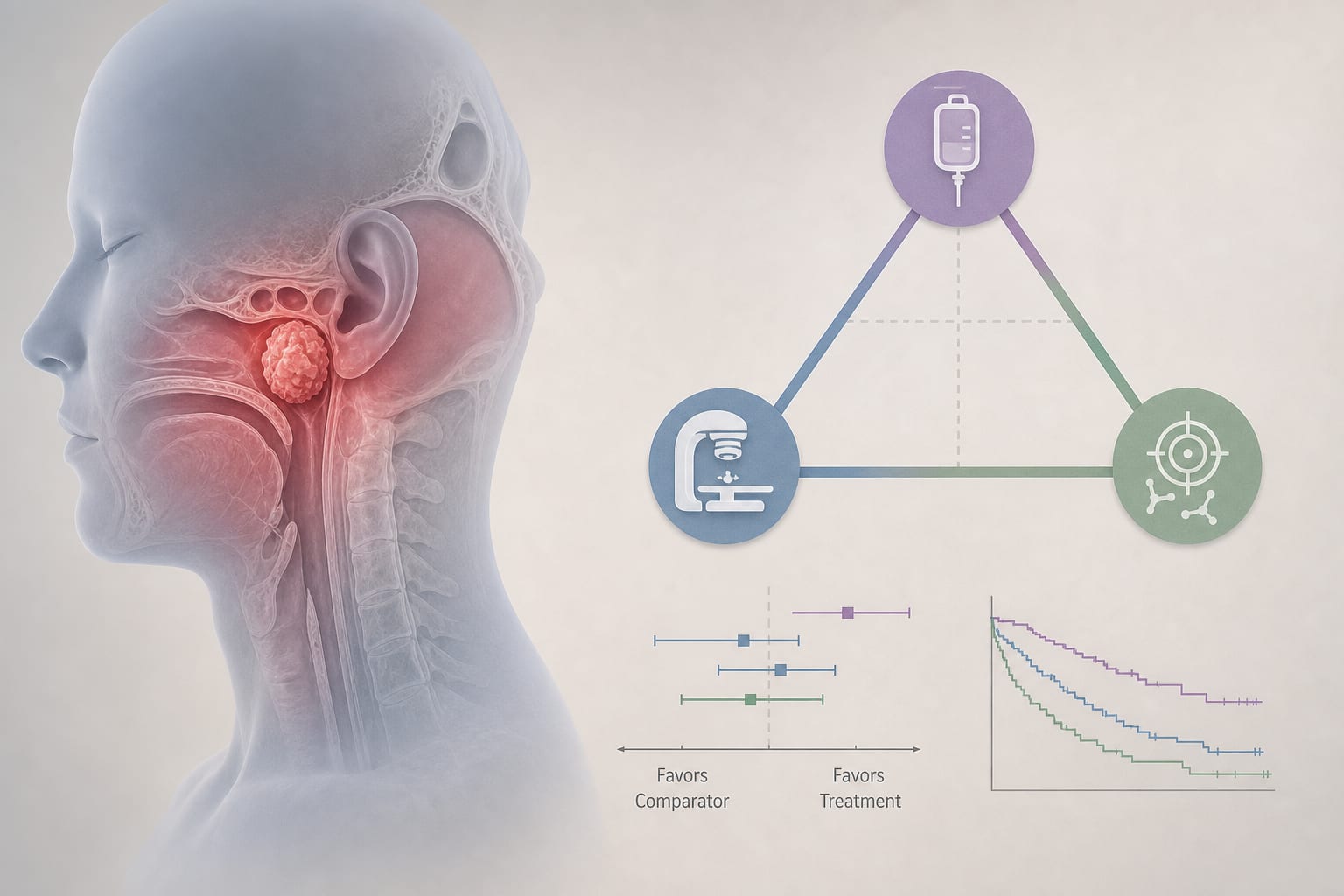
This study systematically compares the efficacy of induction chemotherapy, targeted therapy, and radiotherapy in nasopharyngeal carcinoma (NPC) patients.
Background
Nasopharyngeal carcinoma (NPC) presents a significant disease burden, particularly in endemic regions. The optimal treatment strategy remains debated, with various modalities including induction chemotherapy, targeted therapy, and radiotherapy.
Data Highlights
Intervention
Overall Survival (OS) SUCRA
Progression-Free Survival (PFS) SUCRA
Objective Response Rate (ORR) SUCRA
Cumulative Recurrence Risk (CRR) SUCRA
Induction Chemotherapy (IC)
98.1%
Not significant
71.6%
Not applicable
Targeted Therapy (TD)
Not significant
82.2%
Not significant
98.0%
Radiotherapy
Not significant
Not significant
Not significant
Not significant
Key Findings
Induction chemotherapy (IC) demonstrated a statistically significant survival benefit compared to the control group (HR = 0.37, 95% CI: 0.02, 0.71).
Targeted therapy (TD) ranked first in overall survival probability (SUCRA = 98.1%) but did not show significant benefits in OS.
No intervention showed statistically significant benefits for progression-free survival (PFS).
IC had the highest probability for objective response rate (ORR) (SUCRA = 71.6%) with no significant differences among interventions.
TD showed the greatest advantage in cumulative recurrence risk reduction (SUCRA = 98.0%).
Radiotherapy alone did not demonstrate significant benefits across any outcome measures.
Clinical Implications
The findings suggest that induction chemotherapy should be prioritized for improving overall survival in NPC patients. Targeted therapies may be more effective in managing recurrence risk, while radiotherapy alone may not provide significant benefits.
Conclusion
This network meta-analysis provides evidence for the comparative efficacy of treatment modalities in nasopharyngeal carcinoma.
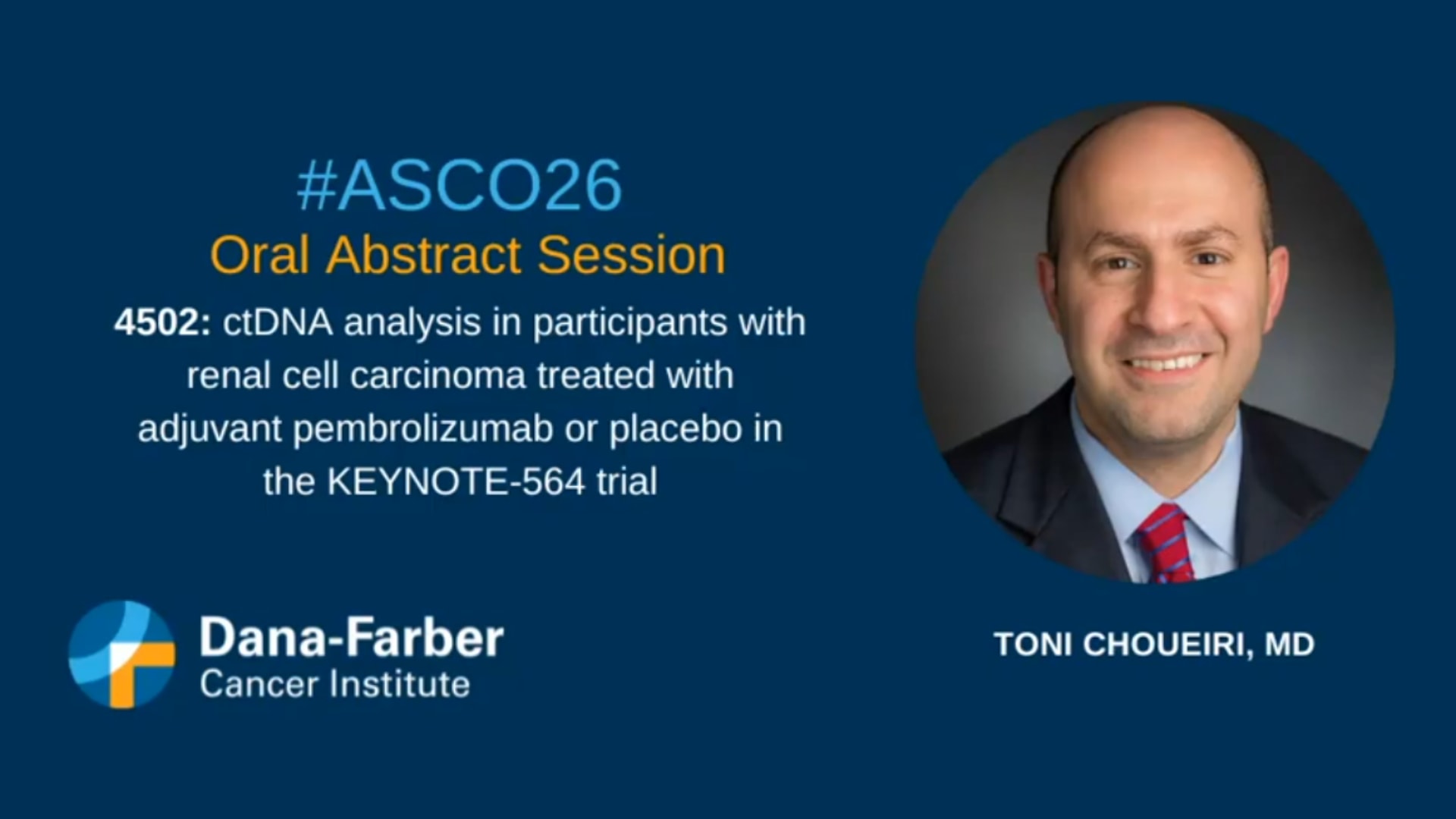
Data highlights limitations of ctDNA assay used to predict outcomes in participants with renal cell carcinoma treated with adjuvant pembrolizumab in the KEYNOTE-564 trial. Dana-Farber Cancer Institute's Dr. Toni Choueiri explains that ctDNA+ was associated with worse disease-free outcomes, but sensitivity was low.