Lysophosphatidylcholine and lysophosphatidic acid as key messengers in atherosclerosis: from a lipid-inflammation vicious cycle to therapeutic translation - Report - MDSpire
Advertisement
Lysophosphatidylcholine and lysophosphatidic acid: pivotal signaling molecules in atherosclerosis and their potential for therapeutic application
Lysophosphatidylcholine and lysophosphatidic acid: pivotal signaling molecules in atherosclerosis
Overview
This review highlights the roles of lysophosphatidylcholine (LPC) and lysophosphatidic acid (LPA) in atherosclerosis, emphasizing their involvement in lipid metabolism and inflammation. It discusses the LPC-LPA axis as a key driver of plaque progression.
Background
Atherosclerosis is a leading cause of cardiovascular morbidity and mortality, characterized by lipid accumulation and chronic inflammation in arterial walls. Despite advancements in lipid-lowering therapies, a significant residual risk of cardiovascular events remains, necessitating a deeper understanding of the underlying mechanisms. Lysophospholipids, particularly LPC and LPA, have emerged as critical players in the inflammatory processes associated with atherosclerosis.
Data Highlights
No numerical data or trial data presented in the article.
Key Findings
LPC and LPA are the most abundant lysophospholipids in atherosclerotic plaques.
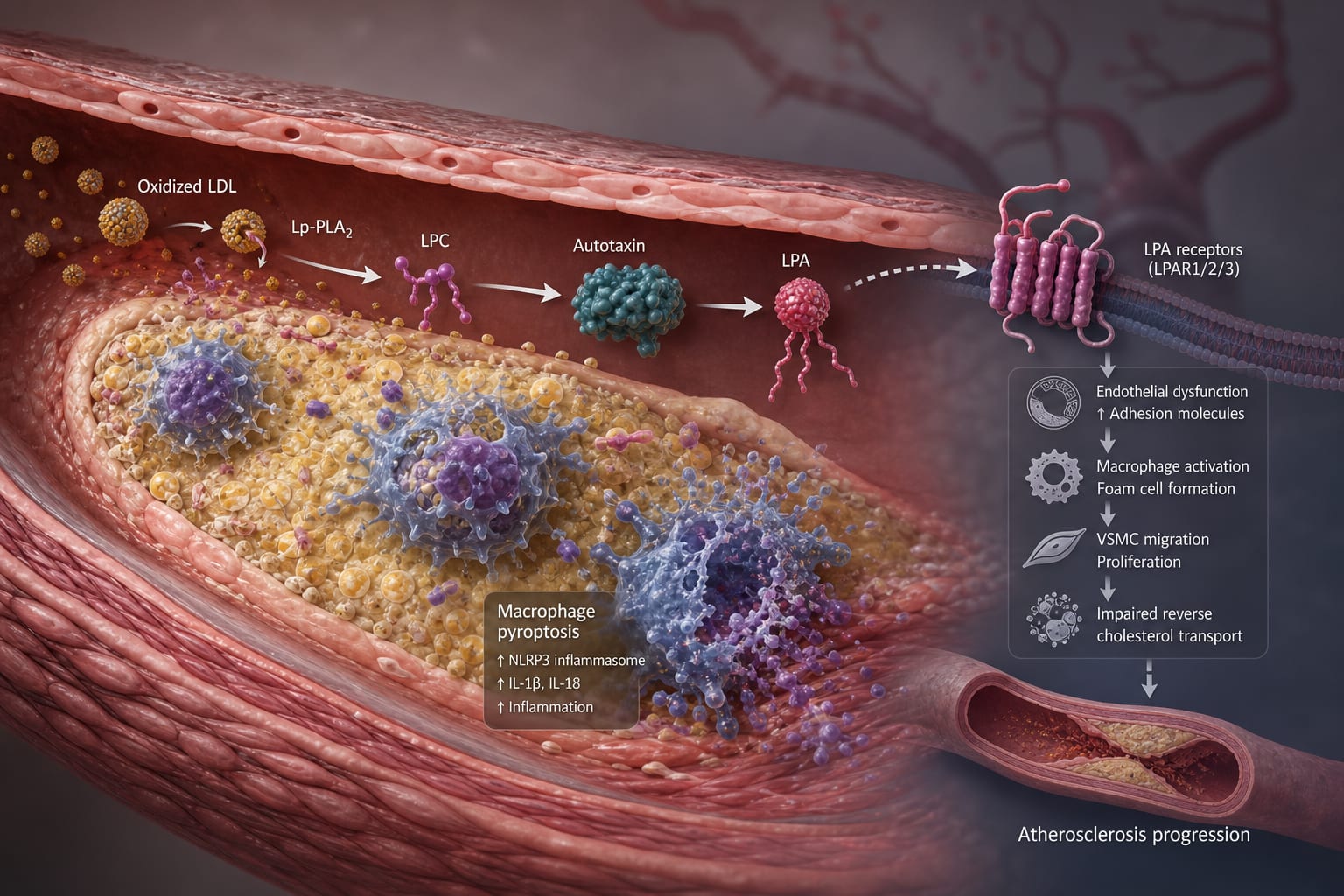
LPC is generated from oxidized LDL by lipoprotein-associated phospholipase A2 (Lp-PLA2).
LPA is produced from LPC by autotaxin and is more potent in activating inflammatory signaling.
Both LPC and LPA contribute to macrophage pyroptosis and impair reverse cholesterol transport.
Spatial metabolomics has identified LPC (18:0) and LPA (18:1) as enriched in vulnerable plaque regions.
Current therapeutic strategies include multi-node combination therapy targeting LPLs.
Clinical Implications
Understanding the roles of LPC and LPA in atherosclerosis may inform future research directions.
Conclusion
The LPC-LPA axis plays a significant role in the pathogenesis of atherosclerosis, highlighting the need for innovative therapeutic strategies to address this complex disease.