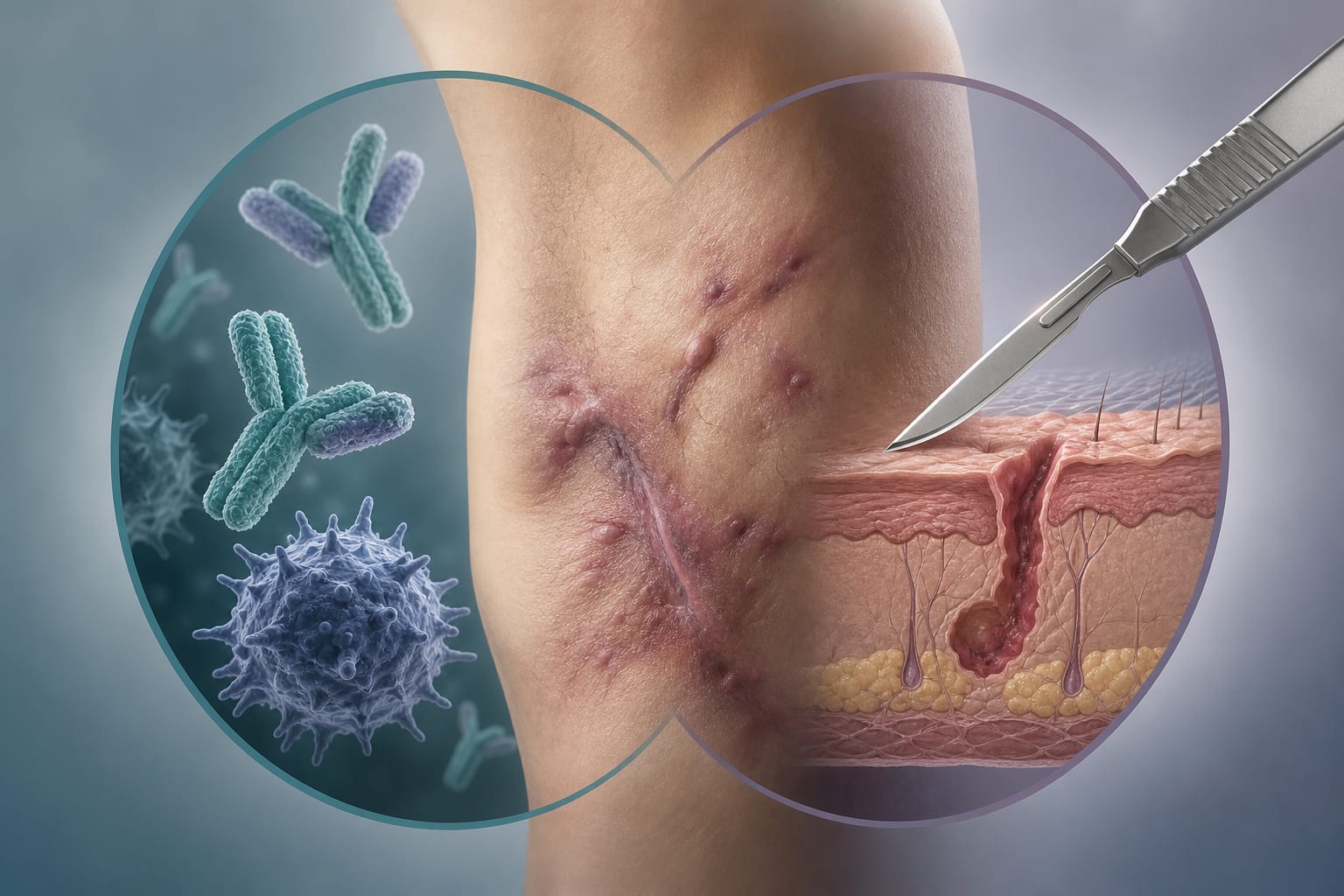
Clinical Report: Local Treatment Options for Hidradenitis Suppurativa
Overview
Revise to specify how antiseptics contribute to reducing antimicrobial resistance.
Background
Hidradenitis suppurativa is a chronic inflammatory skin condition that significantly impacts patients' quality of life. Effective management is crucial due to the disease's progressive nature and the complexity of its treatment options. Local therapies serve as foundational treatments, especially for mild forms of HS, and can complement systemic therapies in more severe cases.
Data Highlights
No numerical data or trial data presented in the article.
Key Findings
Local therapies, including antiseptics and keratolytics, are essential for managing mild HS.
Topical 15% resorcinol has shown meaningful efficacy and may replace clindamycin in mild-to-moderate HS.
Intralesional corticosteroids and botulinum toxin can be beneficial for selected patients.
Topical Janus kinase inhibitors (JAK-I) are emerging as potential treatment options but require further validation.
Patient-reported outcome measures (PROMs) are crucial for assessing the effectiveness of local therapies.
Clinical Implications
Clinicians should prioritize nonantibiotic topical treatments, such as antiseptics and keratolytics, to mitigate the risk of antimicrobial resistance. The use of resorcinol as a first-line option for mild HS should be considered, alongside patient-reported outcomes to guide treatment effectiveness.
Conclusion
Local therapies play a pivotal role in the management of hidradenitis suppurativa, particularly for mild cases. Continued exploration of these treatments is essential to enhance patient outcomes.
The nurse practitioner profession claims the No. 1 spot across three categories in the U.S. News & World Report 2026 Best Jobs rankings for the third consecutive year.