Conexiant’s news site is now MDSpire News. Learn more
Advertisement
Analysis of Muscle Injury Mechanisms in Duchenne Muscular Dystrophy: Insights from Transcriptomics and Inflammatory Imbalance in the Muscle Microenvironment
Clinical Report: Analysis of Muscle Injury Mechanisms in Duchenne Muscular Dystrophy
Background
Duchenne muscular dystrophy (DMD) is a severe hereditary neuromuscular disorder characterized by progressive muscle degeneration and inflammation. The key regulatory molecules involved in DMD remain poorly understood. Identifying biomarkers and therapeutic targets is crucial for improving DMD management.
Data Highlights
Finding
Details
PTPRC Expression
Correlated positively with DMD status and ECM activation scores.
Immune Infiltration
Higher in PTPRC_High patients, with increased M2 macrophages and Tregs.
Inflammatory Pathways
GSEA revealed significant enrichment of 12 inflammatory pathways in DMD.
ECM Activation Scores
Increased in DMD, indicating diagnostic efficacy.
Myoblast Differentiation
PTPRC silencing enhanced differentiation and reduced fibrosis in vitro.
Key Findings
PTPRC is identified as a candidate biomarker for DMD.
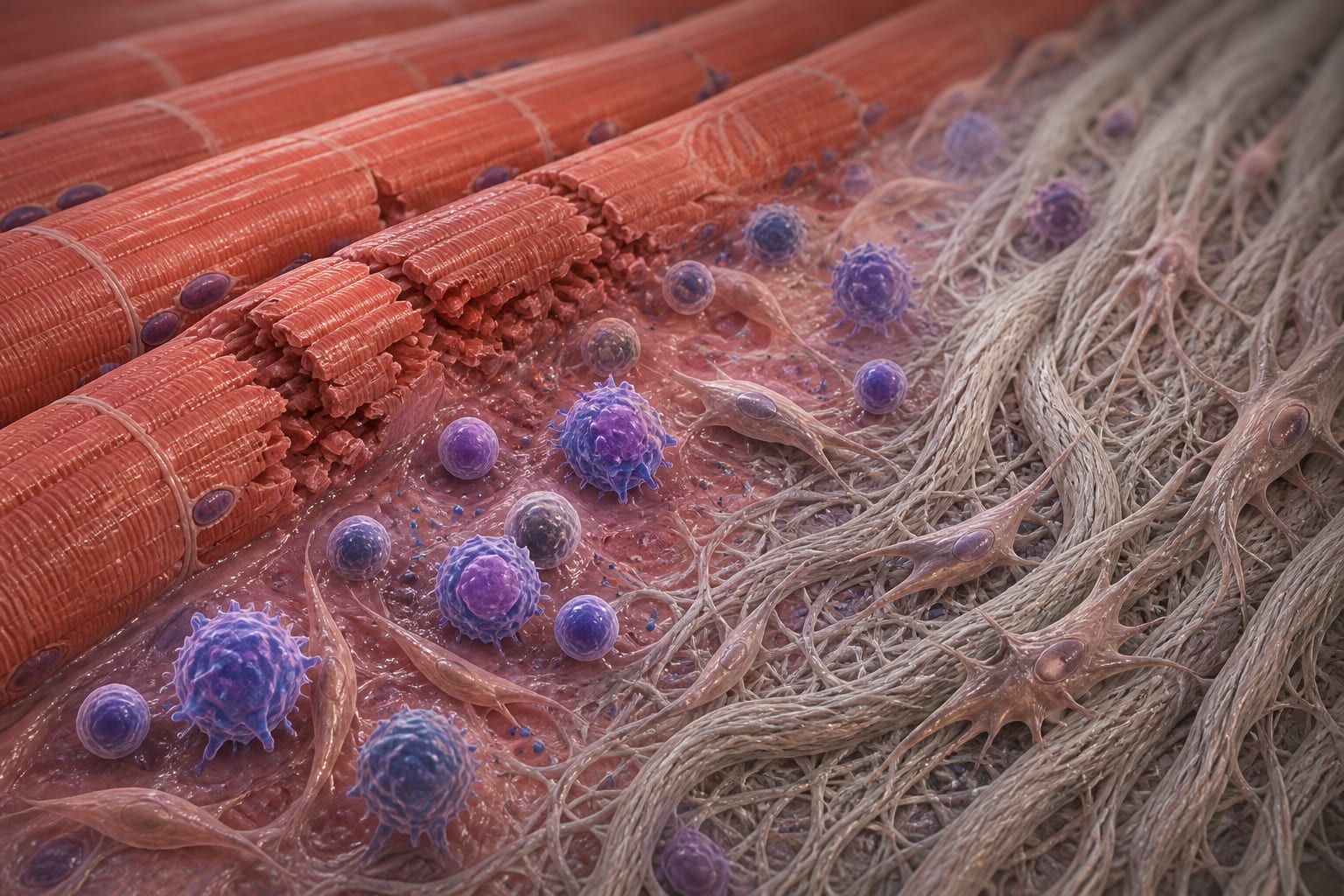
Elevated PTPRC expression is linked to increased fibrosis and immune cell infiltration.
ECM activation scores are higher in DMD patients.
Silencing PTPRC in myoblasts improves differentiation and reduces fibrotic characteristics.
Significant enrichment of inflammatory pathways was observed in patients with high PTPRC expression.
Clinical Implications
The findings suggest that PTPRC may serve as a valuable biomarker for assessing DMD progression and therapeutic response. Understanding its role in the inflammatory microenvironment could guide future research into targeted treatments for DMD.
Conclusion
PTPRC's involvement in DMD highlights its potential as a biomarker and therapeutic target, warranting further investigation into its role in muscle injury and repair mechanisms.