Beyond the airway: the impact of septoplasty and turbinate reduction on somnolence and sleep disordered breathing risk—a prospective study - Report - MDSpire
Conexiant’s news site is now MDSpire News. Learn more
Advertisement
Examining the Effects of Septoplasty and Turbinate Reduction on Daytime Sleepiness and Obstructive Sleep-Disordered Breathing Risk: A Prospective Analysis
Clinical Report: Examining the Effects of Septoplasty and Turbinate Reduction
Overview
This prospective study investigates the impact of septoplasty and inferior turbinate reduction (S + ITR) on daytime somnolence and obstructive sleep-disordered breathing (OSDB) risk. Results indicate significant improvements in daytime sleepiness and OSDB risk.
Background
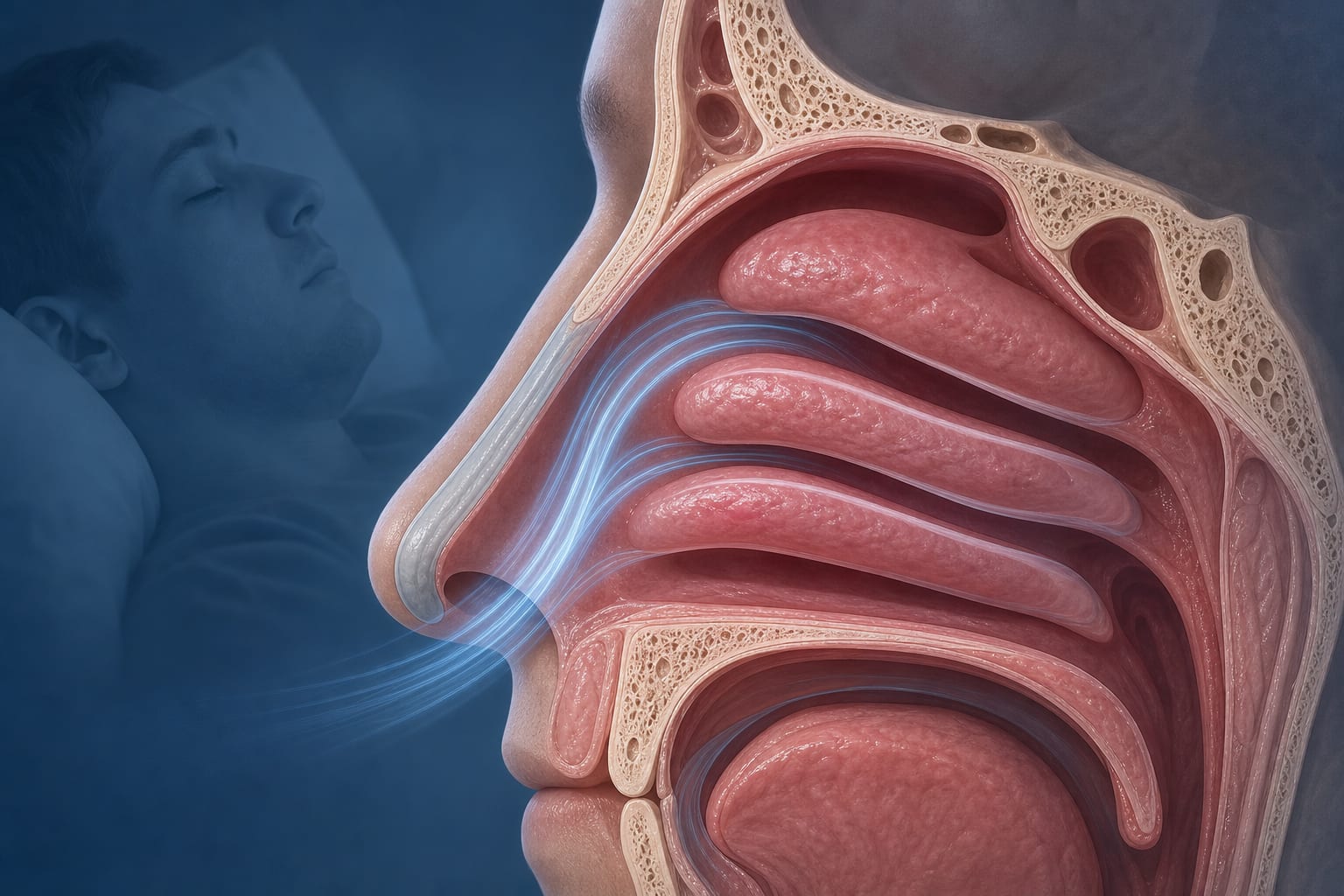
Chronic nasal obstruction can lead to daytime somnolence and obstructive sleep-disordered breathing (OSDB), which are significant health concerns. Standard treatments like septoplasty and inferior turbinate reduction aim to restore nasal airflow.
Data Highlights
Outcome Measure
Change
p-value
ESS Score
-2.7 ± 4.4
0.002
Berlin Questionnaire Category 1
Improvement
0.024
Berlin Questionnaire Category 2
Improvement
<0.001
Berlin Questionnaire Category 3
Stable
0.422
Key Findings
S + ITR significantly reduced daytime somnolence, with a mean ESS score improvement of 2.7 ± 4.4 (p = 0.002).
Improvements were noted in Berlin Questionnaire Categories 1 and 2, with p-values of 0.024 and <0.001, respectively.
Category 3 of the Berlin Questionnaire remained stable (p = 0.422).
No correlation was found between ESS improvement and PNIF airflow gains (p = 0.516).
An inverse correlation was observed between ESS gains and BMI variation (r = -0.381, p = 0.035).
Clinical Implications
The findings indicate that S + ITR can reduce daytime sleepiness and the risk for OSDB.
Conclusion
Nasal surgery is associated with reduced daytime sleepiness and improved OSDB risk.